

Note: This post is being published simultaneously on Inconspicuous Consumption and on Uni Watch. It is not paywalled. — Paul
I recently published an Inconspicuous Consumption article about JFK half-dollars. That prompted an interesting email from reader Dave Truman, as follows:
I spent about 15 years as a lacrosse referee in St. Louis, and they always taught the new guys to use half-dollars for the coin toss. (The logic was probably connected to the size of the coins: easy to flip, easy to catch, easier to find in the grass if you dropped it, etc.) … Usually I had to go get them at a bank, but on the rare occasions when I got one as change, I made sure to put it into my equipment bag.
That got me thinking: What do other referees use for coin tosses? I figured I probably have plenty of readers besides Dave who’ve done some sports officiating, so I invited Uni Watch readers and Inconspicuous Consumption readers to share any noteworthy stories they might have about coin tosses.
I got lots of responses (thank you!), some of which veered off into fun non-sports directions. Here are the most interesting ones:
Skyler Archibald
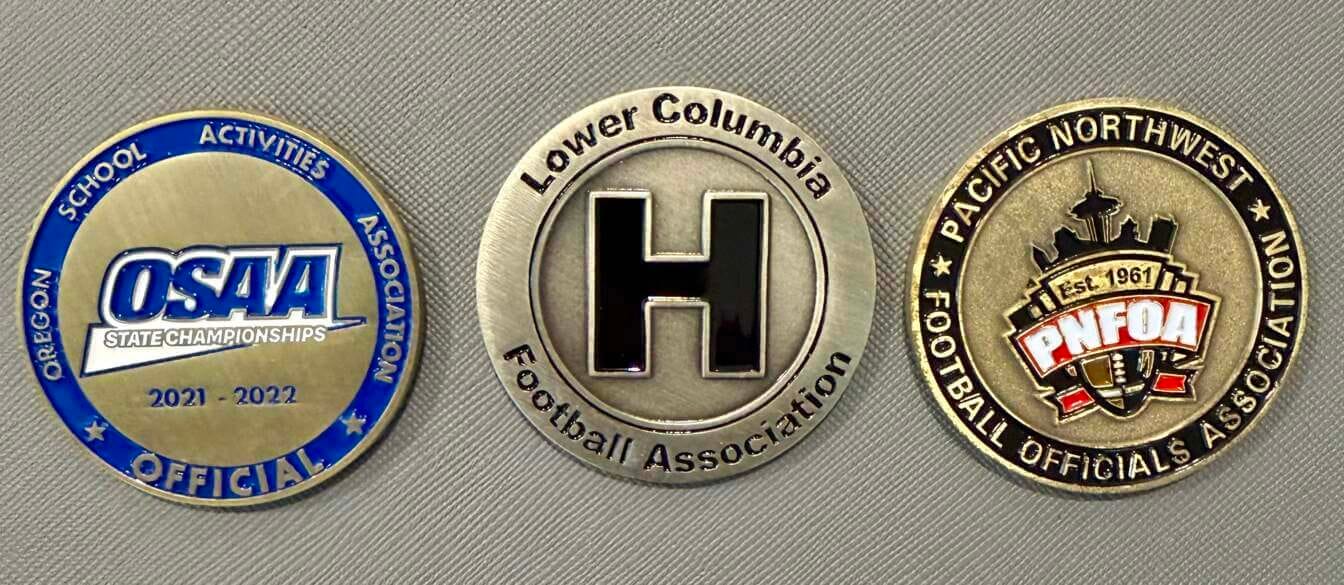
I typically use a coin provided by our officiating association. I have a few of them (see above) that I’ve collected over the years as a part of different associations or have acquired as a result of officiating at some state tournaments.
One cool tradition I’ve seen was in Washington State. The officials for some playoff games are from all different associations or regions around the state, so each official would bring something from their “home” association — often a coin — for the other officials, and then you’d share those things with the crew before the game. Kinda fun to see what other associations are using.
The coin toss procedures for youth or middle school football games are often a bit less structured. Depending on the weather, the officials might be wearing shorts, which is less friendly for carrying a coin during the game. So the officials often skip the coin and have the captains do “Rock, paper, scissors” instead, which is really fun.
Some referees like to catch the coin, some like to let it hit the ground. The best referees will indicate beforehand how they’ll be handling it. I’ve had many a chuckle over referees who try to catch it and drop it, which happens often.
Randy McCallum
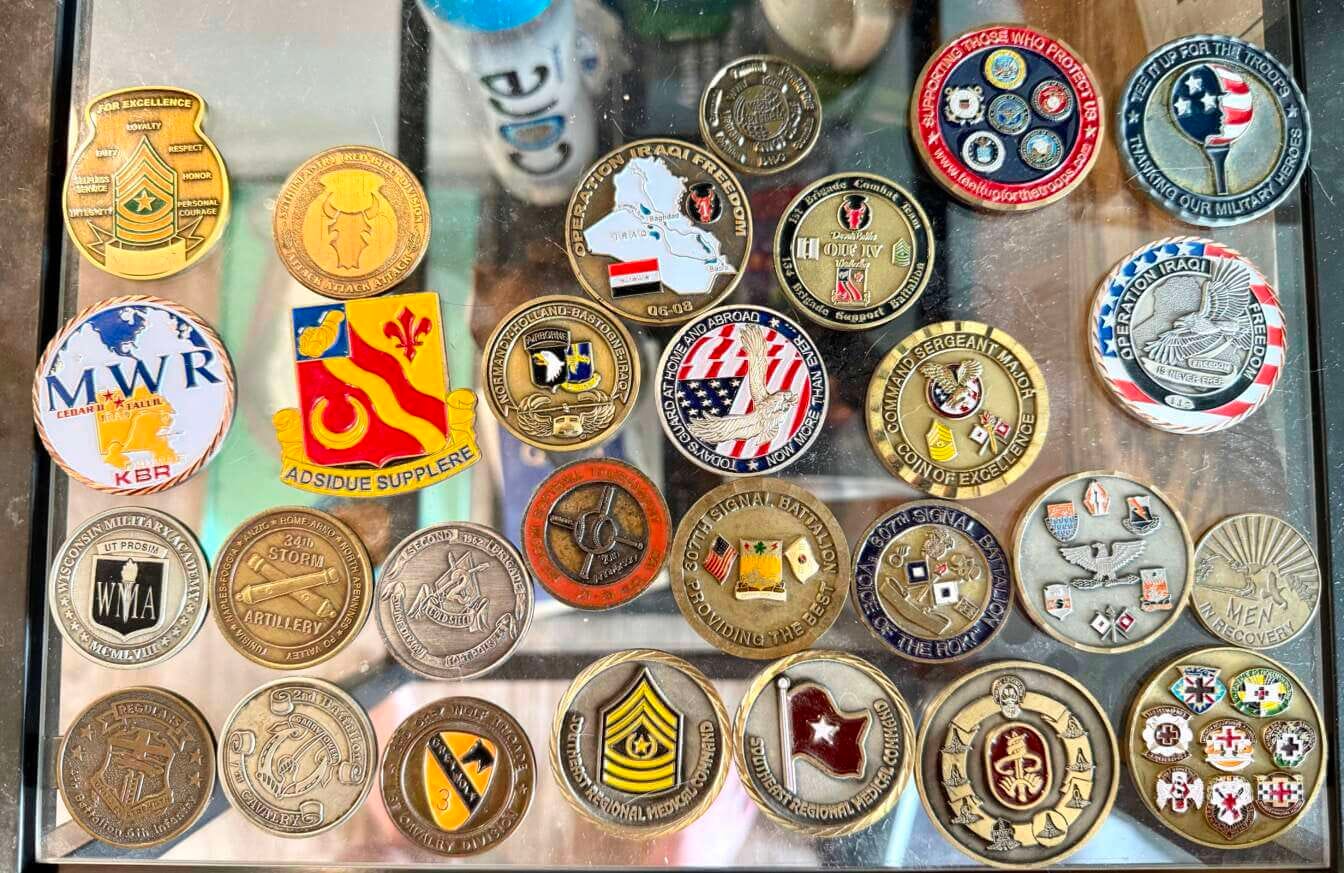
To supplement my income when I was in the Army, I would umpire games in the leagues of whatever post I was at. If I was new to the post, I’d use the challenge coin from the highest-ranking person at my last post (see photo above). Whenever I got a new challenge coin from a new base, I would start using that and then upgrade every time I got another challenge coin from a higher-ranking person.
Now I umpire a sober league, so I use my 10-year coin for games.
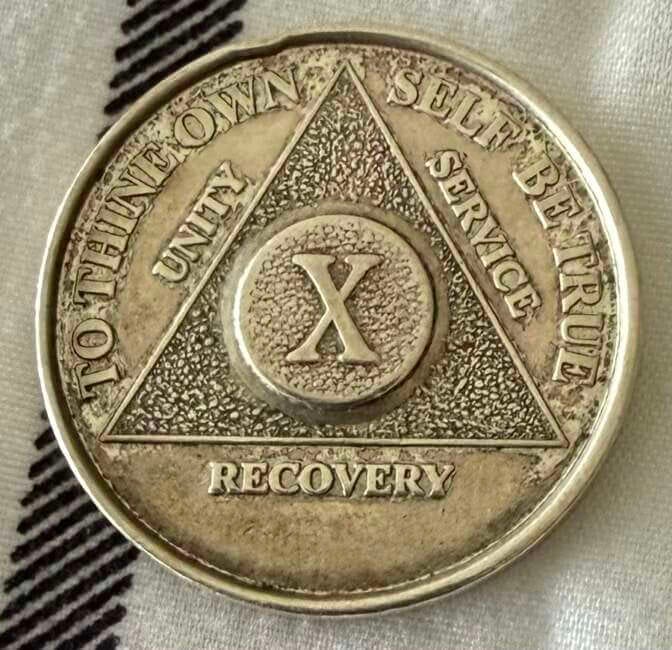
Mike Styczen
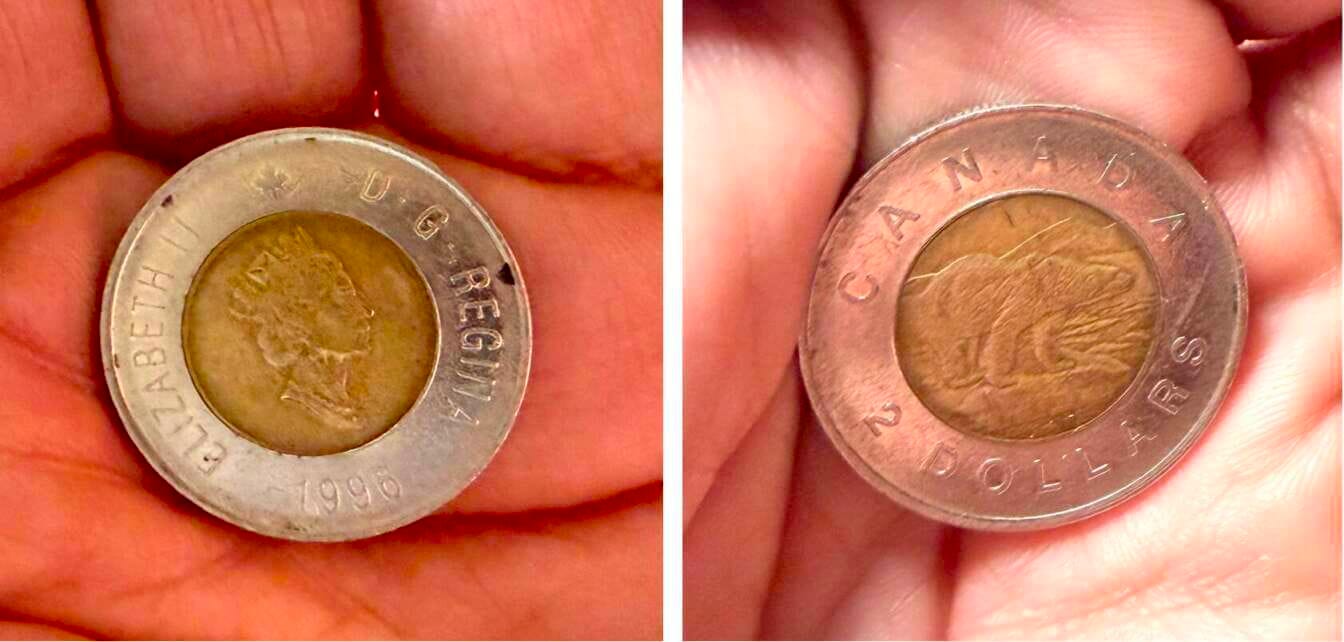
I’m not a ref but I’m a curler. We do our own coin toss for hammer (i.e., who gets “last licks”) at the beginning of every game. I’ve kept the same toonie (shown above) in the zippered back pocket of my curling pants for a decade. I don’t even take it out when I wash the pants, so there’s always a coin.
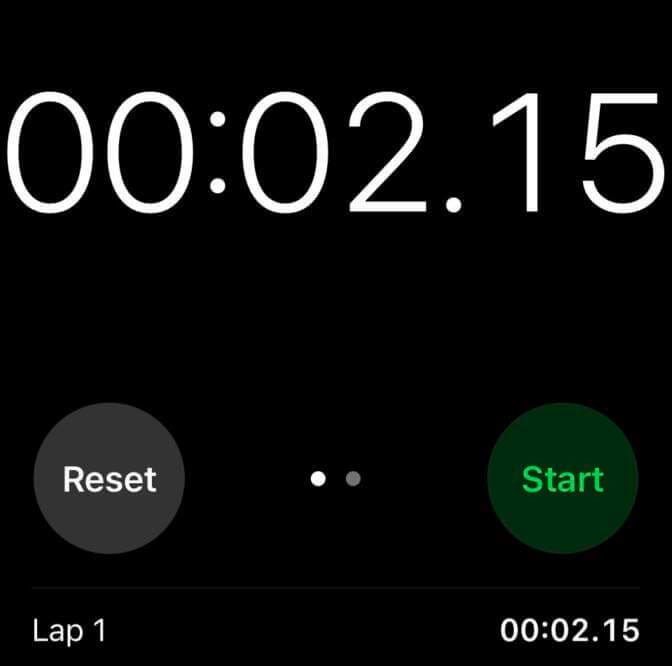
But when there’s no coin for whatever reason, we use the stopwatch app on someone’s phone and play “odd/even.” You start the timer, one team calls “odd” or “even,” you stop the timer, and the last hundredths digit of the timer determines the winner.
Joe Lombardo
My son played flag football until he was 14. Instead of a coin, they did “laces or no laces”: The ref (usually a 19-year-old kid working for the YMCA) would throw the ball in the air, and you’d win or loss depending on whether it came to rest with the laces facing up or down
My son also played high school tennis, which had no officials — the boys always officiated themselves and were on their honor. But the players still had to decide who served first, and no 17-year-old kid is carrying pocket change on the court, so they’d flip a racket, and you’d call something, like the “W” on a Wilson racket facing up or down, something like that. I remember this clearly, because I cringed every time the $350 racket that I bought for him got thrown.
Christopher Carvalho
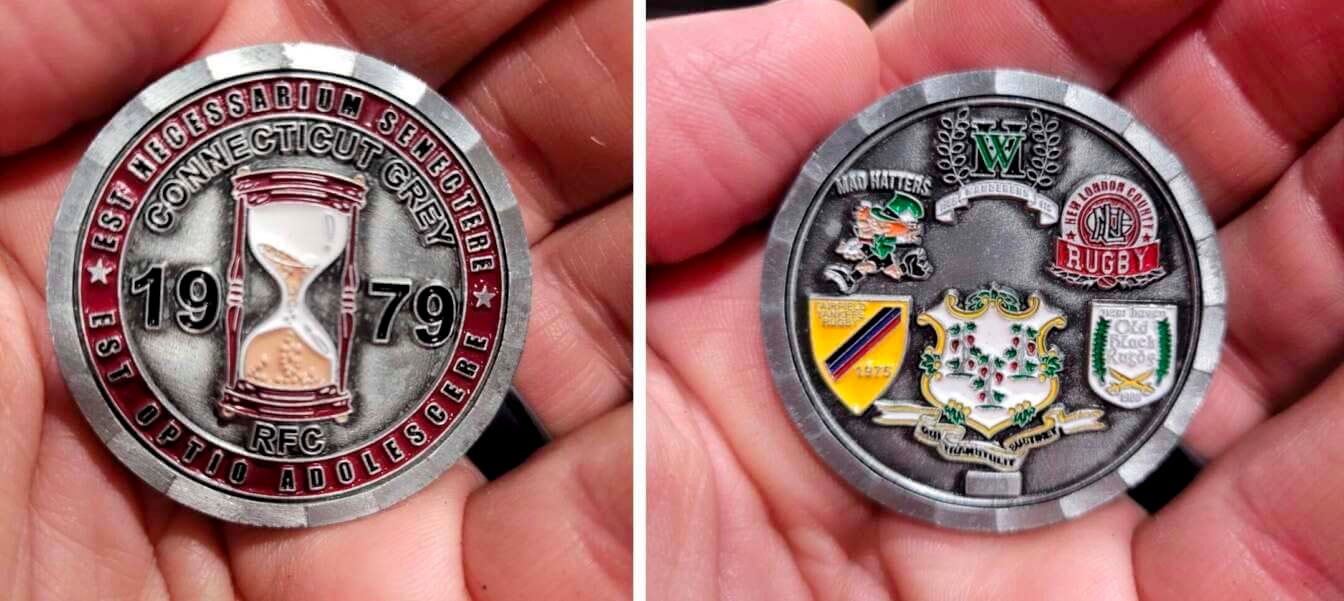
I’m a high school rugby ref out here in Connecticut. My old boys’ rugby team had challenge coins made up for when we traveled and went to tournaments, so I use that (shown above). The “heads” design has our insignia — an hourglass — and “tails” has the logos or insignia of our five “feeder” clubs.
It’s nice and heavy and easy to spot on the pitch. When I’m not reffing, I make sure to have it on me at the drink-up or I’m buying a round for whoever catches me without it!
Brad Evers
Soccer ref here. I opt for a half-dollar. I know some refs use commemorative coins from tournaments they’ve worked in the past, but the half-dollar is great for me, especially when the grass is long and a quarter won’t land nicely. Even if I choose to catch the coin in that situation, the half-dollar is easy to see.
R. Scott Rogers
Curling games begin with a coin flip, and it’s quite common for neither of the designated coin-tossers to have a coin on hand. I’ve seen people resort to flipping wildly inappropriate things like gloves or gripper pads. So when I curled, I took to carrying a 2007 Madison dollar in my curling vest pocket, just in case nobody else had a coin. I chose the James Madison coin because the Madison Curling Club was my home club, which made the coin a good conversation starter. On home ice, folks would think it was neat; at out-of-town tournaments, it would get people asking about the Madison club.

Joe Jordan
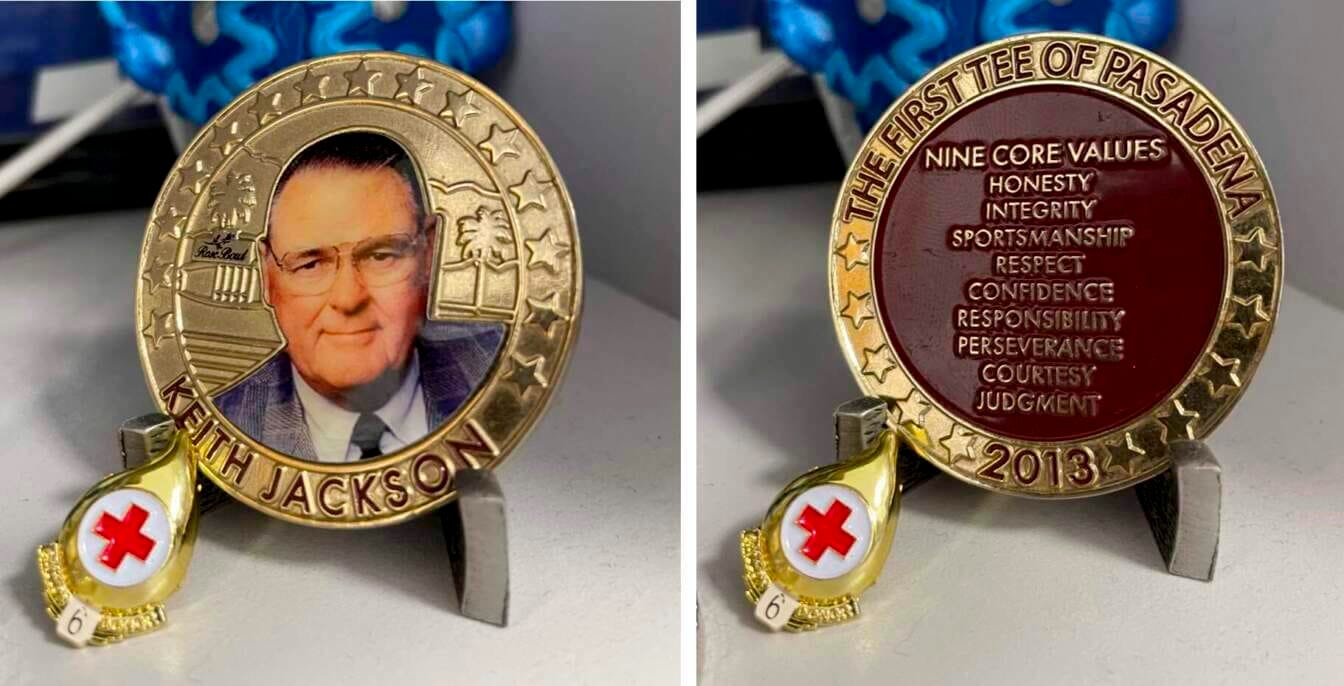
I’m an athletics administrator for a Division III athletics program. I had the privilege to use this Keith Jackson challenge coin (shown above) as the coin-flip tiebreaker to decide the designated home team in the 2024 NCAA DIII Baseball regionals. Our team won the flip but lost the game.
The coin was given to me by a dear friend who knows I love the Rose Bowl and Keith Jackson! When not in use at baseball games, I keep the coin on display in my office and refer often to Keith’s Nine Core Values.
Whoa, Nelly!
Eric Bangeman
When I refereed rugby, I used a 1921 Morgan silver dollar for coin tosses. I was a coin collector, and this was a “pocket piece,” as it was a duplicate and not in great condition. Usually one of the captains would comment on it during the coin toss, and sometimes I’d give a very brief numismatic or history lesson.
Unfortunately, the coin fell out of my pocket during a match and I was unable to locate it on the pitch afterwards. After that, I used a USA Rugby coin for tosses.
Amer Shamaa
I’m a licensed official in four sports here in Indiana. I’m not senior enough to do a coin flip for football (that’s usually reserved for ref), but I used to keep a quarter or at least a nickel on hand for basketball in the case of tournament play or where there wasn’t a visible possession arrow visible. I’d switch pockets to keep track of possession. I did that until I switched to doing the same thing with a backup whistle.
Jay Roddy
As a baseball umpire, I don’t normally need a coin. But in travel tournaments, and occasionally in youth ball, it’s not always clear which team is the home team, so I try to be prepared with a quarter. If I forget or am surprised by the question at the pregame plate conference, we’ll flip a ball/strike indicator (i.e., the clicker). Typically, the team that has traveled farthest gets to call it. Heads is the side with the numbers; the plain side is tails.
Joe Bailey
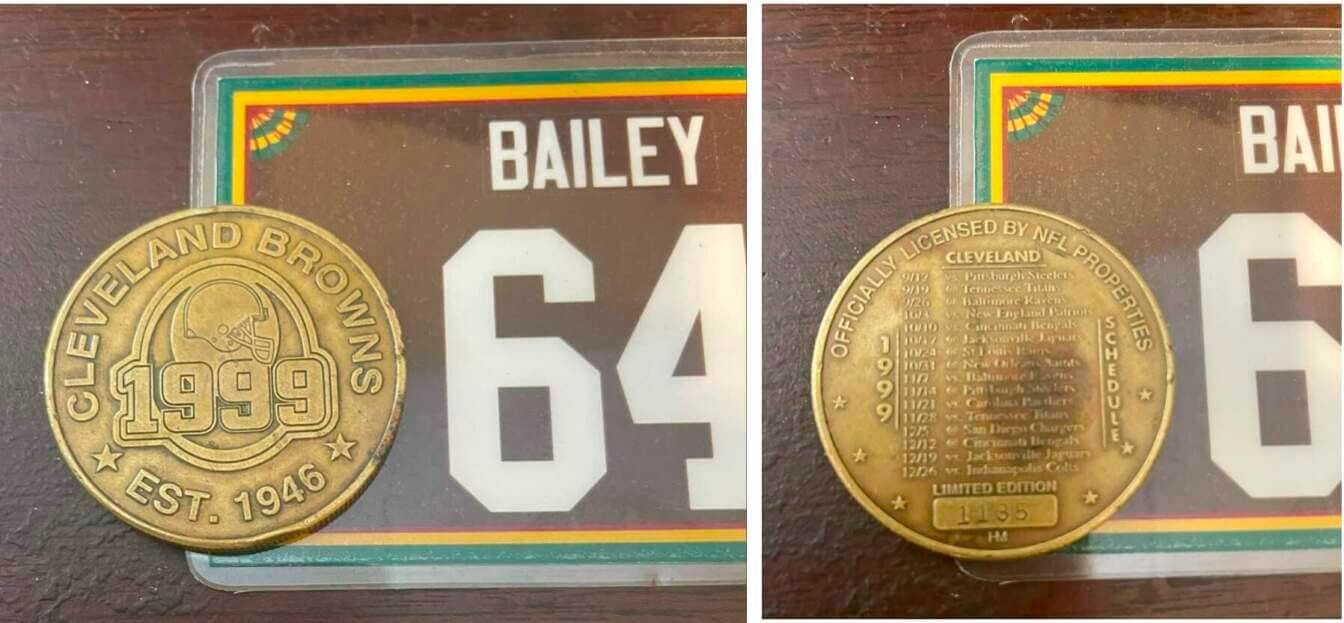
I’m going into my 26th year of officiating high school football. When I started, 2001, I went on eBay and found a commemorative Cleveland Browns coin marking their return to the NFL in ’99 (shown above). I’m predominantly an umpire at the varsity level, so we don’t use my coin for those games. But I’m sometimes the referee for JV and youth games. I tell the captains, “The helmet is heads and the writing is tails.” (Oh, the Browns went 2-14 that season.)
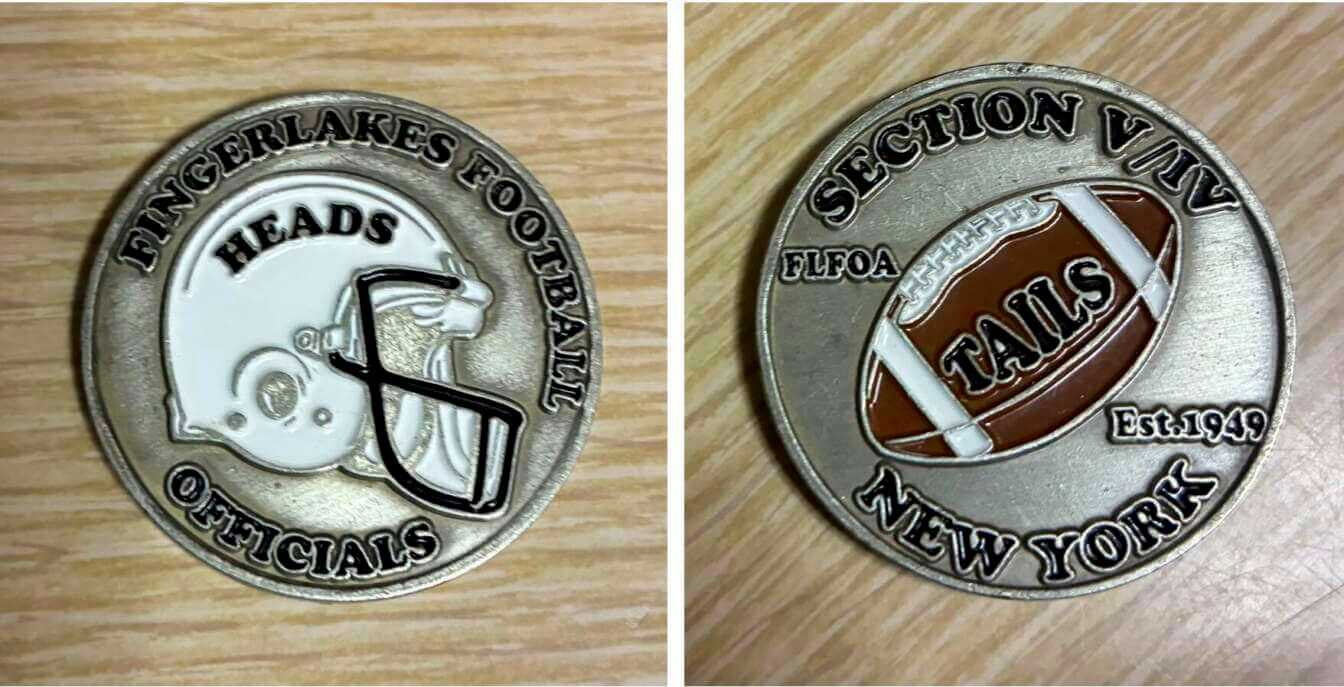
In addition to that, my chapter of the NYS Football Officials created a coin for our members to use, which is much more traditional:
Matt Maldre
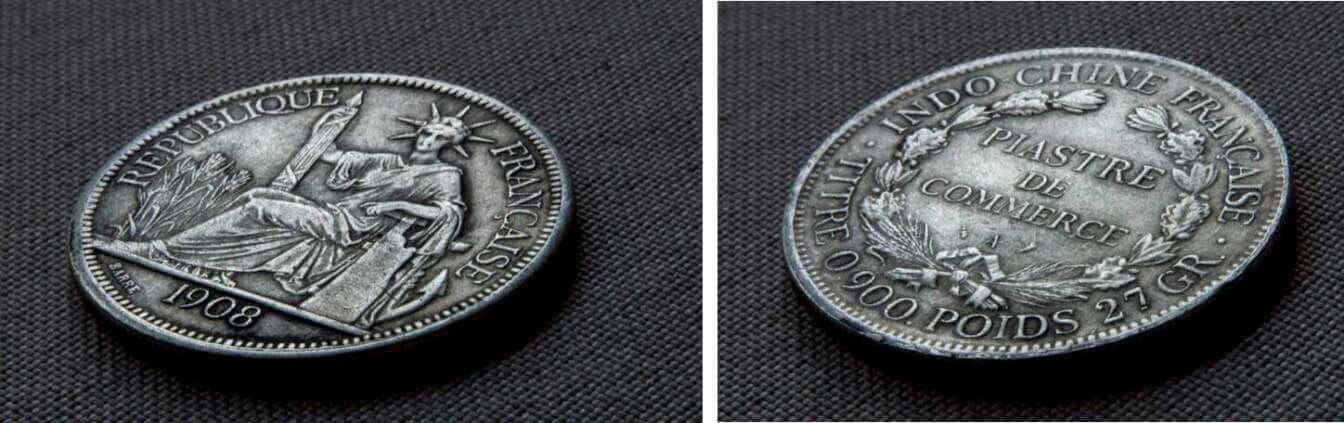
In my house, there are often disputes over who picks what to watch on TV, who gets to sit in the front seat, and so on. We resolve these disputes by using an official family coin — a French Piastre from 1908 (shown above). I originally got it mostly because I wanted to own something from 1908 when the Cubs last won the World Series, just so I could hold something in my hand that physically existed from that time period. (There’s more information about the coin and its role in our family here.)
Curt Rogers
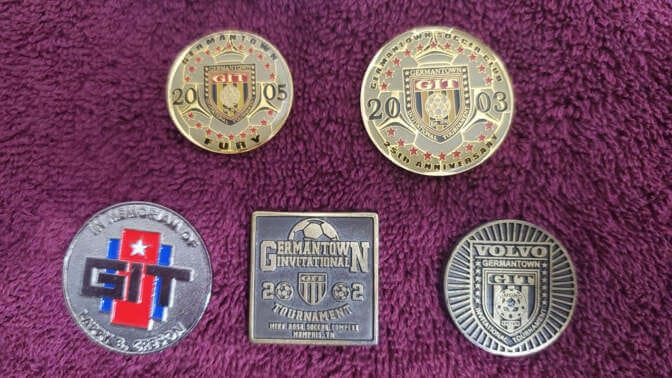
I’ve been a soccer referee for 36 years. Leagues and tournaments will often given out special coins to use. One annual tourney in particular gave out a commemorative coin with a slightly different design each year, usually incorporating the tournament logo (see above). The thing I remember about those in particular is that they were heavy — much heavier than a normal coin, so you really had to put some oomph into it when you flipped it. My favorite version of the coin was the year they made it square, which I thought was really unique.
Derek Linn
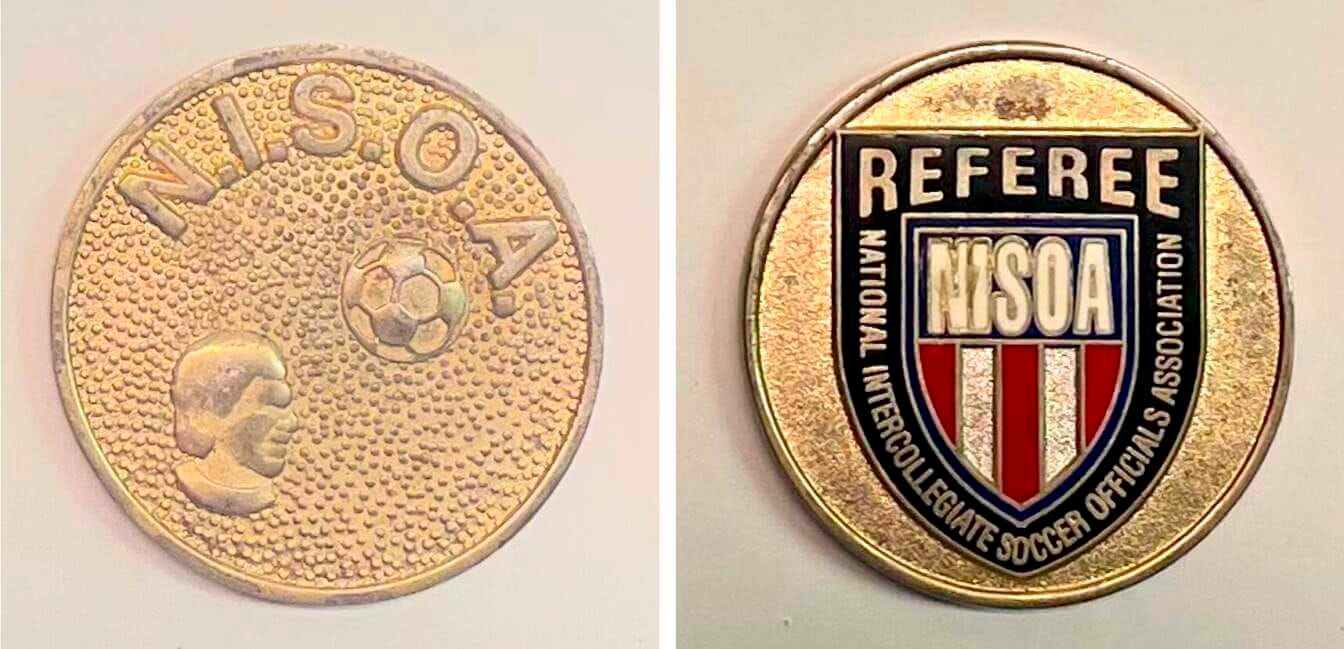
I refereed soccer from 2011-2022. I almost always used an Eisenhower silver dollar for high school games and I used the NISOA coin (shown above) for college games. When I used the Eisenhower coin, I would always ask the captains who the silhouette was, and I don’t think anyone ever got it correct.
Anonymous
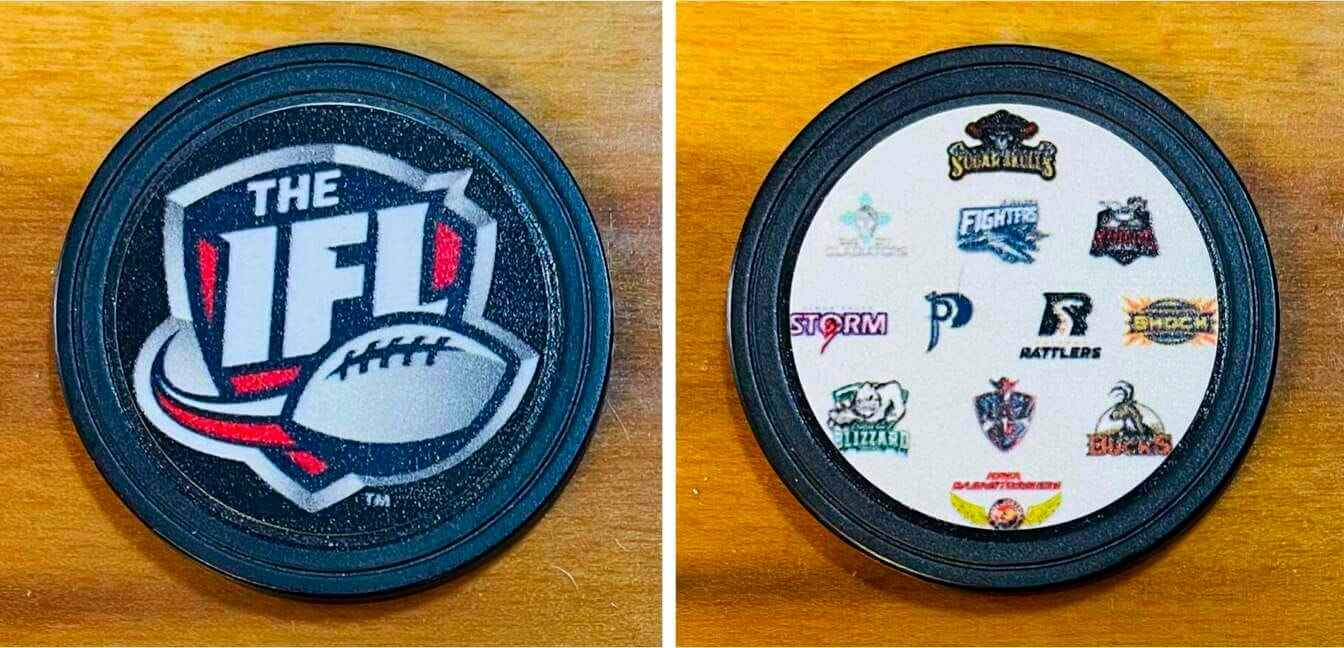
I’m not a referee, but in 2023 I took my son to an Indoor Football League game, and the head referee gave him the coin used for the opening coin toss (shown above) — a very cool move.
The “coin” is plastic and appears to be more of a customized poker chip than a traditional coin, though it has enough heft that some metal may be inside. The obverse features the IFL logo, while the reverse includes the logos of 12 IFL teams. Interestingly, there are 12 team logos, which appears to correspond with the IFL’s 2021 season; they were up to 14 teams in 2023, when my son received the coin.
Gabe Cornwall
My mother officiated D1 and WUSA soccer and college basketball for more than 20 years. She kept a 1921 Peace silver dollar for coin-flipping purposes. Her husband in those days — my late stepfather — was an enthusiastic numismatist, so I’m sure that had plenty to do with which coin she chose. My mother still has his coin collection, which includes the 1921 dollar.
Jeff Economy
This is not about refereeing exactly, but the coin toss conversation immediately reminded me of the 1971 Australian film Wake in Fright. If you’ve not seen it, you’re in for a wild ride. It has been synopsized thusly: “After a bad gambling bet, a schoolteacher is marooned in a town full of crazy, drunk, violent men who threaten to make him just as crazy, drunk, and violent.” The gambling debt has to do with a coin toss game, and although I don’t think using half-dollars would have affected the outcome, it does make me wonder how a small-town American version of the same concept would play out if centered around the saintly profile of the fallen JFK.
———
Paul here. Good stuff! Big thanks to everyone for sharing your stories, and doubleplusthanks to Dave Truman for getting the ball rolling on this one.
Incidentally, the road that led to this post began nearly a month ago, when I published an article about receiving a buffalo nickel as change. That led to the post about about the stationery shop in Maine that gives out half-dollars as change, which ultimately led to all of these coin-flip stories. I love it when one topic begets another, and another. It’s like an IC perpetual-motion machine!
Paul Lukas has been obsessing over the inconspicuous for most of his life, and has been writing about those obsessions for more than 30 years. You can contact him here.
Another coin flip movie is "No Country for Old Men," in which the hit man -- Javier Bardem's Anton Chigurh -- decides life or death with a coin flip.
I loved this article!!! I never really thought about the coin toss - from the coin's point of view. Thanks for sharing.... and I pick tails!