
I recently wrote about receiving a 1928 buffalo nickel as change. That article prompted a comment from reader Frank Boscoe, who wrote, “Every so often I get some half-dollars from the bank and put them back into circulation. They make good conversation pieces.”
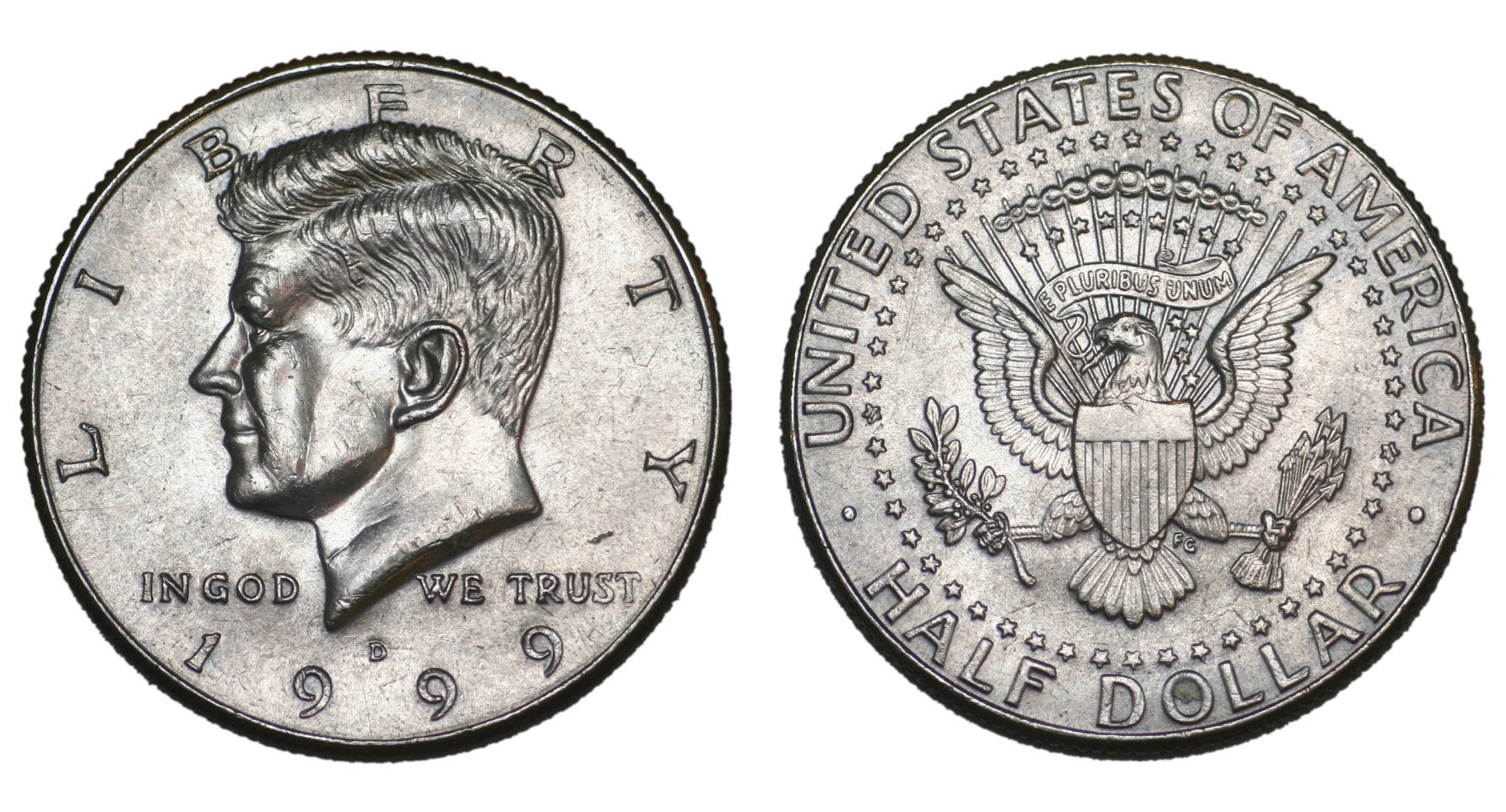
That got my attention because I’m a longtime fan of the Kennedy half-dollar. For starters, it’s clearly our best-looking coin: the fine-grained swoop of JFK’s hair, the wide-spaced ʟ ɪ ʙ ᴇ ʀ ᴛ ʏ lettering, the handsome eagle on the reverse — it’s a beauty. I also like its size and weight, which make other coins seem like mere tokens by comparison. A half-dollar feels substantial and tactile in the hand and has a resonant ring when hitting a countertop or table. A very satisfying physical object.
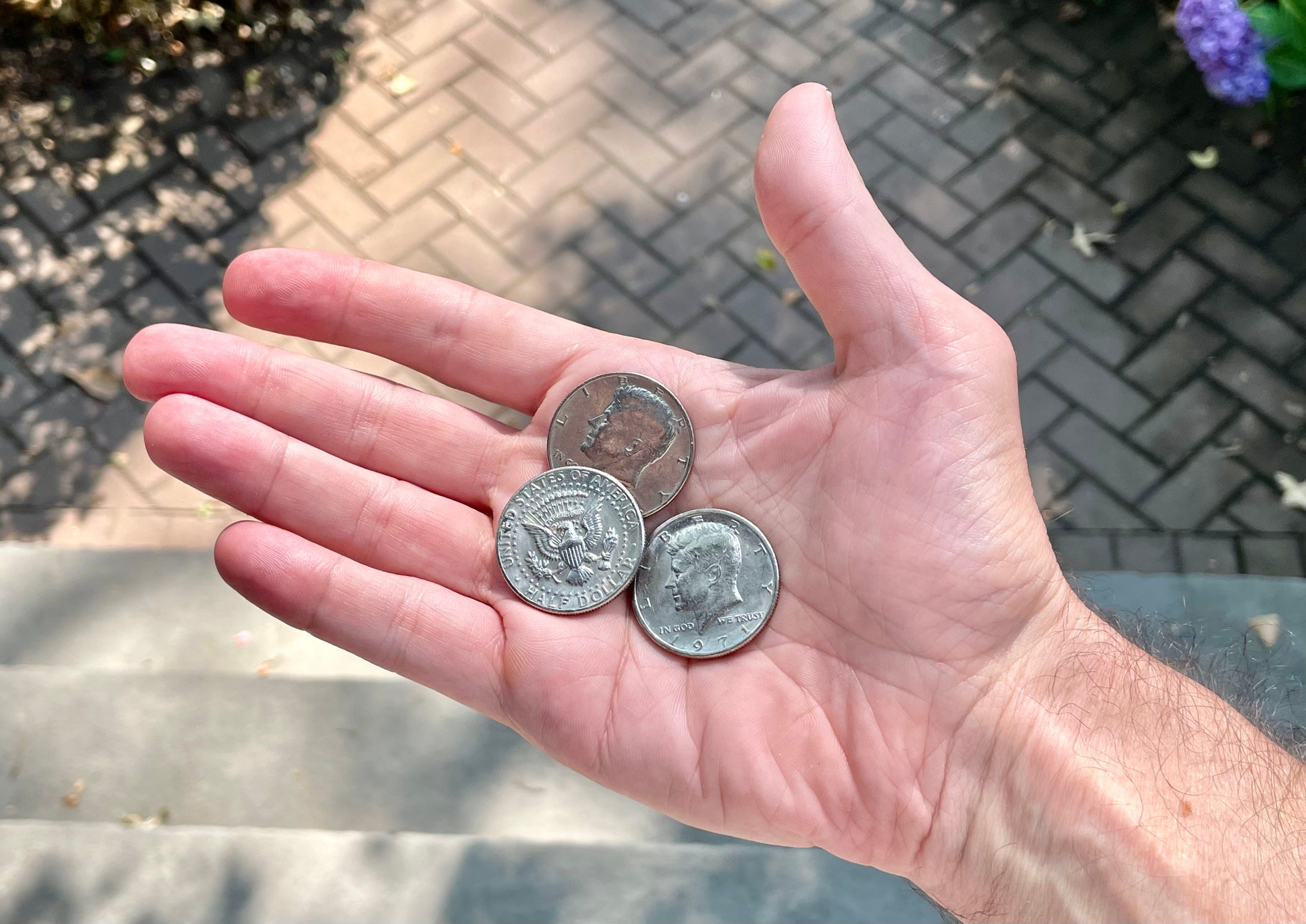
Despite these aesthetic and material pleasures, the JFK half-dollar’s public profile these days is essentially nil. The U.S. Mint produced 34 million of them last year, which might sound like a lot until you realize that they also produced 1.3 billion pennies in 2025, along with 1.04 billion nickels, 1.38 billion dimes, and 697 million quarters. Vending machines and other coin-operated gadgets don’t take half-dollars, retailers don’t keep them in their cash registers, and even banks sometimes don’t have any on hand. Although JFKs have been circulating for more than 60 years, there’s a decent chance you’ve never spent one or gotten one back as change.
How did this attractive coin end up becoming so inconspicuous? I looked into that question myself in a 1997 magazine article (later reprinted in issue No. 8 of my zine, Beer Frame: The Journal of Inconspicuous Consumption). Here’s a key passage:
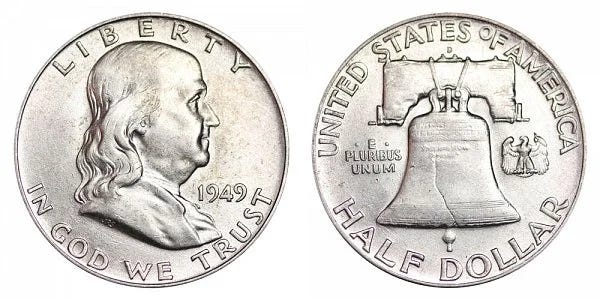
One frequently cited reason for [the JFK half-dollar’s relative obscurity] is its considerable heft, which some find unwieldy. But Tim Sanford, editor of the trade journal Vending Times, points out that the JFK is precisely the same size and weight as its predecessor, the Franklin half-dollar, which was minted from 1948 through 1963. “Nobody used to say the Franklins were too big,” says Sanford. “They used them! For some reason, something happened in the public mind when the JFK was introduced. The 1960s saw the 50-cent piece slide right off the boat.”
James C. Benfield, Executive Director of a Washington lobbying group called the Coin Coalition, thinks he knows why. First, he explains, the year that the JFK was introduced — 1964 — was the last year when dimes, quarters, and half-dollars were still 90% silver, which led to a rash of hoarding in the mid-’60s. (The silver content was reduced to 40% in 1965 and eliminated altogether in 1971. The current composition for all three coins is 92% copper and 8% nickel.) Since all Franklin half-dollars were minted during the 90% silver era, they disappeared from circulation almost immediately. Meanwhile, with the new half-dollar rushed into production just months after Kennedy’s death, grief-stricken Americans held onto the JFK instead of spending it. The large, good-looking 50-cent piece essentially became a commemorative keepsake instead of a circulating coin. “So Franklin gets hoarded because he’s silver,” Benfield summarizes, “and Kennedy gets hoarded because he’s popular. So you had double-hoarding, and it killed the 50-cent denomination.”
Still, as the price of candy bars and soda rose to 50 cents and beyond, you’d think the half-dollar would’ve been a natural for vending machines. But that didn’t happen either. Why? Quoting again from that same 1997 article:
Early vending machines were never tooled to accept half-dollars because most vended products at the time cost only a nickel or dime anyway. By the time inflation made the JFK viable for coin-op purchases, the country had basically stopped using it [due to the double-hoarding phenomenon just described]. “Vending is a demand-driven industry,” says Sanford, the Vending Times editor. “I assure you that if people were saying, ‘Gee, it would really be convenient if I could use a 50-cent piece in this machine,’ the industry would start thinking seriously about it. But the coin has just dropped off everyone’s radar.”
All of which brings us back to IC reader Frank Boscoe and his comment about getting half-dollars from the bank and putting them into circulation. When I contacted him off-site to learn more, he said the story really begins with his son, Keenan, who runs a small shop in Camden, Maine, that sells stationery and maps. “He gives half-dollars as change to the right type of customer,” said Frank.
So I recently arranged a Zoom call with Keenan and Frank. Here’s a transcript, edited for length and clarity: