
Like most people, I don’t use cash as much as I used to. But when I do use it, I’m sometimes reminded of the pleasures that only a cash transaction can provide.
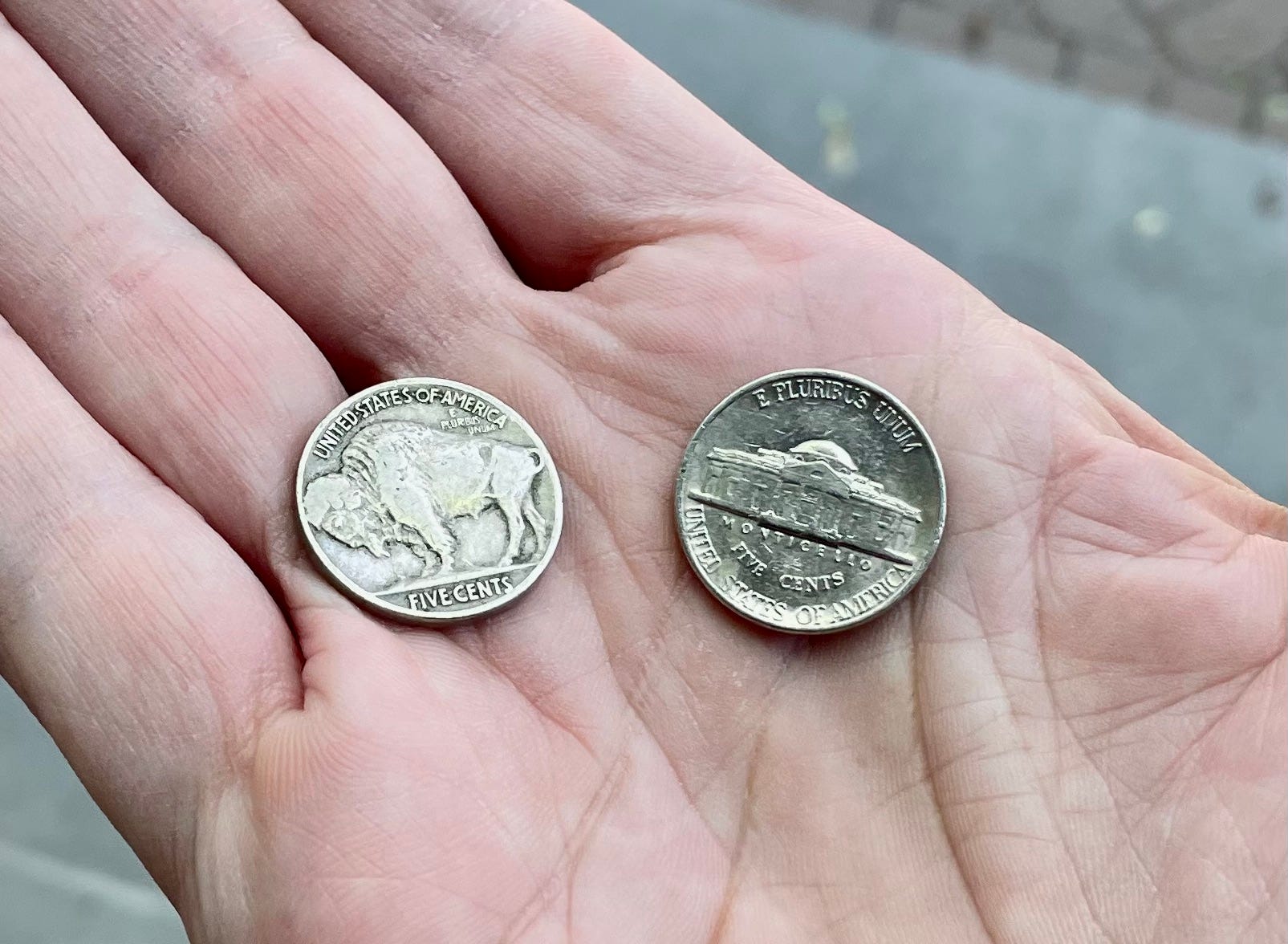
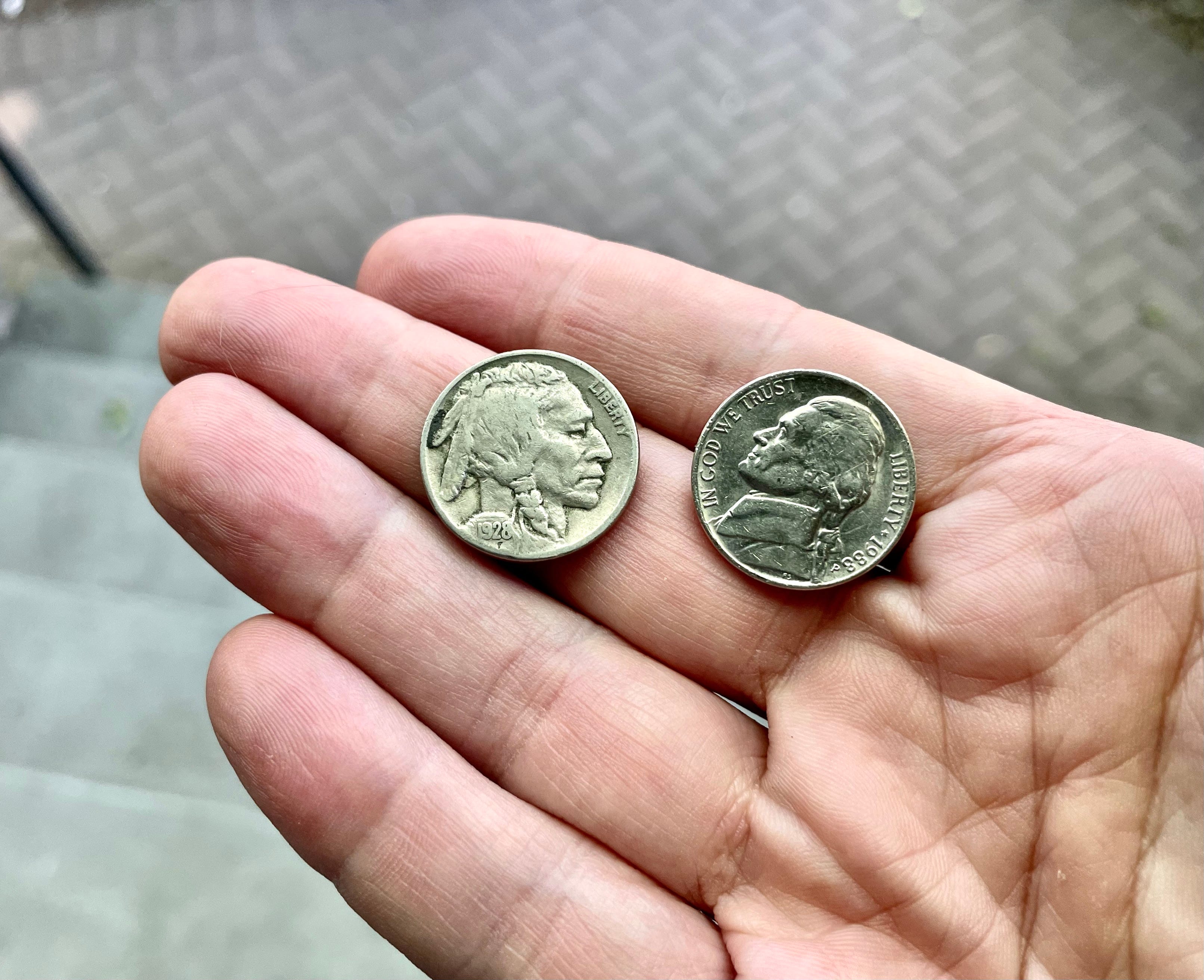
The most recent instance of this happened the other day when I bought a few items at my local bodega. The total came to $14.90, so I paid with a $20 bill and received a fiver and two nickels as change. I don’t know why the shopkeeper gave me two nickels instead of a dime, but I’m glad he did, because one of them, as you can see above, was a 1928 buffalo nickel! I’ve seen them before, but I’m pretty sure this is the first time I’ve received one as change. This one is nearly 100 years old, so it’s fun to think of all the pockets it’s been in, the places it’s gone, the commerce it’s been part of, the stories it could tell.
Despite its age, this nickel not particularly valuable. My amateur assessment is that it’s in “VG” condition, which according to various online price guides means it’s worth somewhere between $1.75 and $3.50. This isn’t surprising when you consider that 1928 nickels aren’t exactly scarce (the Philadelphia mint made over 23.4 million of them), plus nickel isn’t a precious metal (a 1928 quarter in comparable condition is worth $12 to $15, mainly because it’s made of silver).
But while this buffalo nickel may not have much monetary value, it nonetheless ended up sending me down a fun rabbit hole. For starters, some of you may be thinking, “Wait a minute, where’s the buffalo?” That’s because the titular animal (which is actually a bison, not a buffalo) appears on the back of the coin. The front, or obverse, shows a profile view of a Native American — a composite of several men, according to the coin’s designer, James Earle Fraser — so I’ve never understood why these are typically called “buffalo nickels” instead of “Indian head nickels.” I mean, we don’t call the current five-cent coin a “Monticello nickel,” right? Are any other American coins commonly referred to by what’s on the back?