
Note: This article includes several short video clips that are essential to the story, so I strongly recommend that you read the web version, not the emailed version. — Paul
I’ve been professionally obsessed with the Brannock Device for more than 30 years, and personally obsessed with it for a lot longer than that. In addition to having written many articles about the device, I also have a Brannock Device tattoo, I got to throw out the first pitch at the Syracuse Chiefs’ Brannock Device Night game in 2018, and I was recently interviewed at length for a podcast episode about the Brannock Device’s importance in American history. Inconspicuous Consumption even has an endorsement deal with the Brannock Device Company! So you’d think I’d be well versed in pretty much anything Brannock-related.

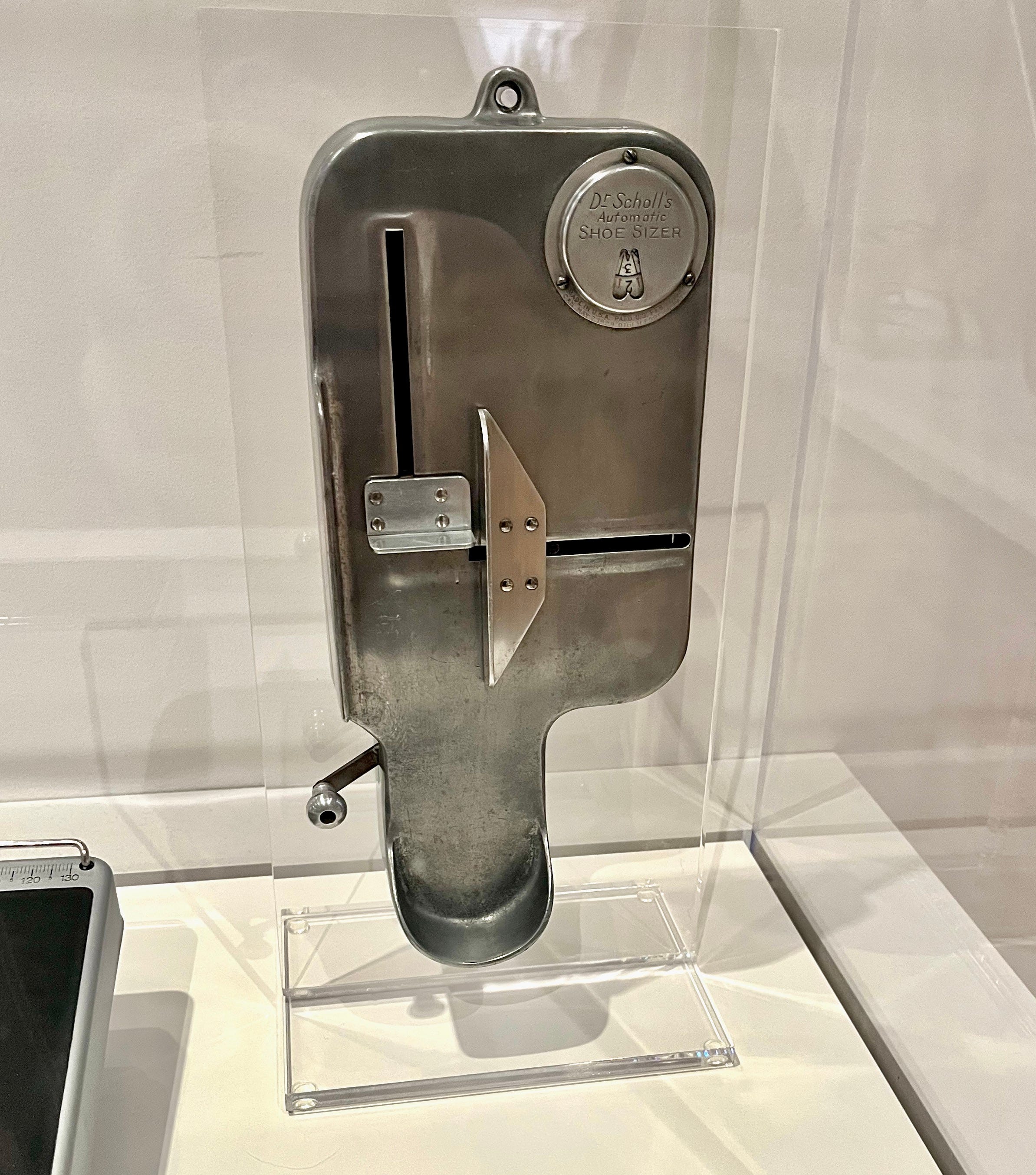
But despite all my Brannock acumen and credentials, I was caught off-guard when a friend1 recently sent me a photo (shown above) of an object he saw displayed at the Milwaukee Art Museum. As you can see, it’s a shoe-sizing gizmo that looks like a primitive Brannock Device, produced by the popular footcare brand Dr. Scholl’s! I had never seen such an item before, or even known of its existence.
As it happens, this same museum exhibit was recently spotted by IC reader Austin Gillis. He got this shot of the information placard:
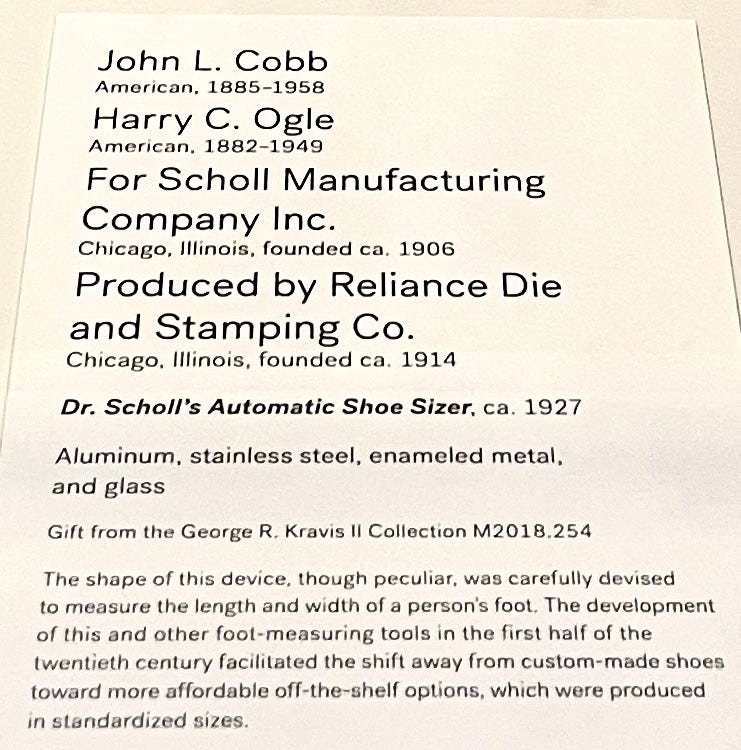
Relegating the Brannock Device to the realm of “other foot-measuring tools” is a bit of an eyebrow-raiser, but whatever. The real story here is that Dr. Scholl’s had its own Brannock-esque shoe sizer! Was it a Brannock knock-off? Or — perish the thought — did my heroic Charles Brannock build his empire of inconspicuous perfection on a foundation of lies by copying the Scholl design?
Apparently not (phew!). Brannock filed a patent application for his initial prototype in 1925, while the Scholl patent application wasn’t filed until December of 1927. So Brannock was first out of the gate and Scholl was clearly playing catch-up.
Moreover, the Brannock Device is the more versatile tool. For starters, it’s reversible, allowing it to measure both the right and left foot, while the Scholl gadget appears to be designed to measure just one foot. In addition, the Brannock Device measures foot length, foot width, and, most crucially, arch length (i.e., the distance from the heel to the ball of the foot), which has always been the Brannock’s key advantage over other shoe sizers. The Scholl device measured only foot length and width, dooming it to second-tier status.
That said, the Scholl tool appears to have been the more mechanically sophisticated of the two. While the Brannock Device has two sliding parts, the Scholl instrument’s patent drawings indicate that it had all manner of gears, levers, and so on — a veritable Erector Set project!
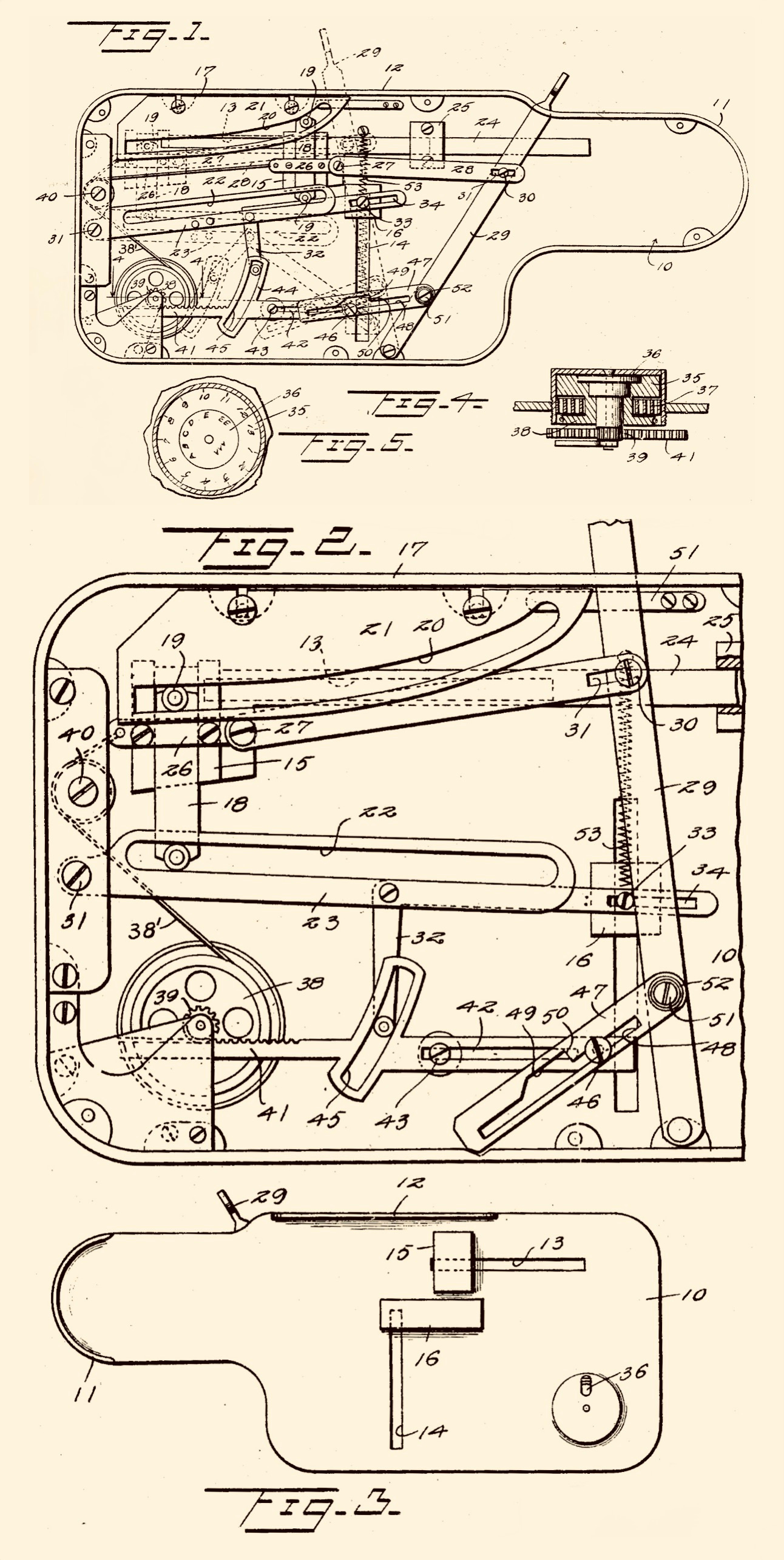
How had I never come across this item before? How long had it been in production? How serious a competitor to the Brannock Device had it been? How did it end up as a mere foot-measuring footnote?
The first step, obviously, was to procure one of these gadgets for myself. Surviving Scholl sizers (say that three times fast) appear to be pretty rare — perhaps that’s why I’d never encountered one before — but I was able to find one in pretty good shape on Etsy for $49.
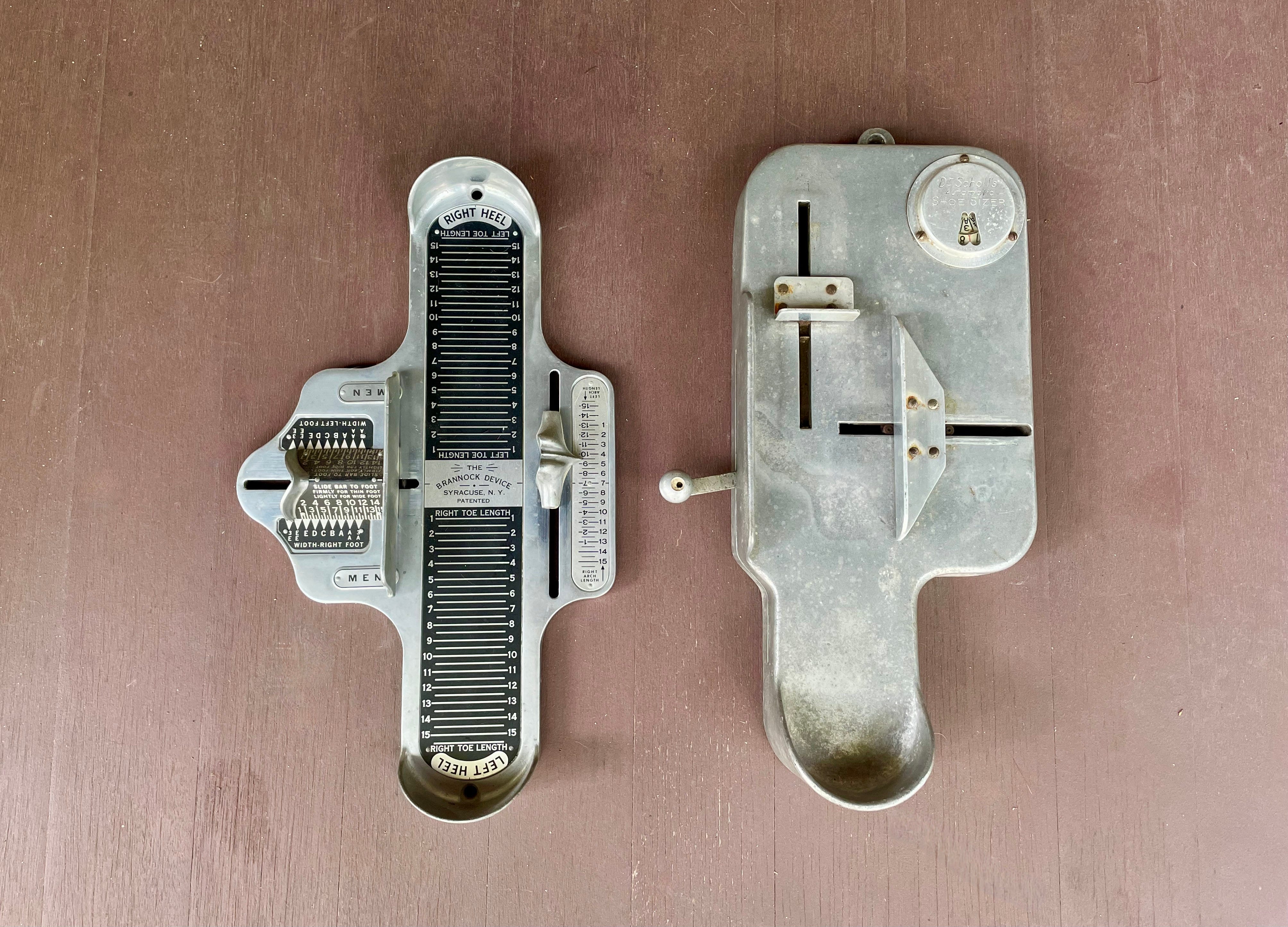
I was excited when the package arrived, as I always am when a vintage item enters my life. This time the tingle carried a slight undercurrent of shame — as a longtime Brannock evangelist, it felt a bit like I was consorting with the enemy — but that vague sense of unease evaporated when I placed the Scholl sizer next to a Brannock Device and suddenly felt like a genealogist who was introducing a pair of long-lost cousins at a family reunion: