

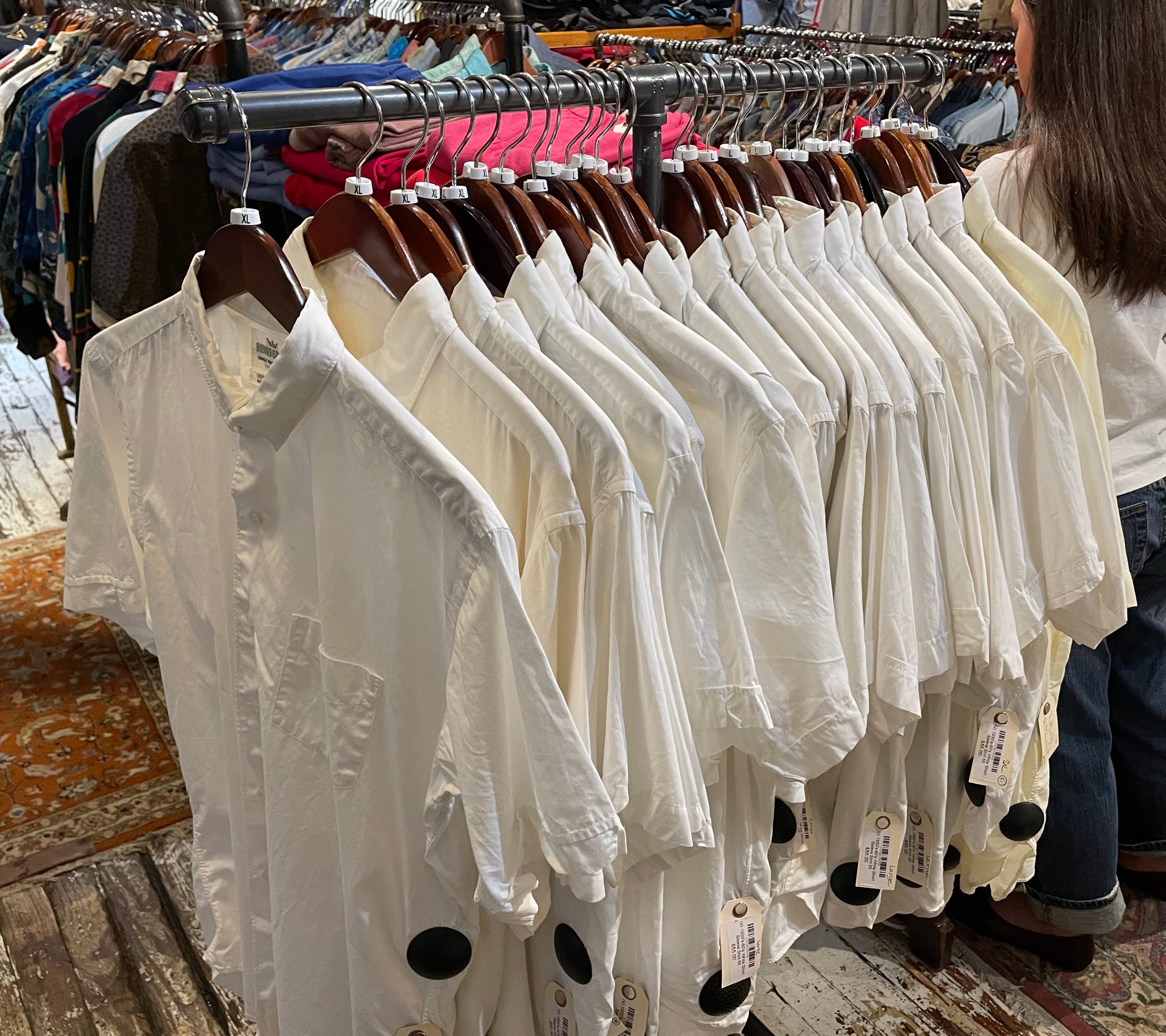
When I’m in a vintage clothing shop, I don’t just look at the clothes. I also like to examine the labels, which comprise their own branch of retro design. So when I was in a vintage shop the other day and saw the rack of old white shirts shown above, I instinctively glanced at the label of the first shirt. It turned out to be a beauty:
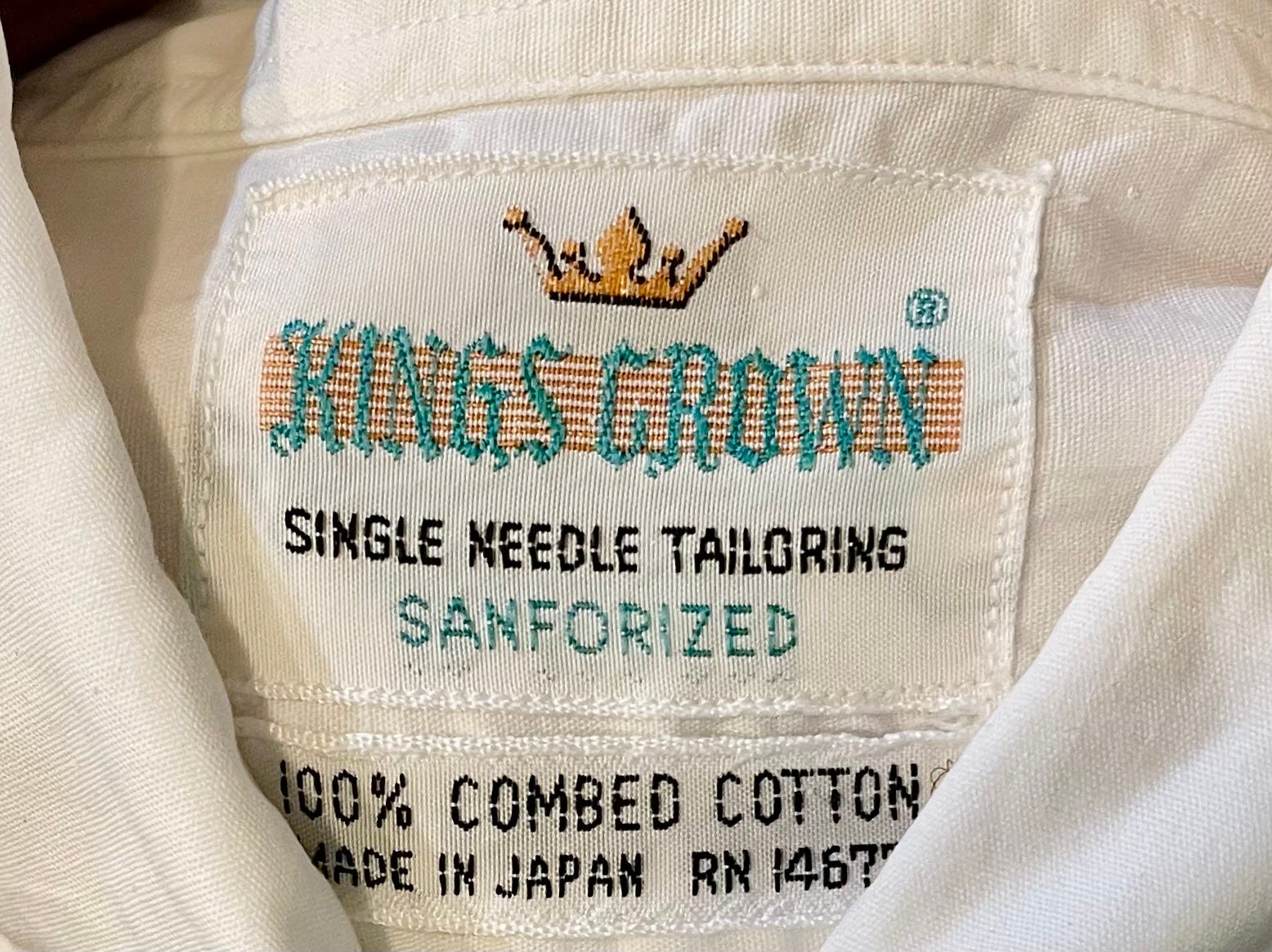
Oh, man — the turquoise lettering, the orange horizontal stripes, the black drop-shadow on the crown. It’s a mini-masterpiece!
I beckoned to a friend who had accompanied me to the shop and showed her the label. She looked at it, nodded appreciatively, and then quietly uttered the word at the bottom of the label: “Sanforized.”
That word hadn’t initially registered with me, in part because I’d been so entranced by the rest of the label design but also because I’ve seen “Sanforized” countless times on other vintage clothing labels. It’s one of those things that’s so omnipresent that you (or at least I) essentially stop noticing it.
But that got me thinking, so I looked at the next shirt on the rack. It too was “Sanforized”:

I checked the next shirt. Sure enough, it was “Sanforized” — and this time the word was rendered in the same typography as on the previous label, with little dots or bullets on either side of the italic lettering and the oddly stylized “S”:
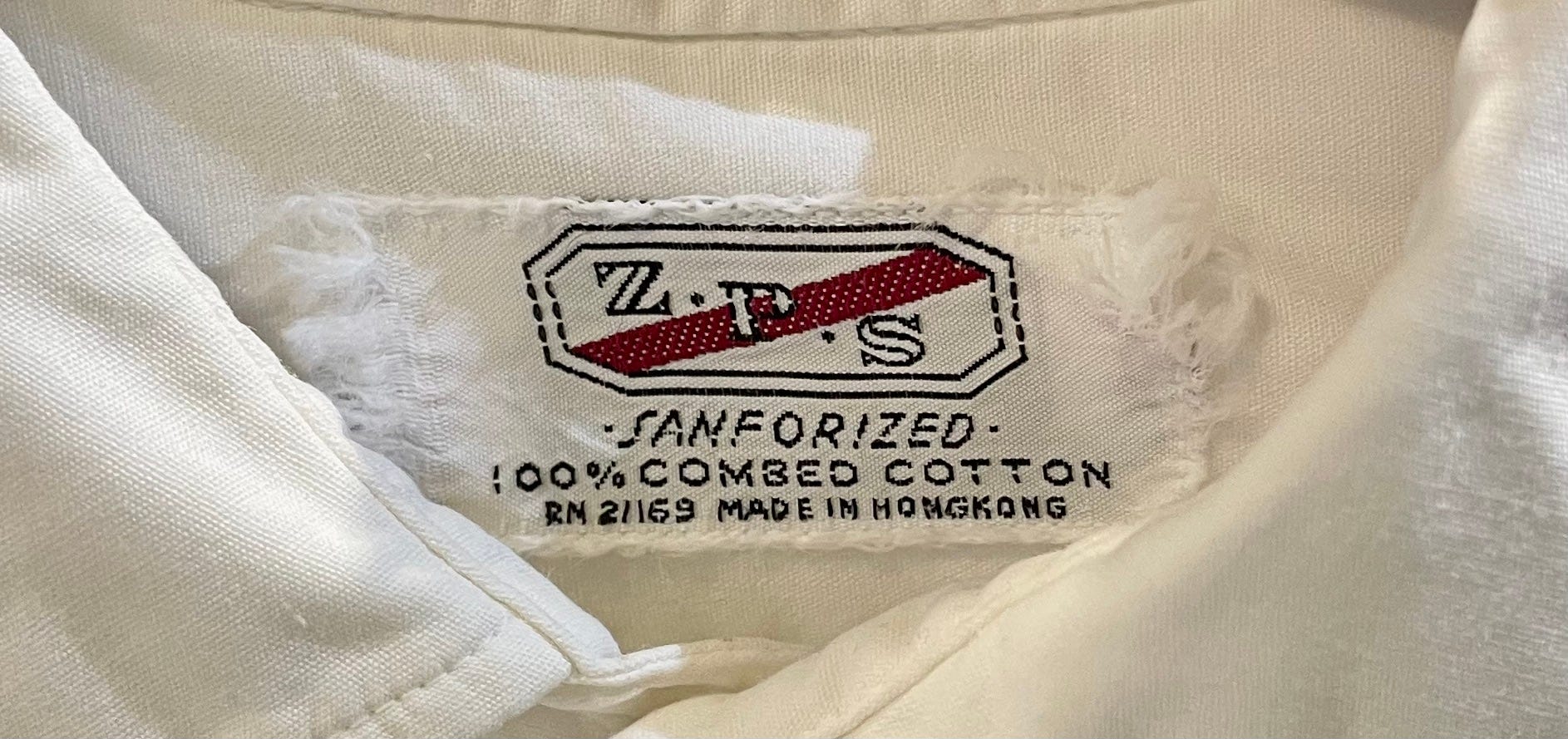
I went through the entire rack. There were 29 shirts, 13 of which were labeled as “Sanforized” — including one that was “Sanforized Plus”! Of those 13, 11 had the pair of bullets framing the italic lettering. Here are the remaining examples (you can click the images to see larger versions):


Despite the ubiquity of “Sanforized,” I’d never noticed that the word was essentially a logotype. Moreover, despite being a professionally curious person who’s spent a lot of time looking at vintage clothing, I suddenly realized that I didn’t even know what “Sanforized” meant! I knew it signified, uh, something fabric-related, but I wasn’t sure what that something was. This felt like an embarrassing gap in my knowledge — one that needed to be remedied.