


Hello, and happy 2026! Hope everyone had a good holiday season.
Now then: The photo above shows a New York City subway conductor whose train has just pulled into a station in Brooklyn. As you can see, he’s pointing.
That might seem like a random gesture that I just happened to capture, but there’s more to it than that. If you watch closely, you’ll see that New York subway conductors always point before opening the train doors when a train arrives at a station. Sometimes they point straight across, like the conductor shown above, and sometimes they point upward, like the conductor in this next photo:

Once you become aware of this protocol, it’s easy to become fixated on it. I was recently excited to witness a moment when two trains were arriving at a station in Manhattan — one on the express track and one on the local track — and I managed to catch both of the conductors pointing in this short video clip:
What are all these conductors are pointing at, and why? Let’s take another look at the two conductors from that video, and look at the areas that I’ve highlighted here:
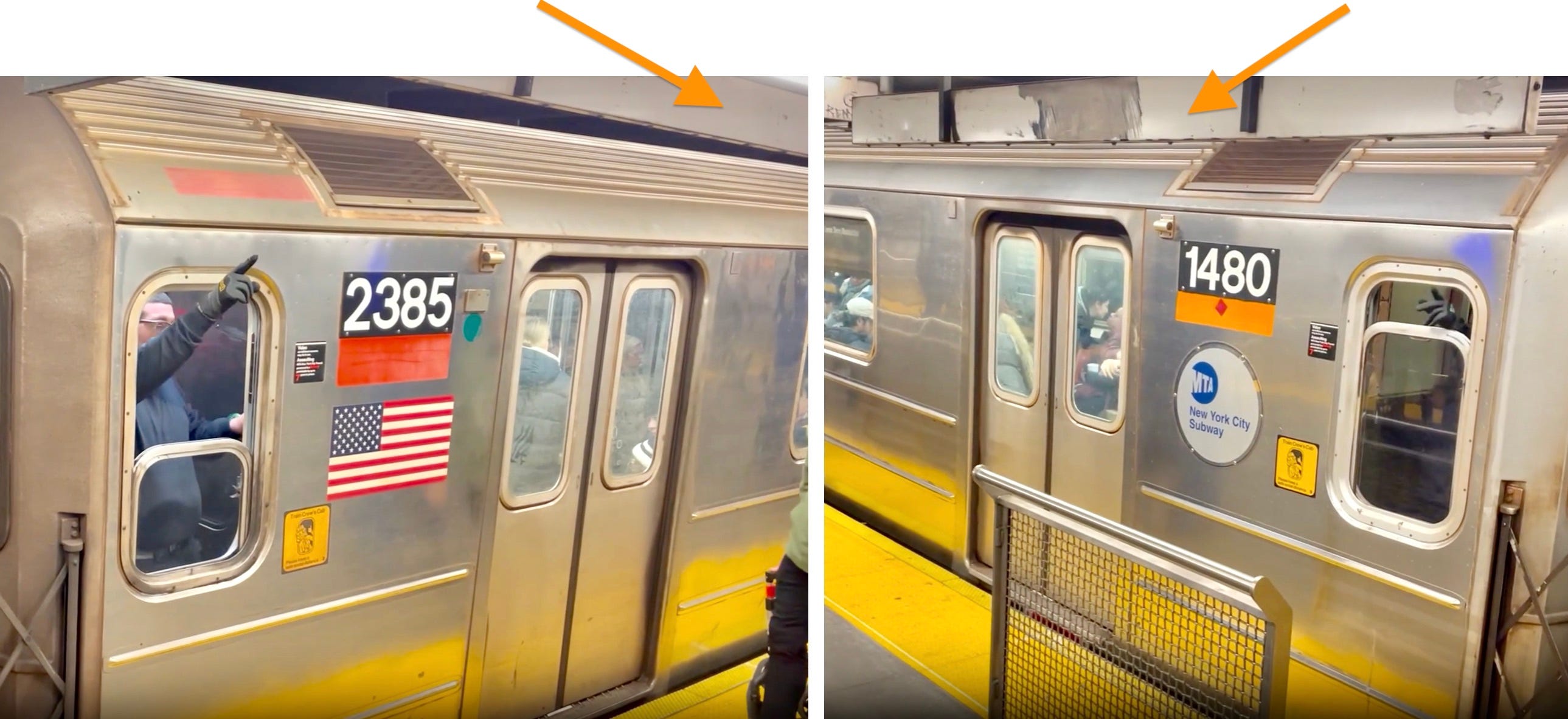
As you can see, each conductor is pointing at a long, narrow white panel that’s been installed above the edge of the platform. But here’s the thing: While most people on the platform just see the white side of that panel, the side facing the conductor’s booth has a design:
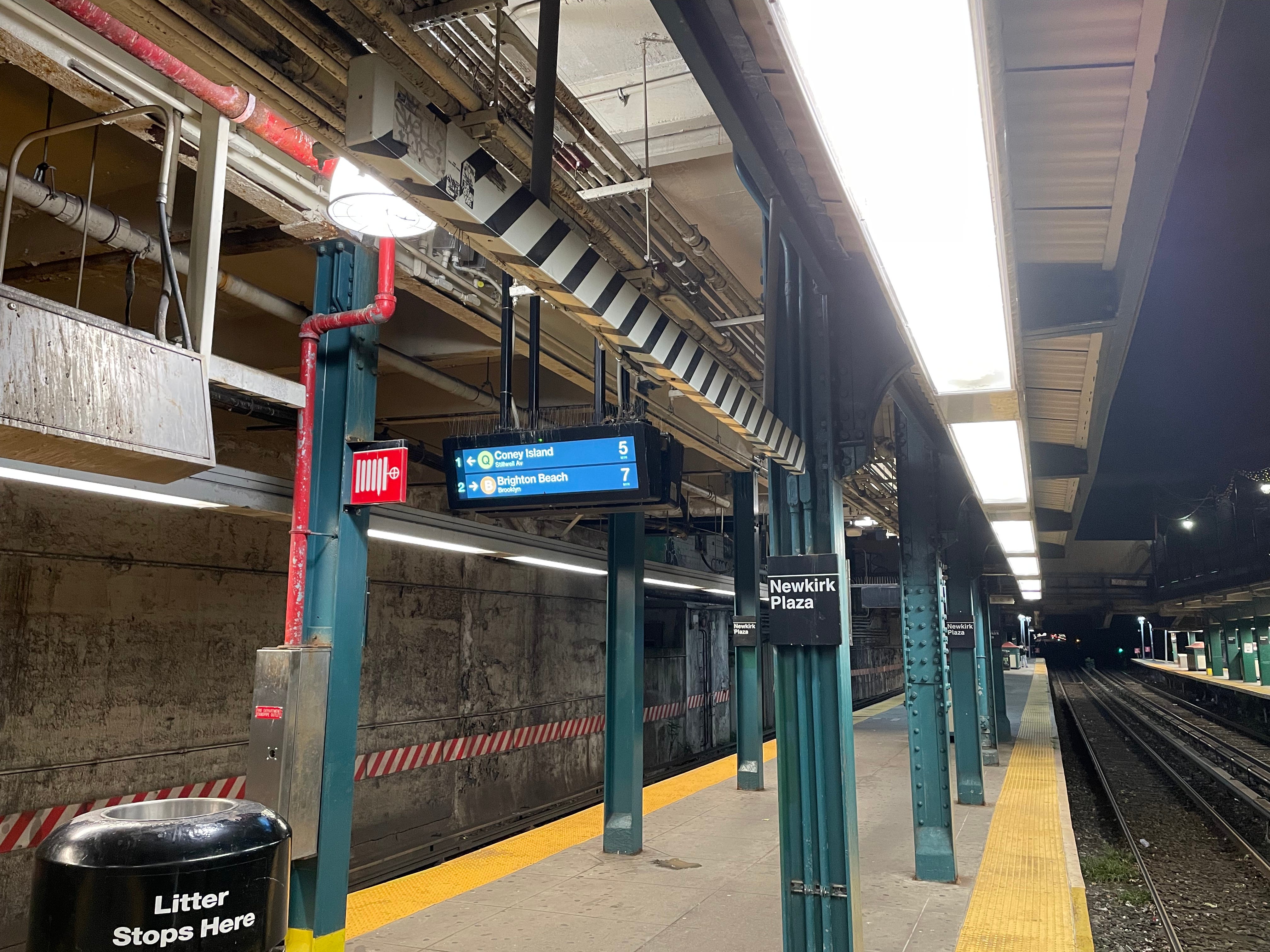
That black-and-white striped panel is called a zebra board. There’s one on every platform throughout the New York City subway system. They’re situated near the center of the platform to align with the conductor’s booth, which is in the train’s center car. The conductors have been trained to acknowledge the zebra board by pointing at it before opening the train doors. If the conductor’s booth is aligned with the zebra board, that means the train is properly aligned on the platform. Conversely, if the conductor looks out and doesn’t see the zebra board, that means the train has either overshot or undershot its proper stopping point, and the conductor should therefore not open the doors because doing so would be a safety hazard.
This system is called pointing and calling (or sometimes pointing and acknowledging). It’s been used in New York’s subways since 1996, but it was pioneered over a century ago in Japan and is also used in China, Taiwan, and Toronto. The idea is that pointing at a specific graphic requires a high degree of engagement by the train conductor’s brain, eyes, and hands, and is therefore more effective than just telling the conductor to look for the zebra board.
Although the zebra board is always installed in the center of the platform, there’s a surprising degree of inconsistency in how they’re positioned. As we’ve just seen, many of them are hanging down from above. But others are mounted on the station wall, as seen in these next three photos:
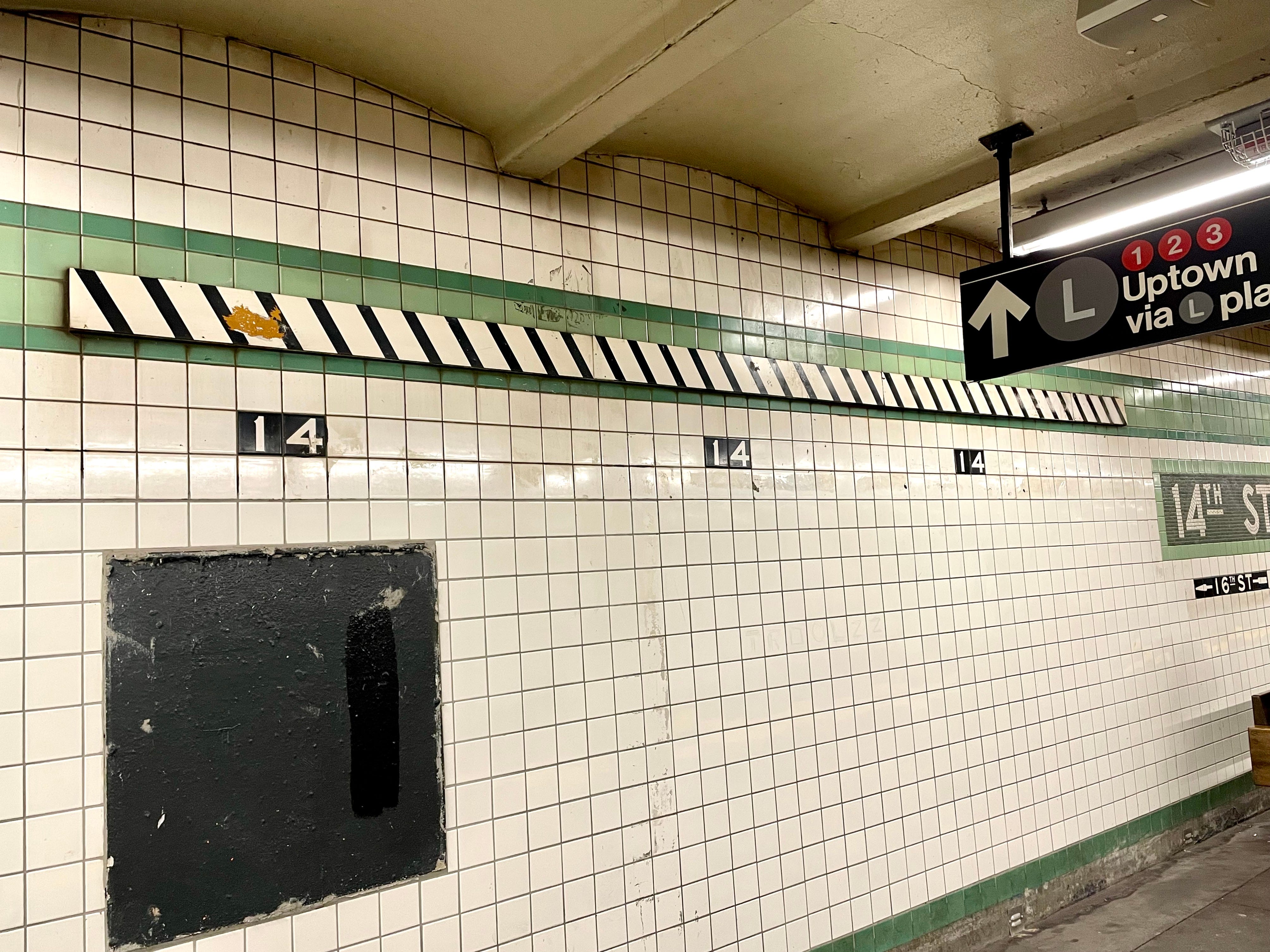
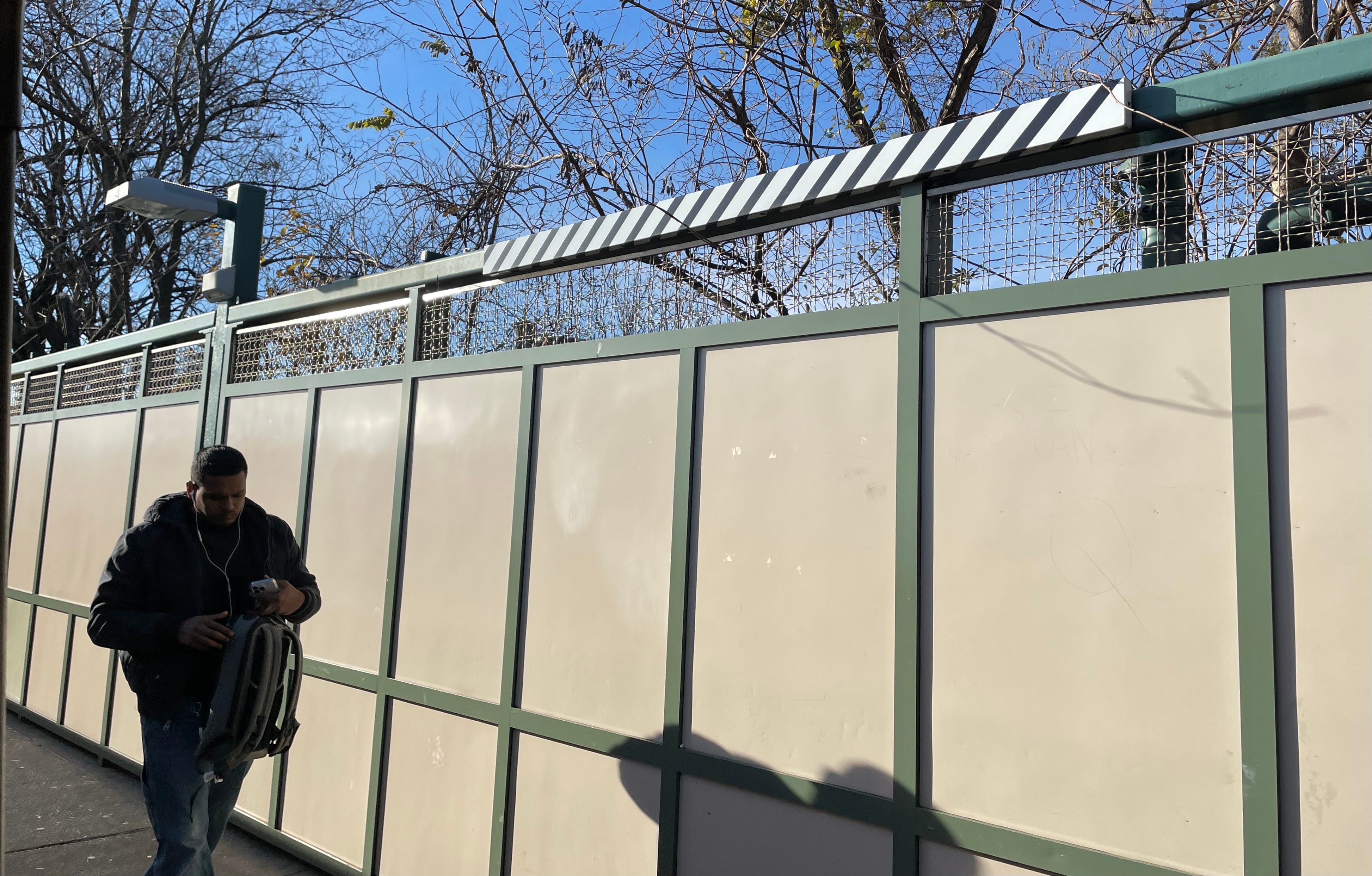
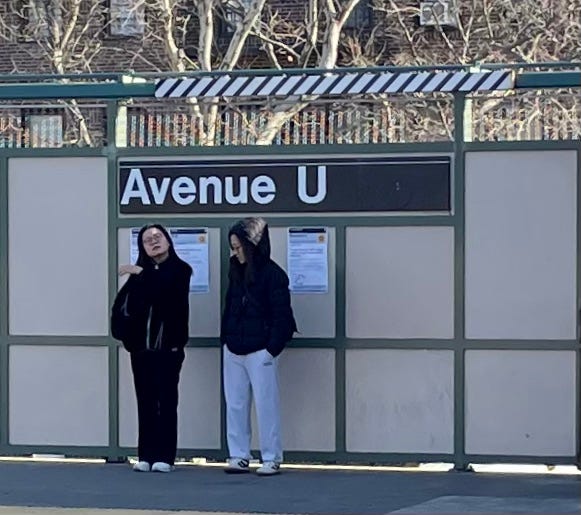
So the direction in which the conductor points — up, straight ahead, or somewhere in between — generally depends on the zebra board’s position. Meanwhile, if you look at those last few photos, you’ll see another inconsistency, this time regarding the direction of the stripes, which of course I find incredibly irksome.
And there’s more: Before the train can depart the station, the conductor is supposed to look all the way to each end of the platform to ensure that nobody is stuck in one of the doors. But some of the older stations have curved platforms, making it impossible for the conductor to see around the bend. Those stations have video monitors that show the conductor what’s happening at the far ends of the platform, and those monitors are right where the zebra board would be, which leads to still more inconsistencies. Sometimes, for example, the zebra board is placed above the monitors:
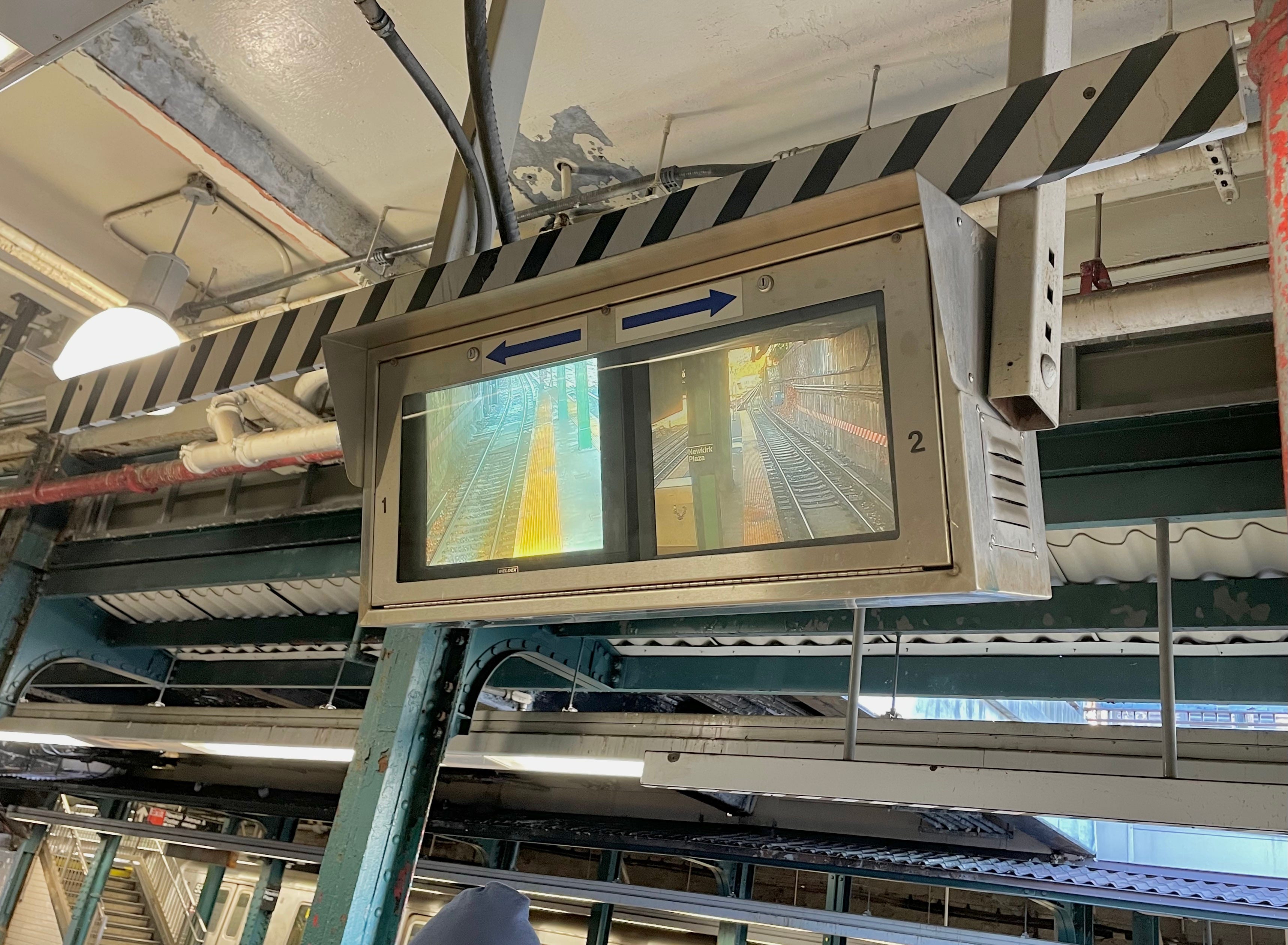
In other instances, the zebra board is positioned below the monitors:
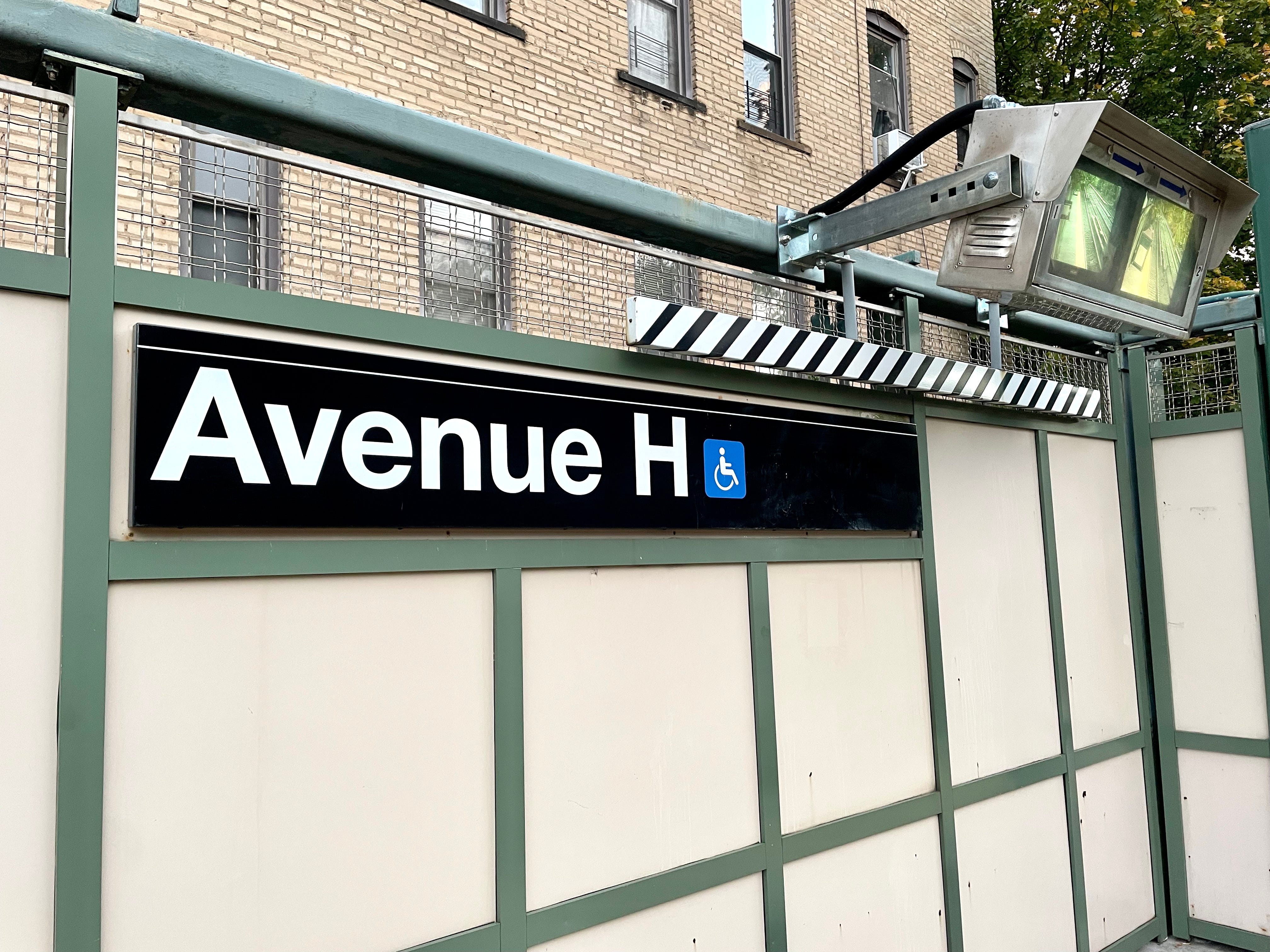
But my favorite situation is when they split the zebra board in two so it sort of bookends the video monitors — with some zebra-striped tape added to the monitors for good measure:
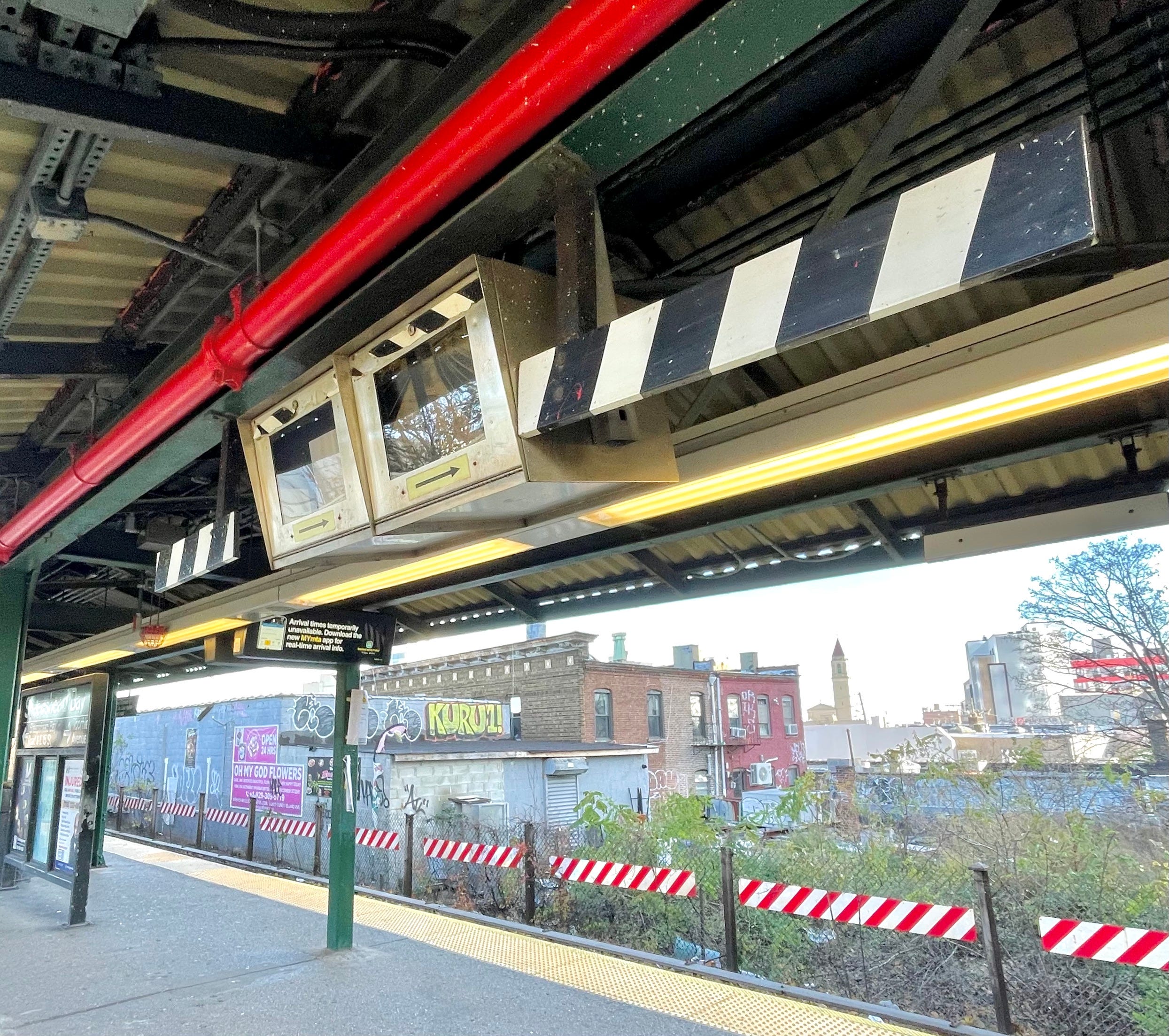
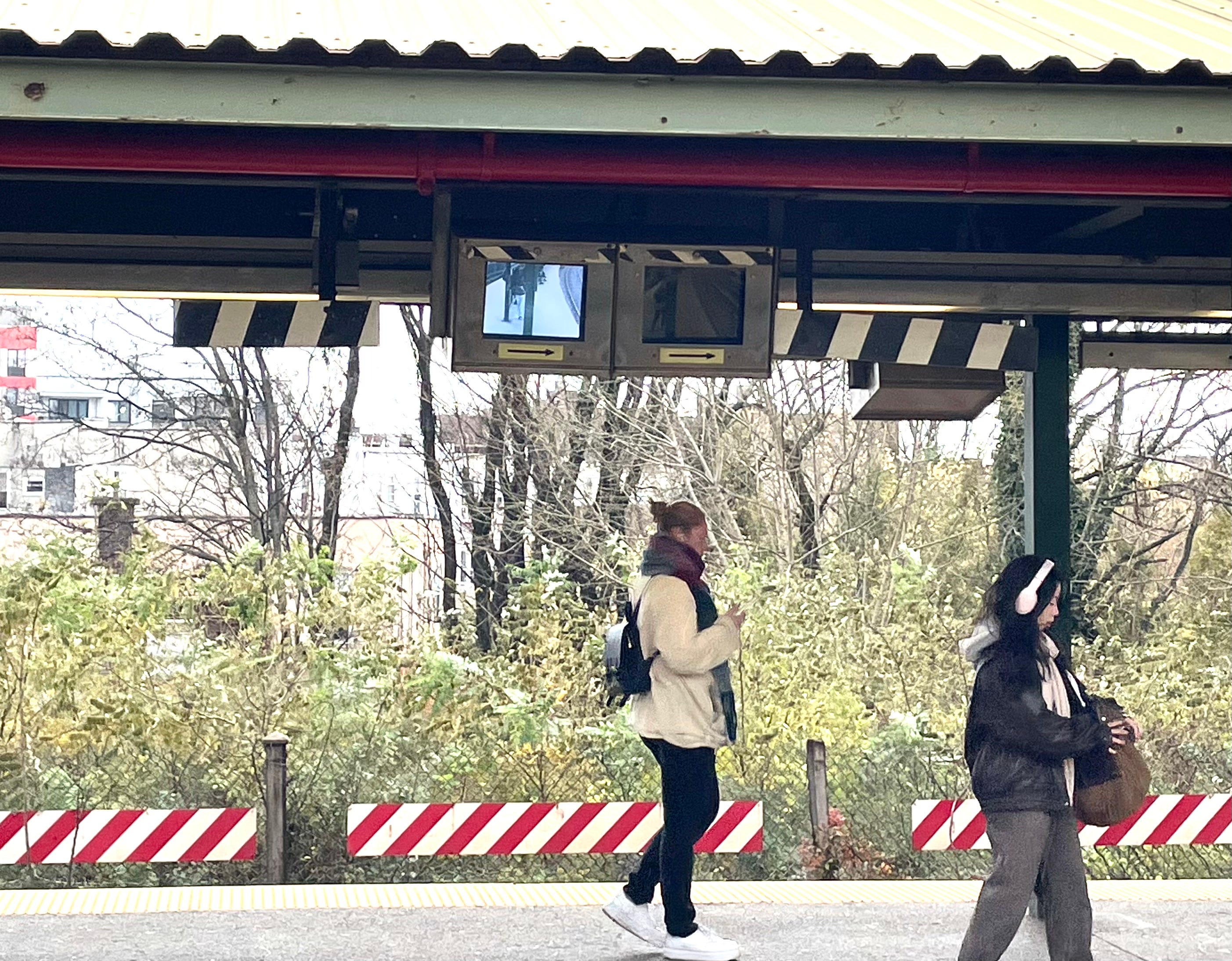
In yet another inconsistency, the zebra boards in those last two photos clearly have thicker black stripes than any of the other boards shown in this article. Grrrr. (And since you’re probably wondering, the red-and-white striped panels in those last two photos are hazard warnings, to help make the chain-link fences more visible.)
The one constant throughout all these inconsistencies is that the subway conductors always point — always! This has occasionally led some creative New Yorkers to celebrate the conductors by standing beneath the zebra boards with fun signs, like so:
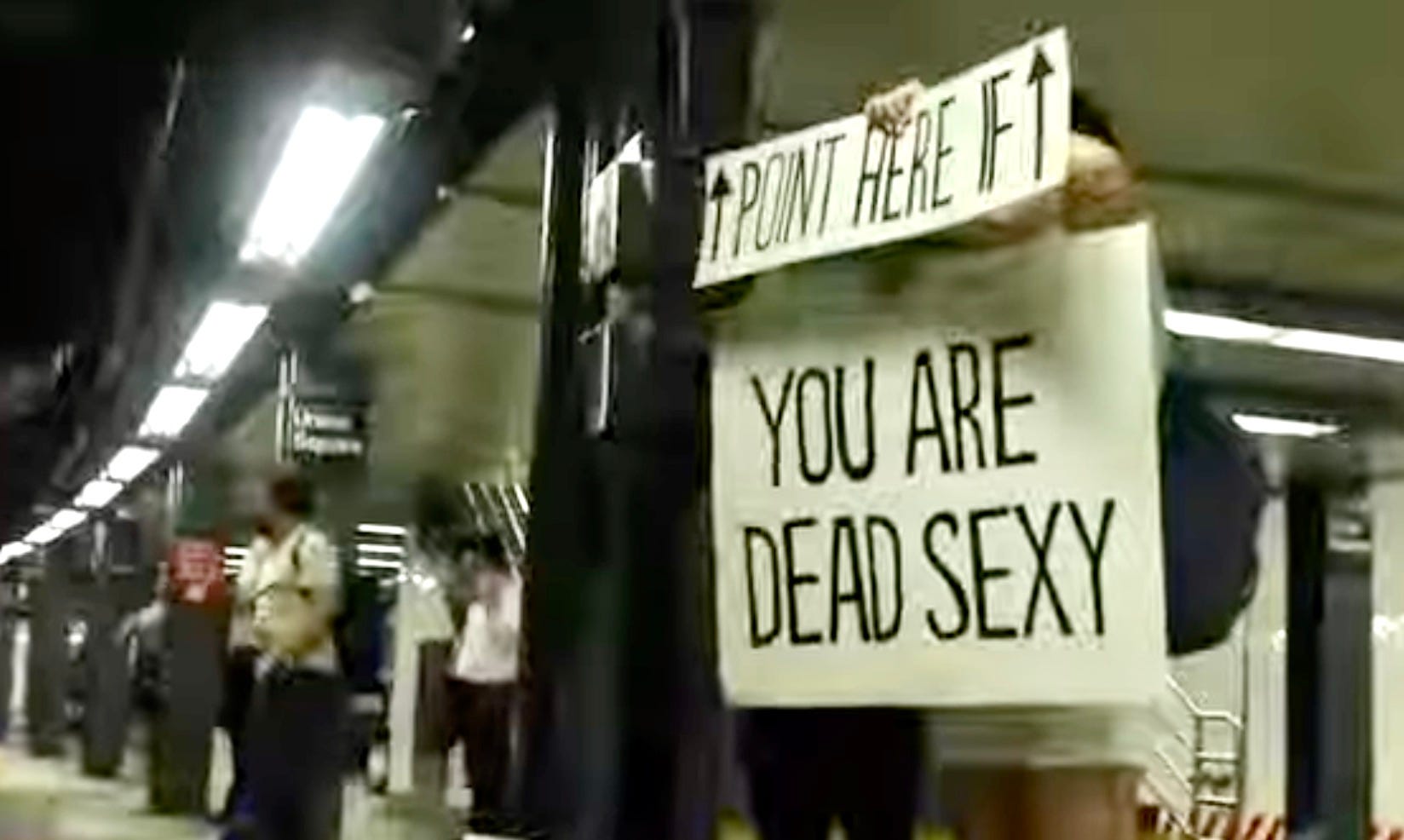
I’ve known about zebra boards for many years but for some reason had never thought to write about them until I recently attended a subway sign sale and noticed that they had some zebra boards available. You can see one in this photo:
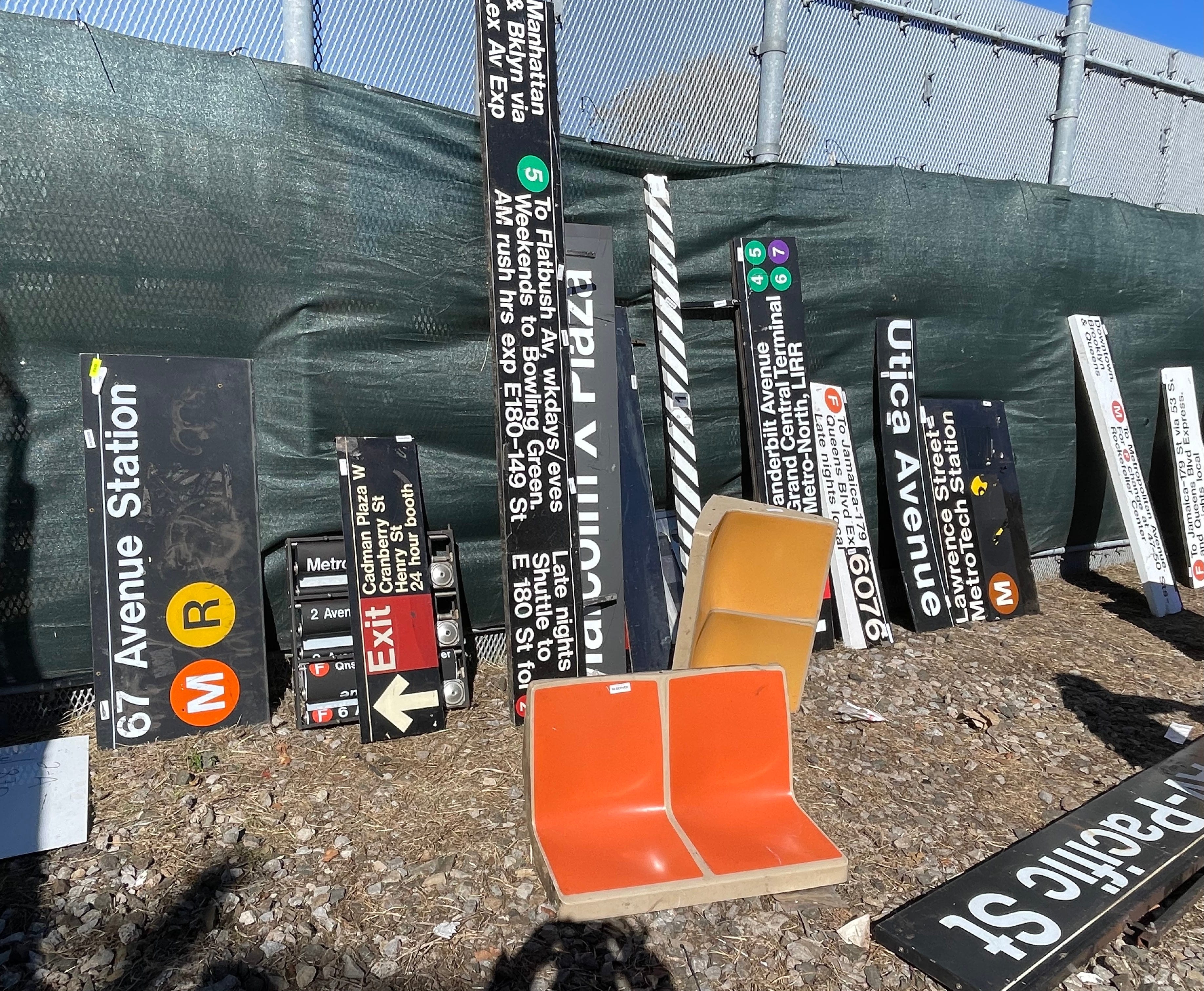
Sitting there amidst all the flashier signs, the zebra board is classically inconspicuous, plus it has a very functionally specific purpose. Now I’m kind of regretting that I didn’t purchase it! Maybe I’ll nab one at next year’s sign sale.
As I mentioned earlier, Toronto’s subway system also uses pointing and acknowledging. But their program, which was rolled out in 2014, doesn’t use zebra boards. Instead, the conductors (or guards, as they’re called in Toronto) point at a series of colored circles and triangles:
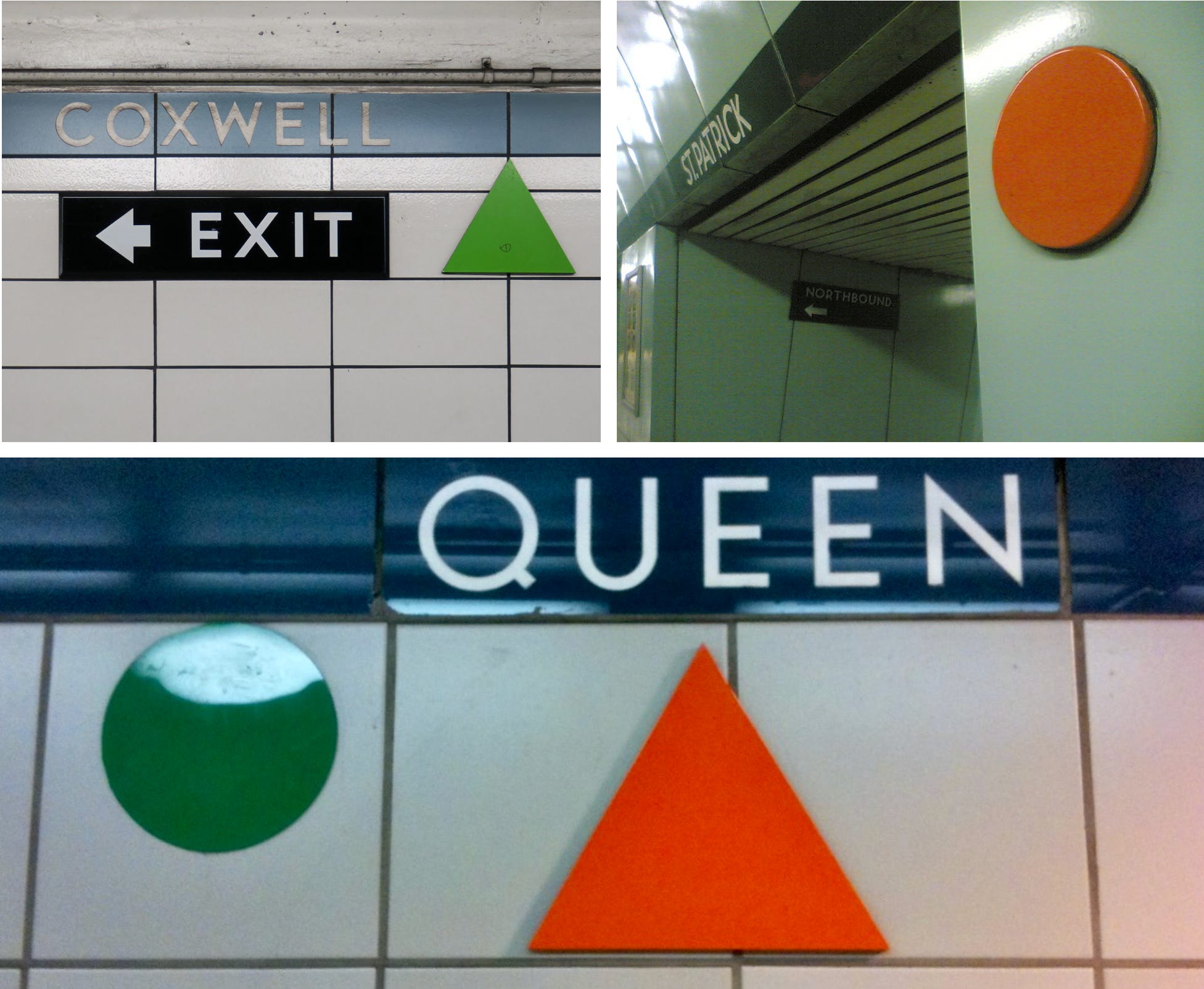
Although the graphics are different, the idea, once again, is to help ensure that the train’s doors aren’t opened until the crew has confirmed that the train is properly situated in the station. This 2014 article explains some of the specifics.
When you think about it, pointing and acknowledging can easily be adapted for everyday life. For example, whenever I’m leaving the house, I always make a point of touching my back-left pants pocket to make sure that my wallet is there. This is more of a habitual tic than a stipulated system, but on several occasions it has saved me from heading out without my wallet.
What internal systems have you folks developed? Feel free to post them in the comments.

Your Feedback Is Hereby Requested
I live in New York City, so some Inconspicuous Consumption posts, like today’s, are based on things I observe and experience here in NYC. But I realize that most of you folks don’t live in New York, so I sometimes worry about overdoing it with the NYC content. I mean, I think zebra boards are totally in the IC wheelhouse, but I could understand if some readers just don’t care about something that’s so NYC-specific.
So with that in mind, please help me out by participating in the following poll:
Thanks in advance for your feedback, and feel free to post additional thoughts on this (or anything else) in the comments.
Paul Lukas has been obsessing over the inconspicuous for most of his life, and has been writing about those obsessions for more than 30 years. You can contact him here.
I voted in favor of NYC content, and I’d like to explain because I’m someone who doesn’t really like NYC very much. But I don’t think of your NYC content as “NYC content”. When you live in a city, any city, you tend to spend most of your time in a few neighborhoods, occasionally venturing further afield, usually for an event. Most of your stuff is neighborhood content. If you lived in Miami instead of Brooklyn, you’d still write about stuff you came across; it would just be more about beaches and alligators instead of subways and BOMPs. You’re not covering an NYC beat; you’re covering an “interesting things you come across” beat.
But also, even if you wrote exclusively about NYC, I’d still probably read it because I find you to be an enjoyable writer. I like watching you work through an idea, seeing how you follow a train of thought (and pointing at the zebra board when the train of thought arrives at the station!).
After I'm done using my stove, and turned off the burners I've used, I point at each burner's control knob (and the oven light and fan switches) to ensure it's off (this reduces my worry that I will burn my house down). I believe I also mutter "off" under my breath.