

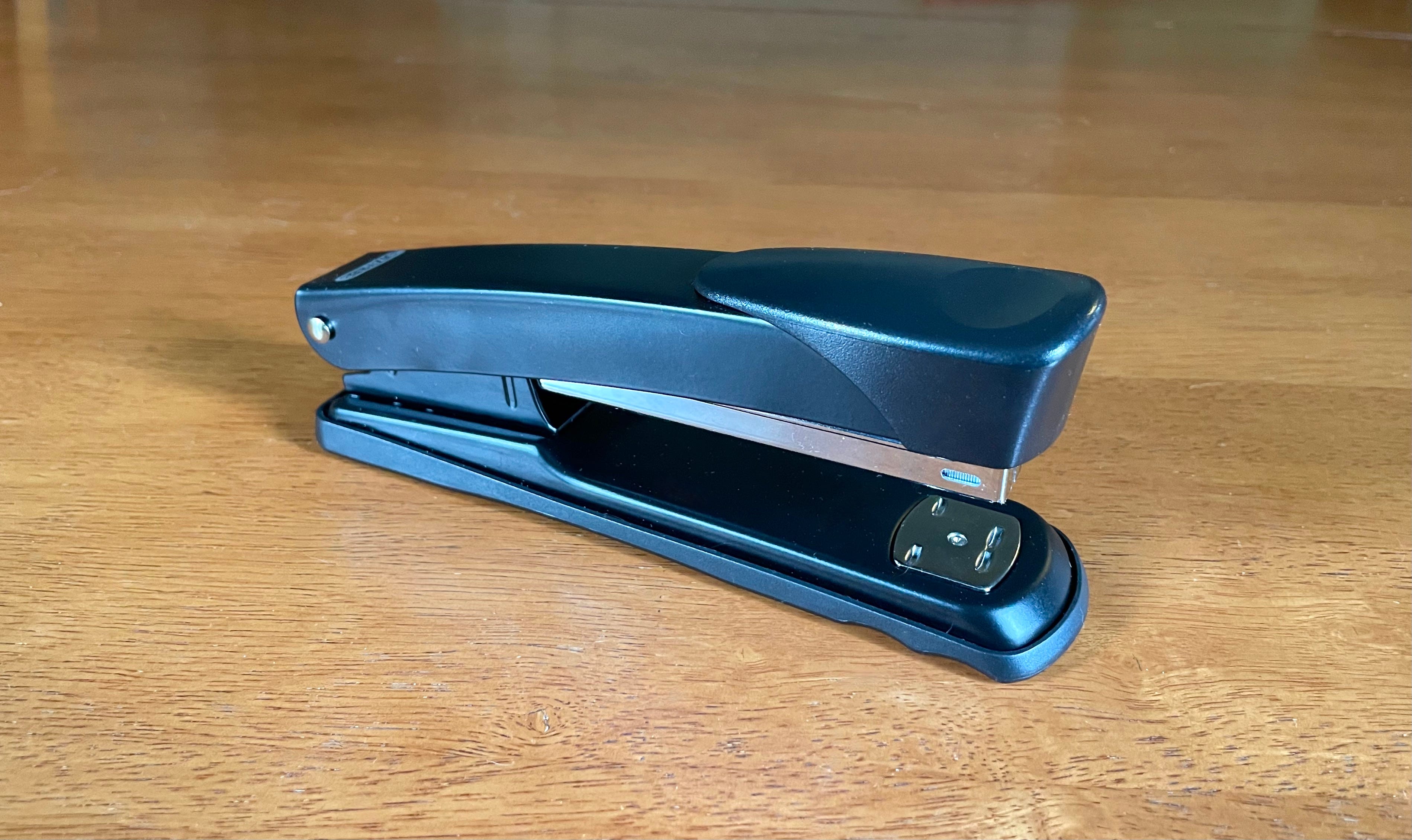
The first stapler was patented in 1877. But the modern version, like the one shown above, was pioneered in 1941. We’ve all used this type of device countless times, and you might think there’s nothing new to learn about it. But today I want to focus on one specific detail: the metal plate near the front of the stapler’s base.
That plate, which bends the legs of the staple into proper paper-fastening position, is called the anvil — a tremendously satisfying name that makes stapling feel akin to blacksmithery. Anvils come in a surprising variety of shapes, but the one thing they tend to have in common is that they’re ripe subjects for pareidolia, which is a fancy way of saying they look like faces.
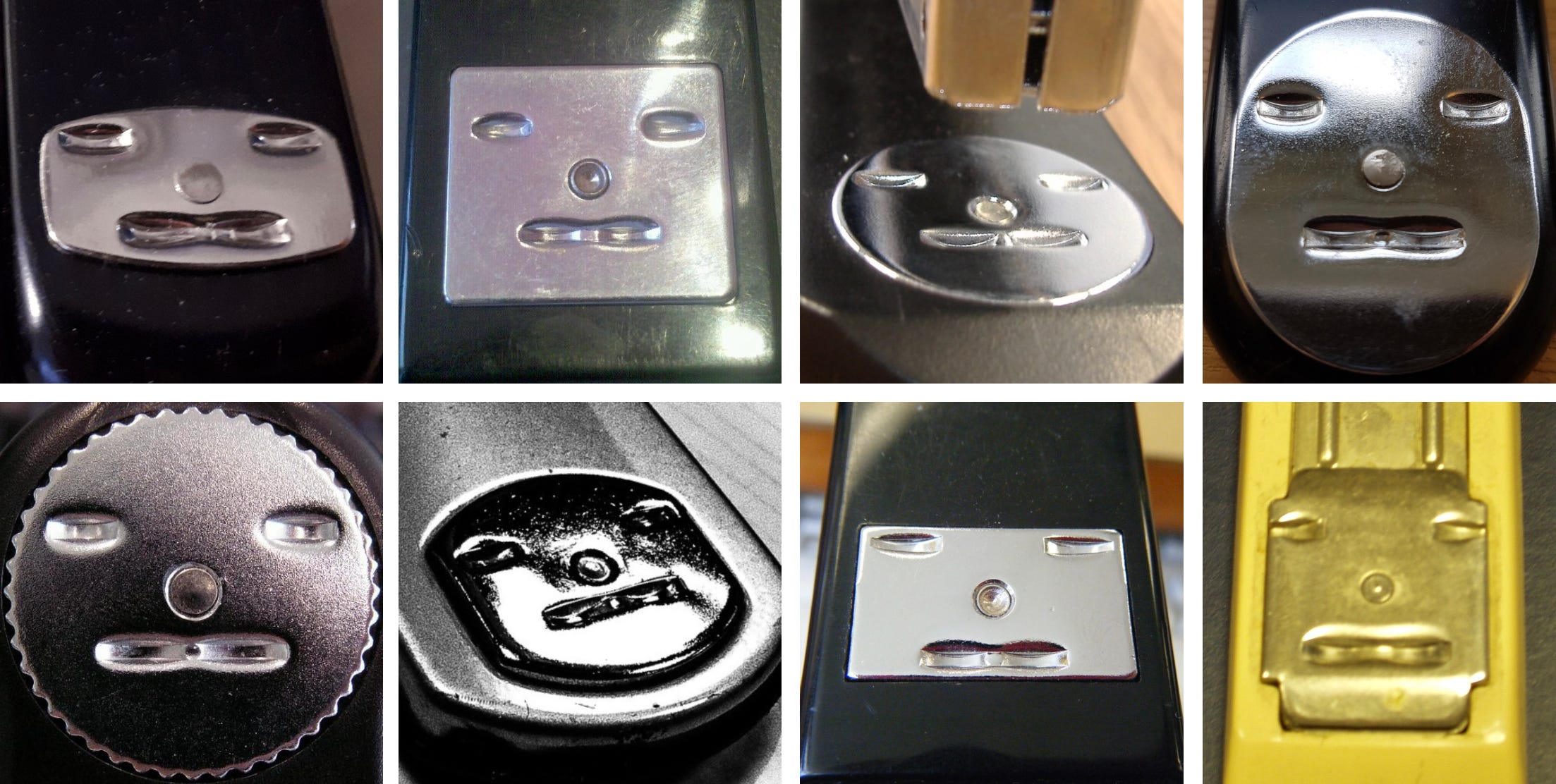
The anvil faces remind me a bit of the “grimacing face emoji”: 😬. And when you think about it, that makes sense — you’d probably grimace too if your job was to have sharp metal tines injected into the corners of your mouth over and over again.
At some point — for me I think it was during high school — most of us learn that the anvil is not fixed in place but can be rotated so that the face is upside-down, like so: