

Note: This article is a updated version of a piece I originally wrote in 2014 for the now-dormant design website re:Form. A dozen years later, it still resonates as a fun discussion of a classically inconspicuous phenomenon, so I’ve decided to reproduce it here on IC. It does not have a paywall. Enjoy! — Paul
We’re often told that urban streets conceal a hidden subterranean world of water mains, sewer lines, electrical wiring, and more. That’s true enough, but the surface of the urban roadway — the blacktop that we navigate each day by car, bike, and foot — presents a complex world of its own. Where the untrained eye may see only pavement, lane markers, and crosswalks, a person who knows how to “read the street” will see a detailed system of painted codes and symbols, markings on manhole covers and storm drains, and small but telling records of construction work, all of which combine to form a language that tells the street’s story.
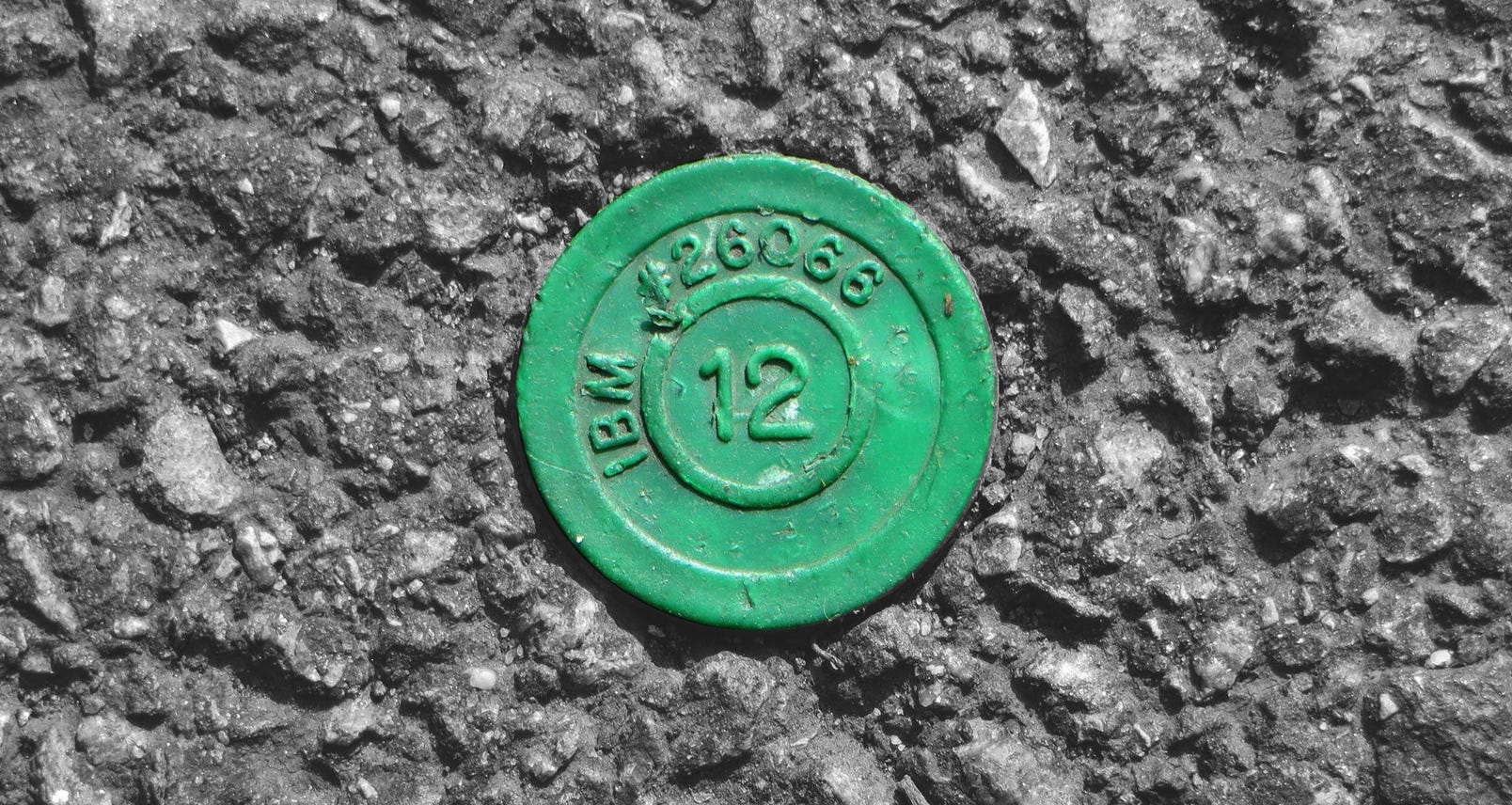
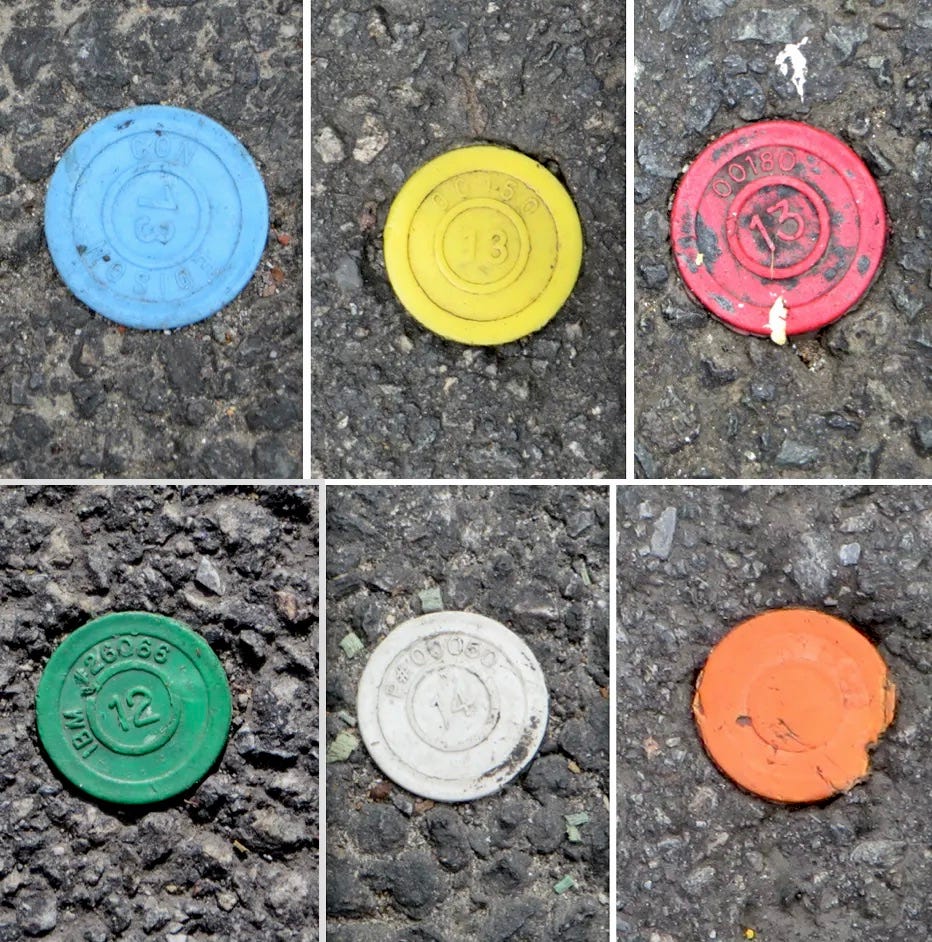
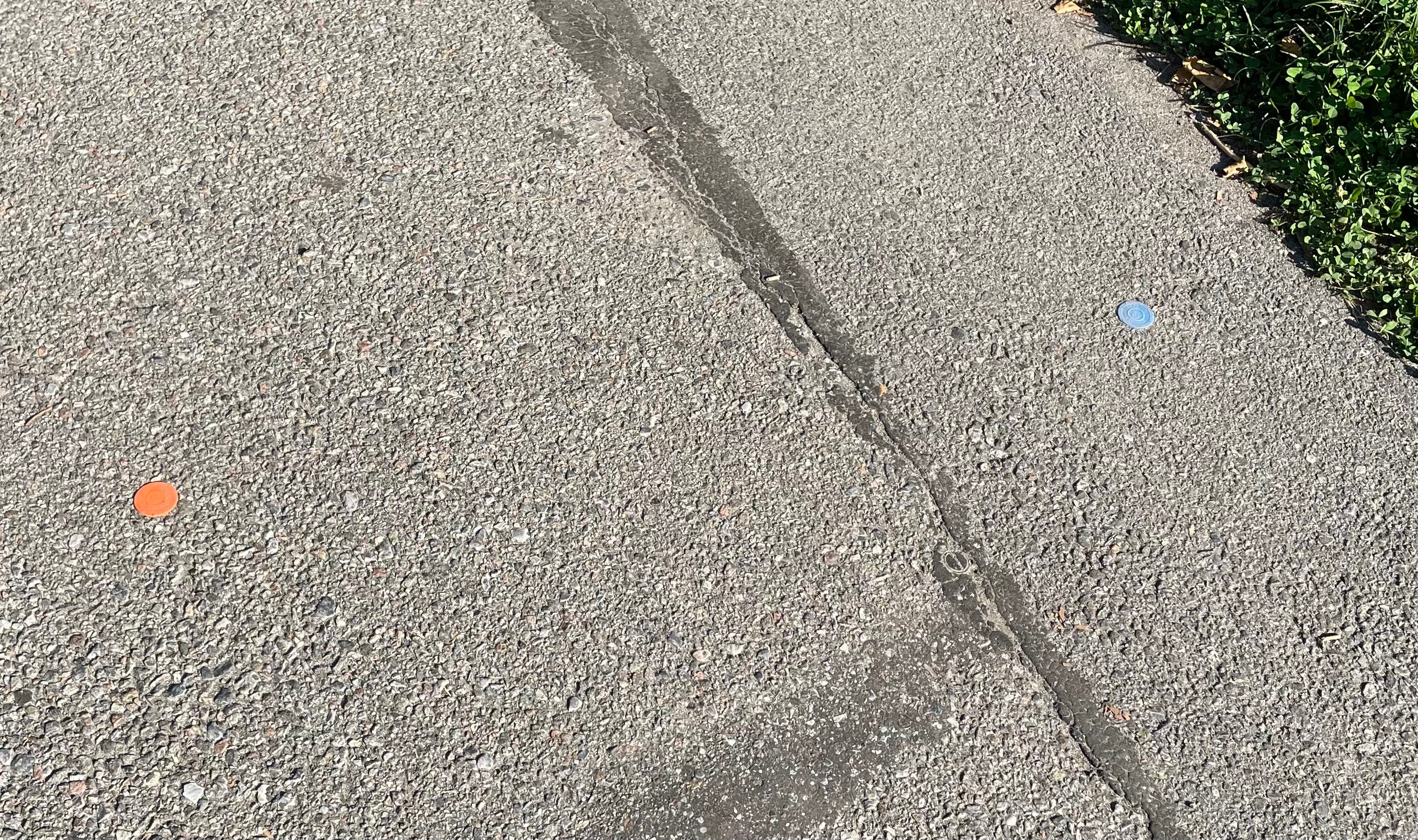
In New York, where I live, that language includes a particularly intriguing element: a series of circular plastic markers embedded in the roadway, each measuring an inch and a half across. Appearing in a variety of colors and stamped with a jumble of words and numbers, they have a bit of Pop Art feel, sort of like poker chips.
Once you start noticing them, you can’t stop — they appear on virtually every city block. At first glance they seem to be randomly distributed, but upon closer inspection it becomes apparent that they appear only on asphalt patches — spots where the roadway has been torn up by a utility or contractor and then repaved.
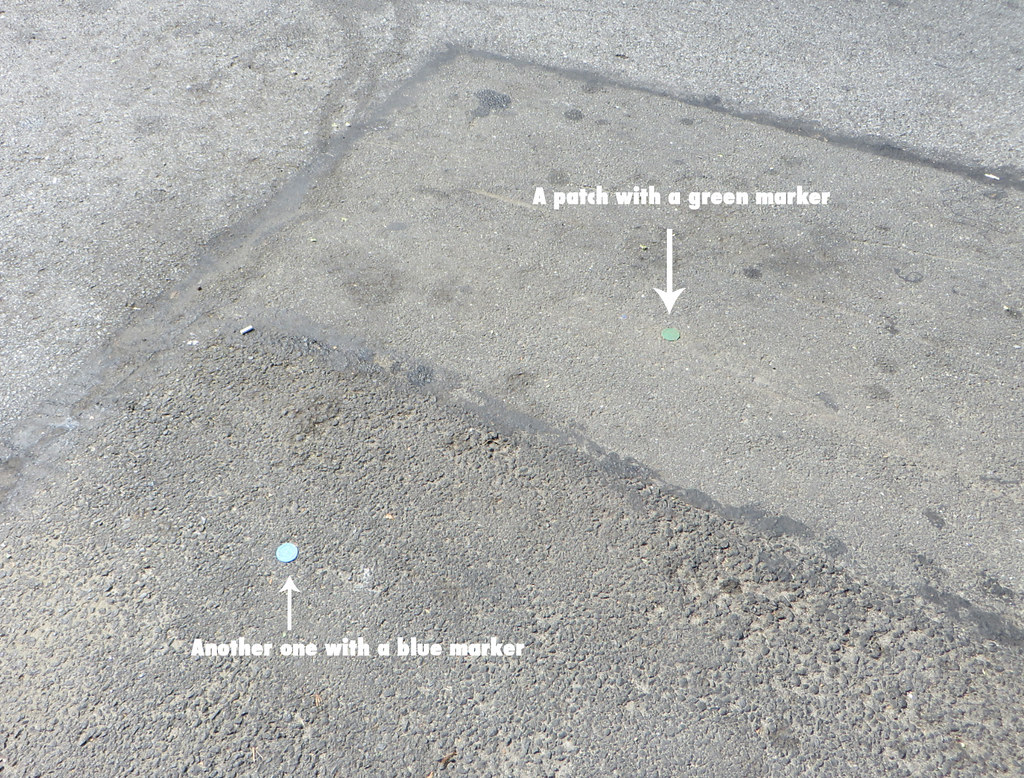
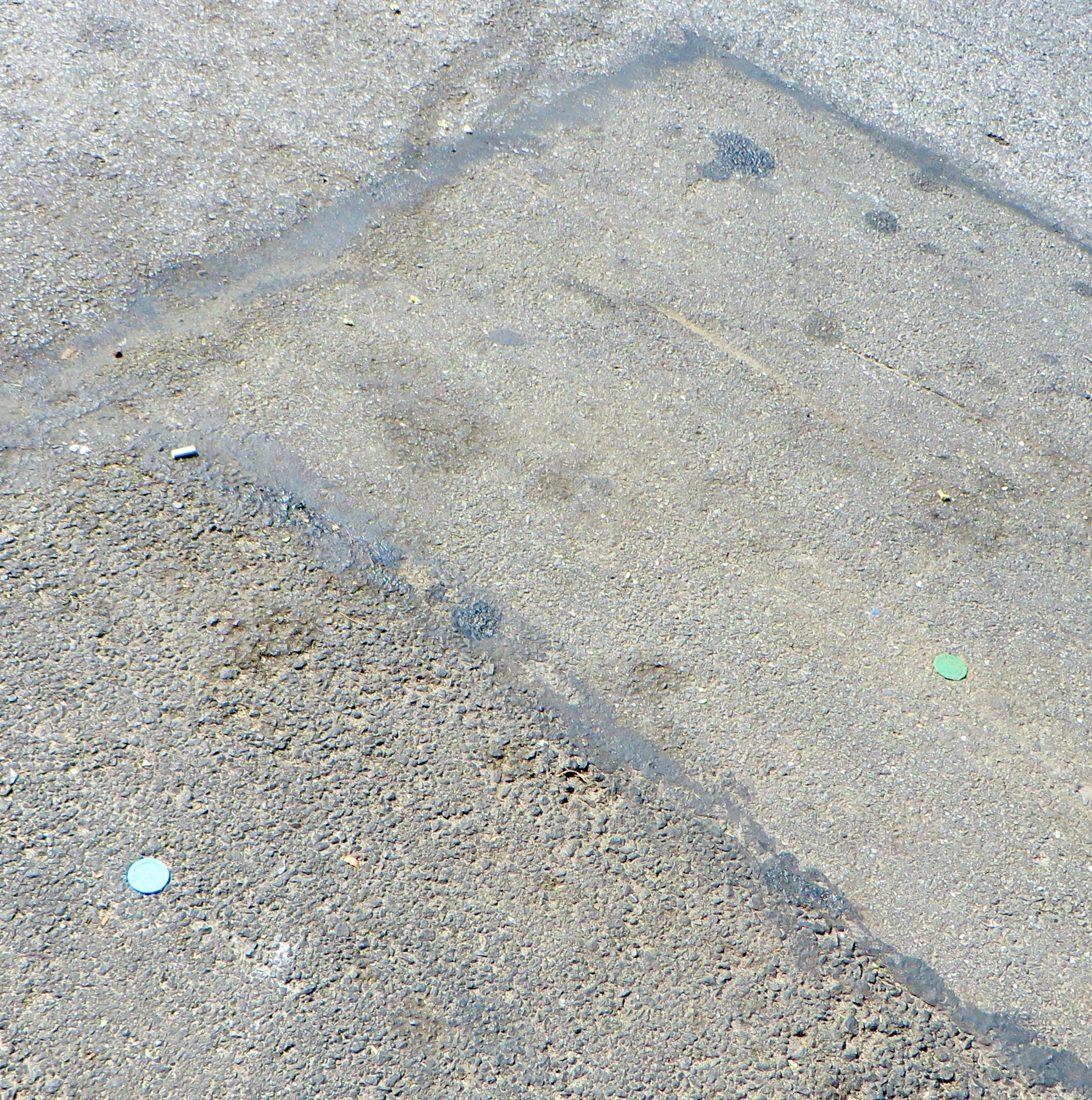
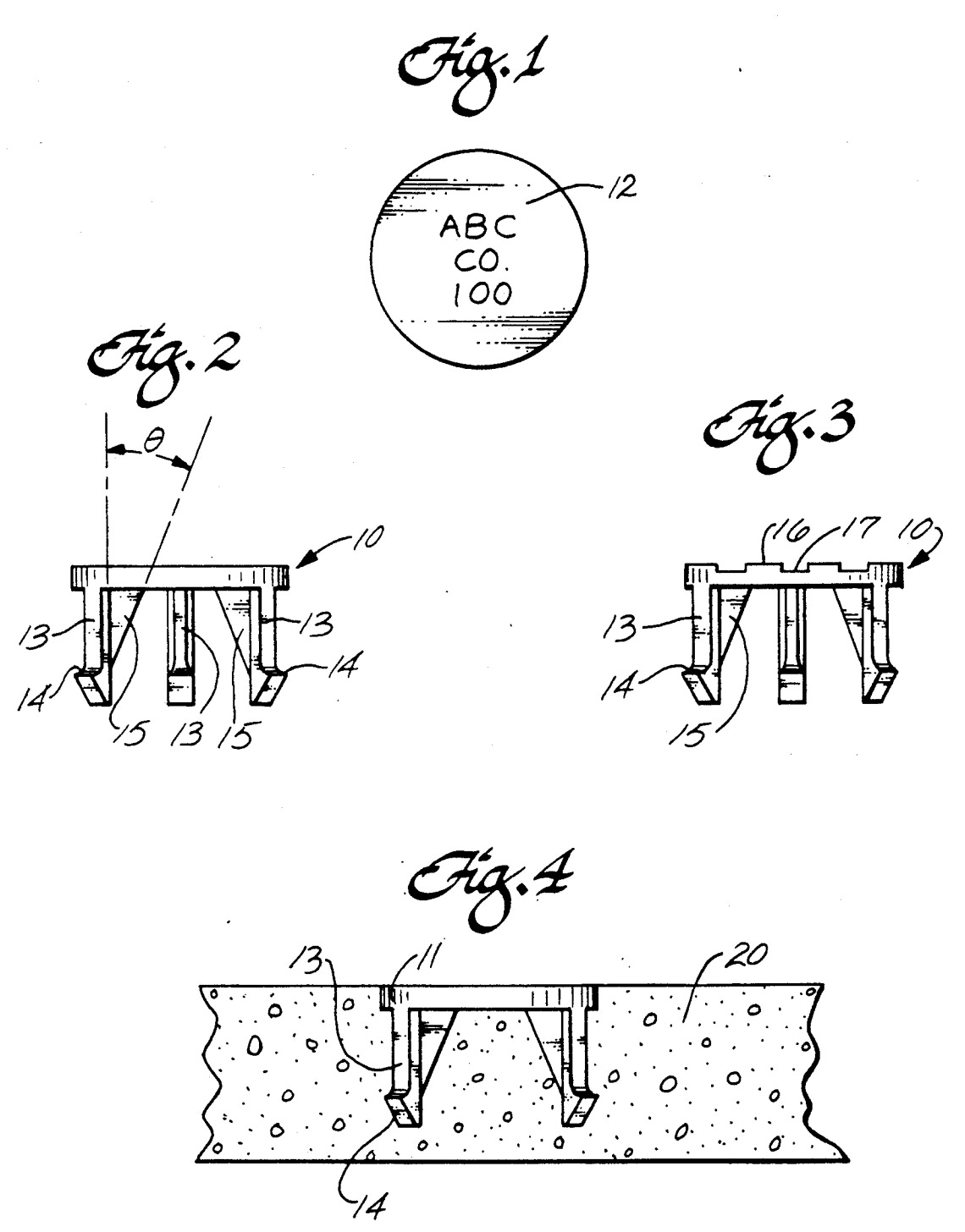
These markers are called A-tags (short for asphalt tags). They’re often used in other municipalities as “Call Before You Dig” warning markers, but in New York they’ve been adapted to create a recordkeeping and accountability system. When a utility or contractor is issued a permit to excavate a hole or trench in the roadway — something that happens hundreds of thousands of times a year in New York — the asphalt patch that’s applied at the end of the job must include an embedded A-tag. Each tag has three anchor legs, which, along with a bit of epoxy and a finishing back-and-forth by the guy operating the steamroller, help keep the tag in place.
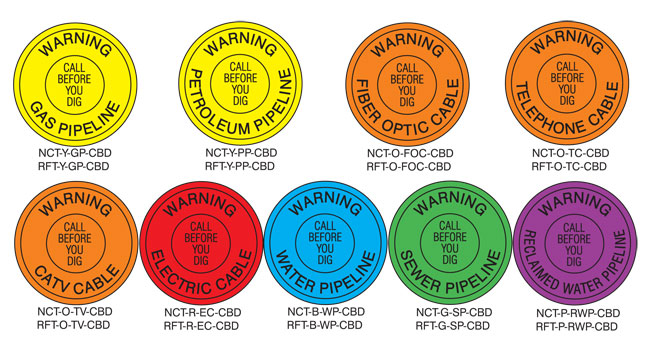

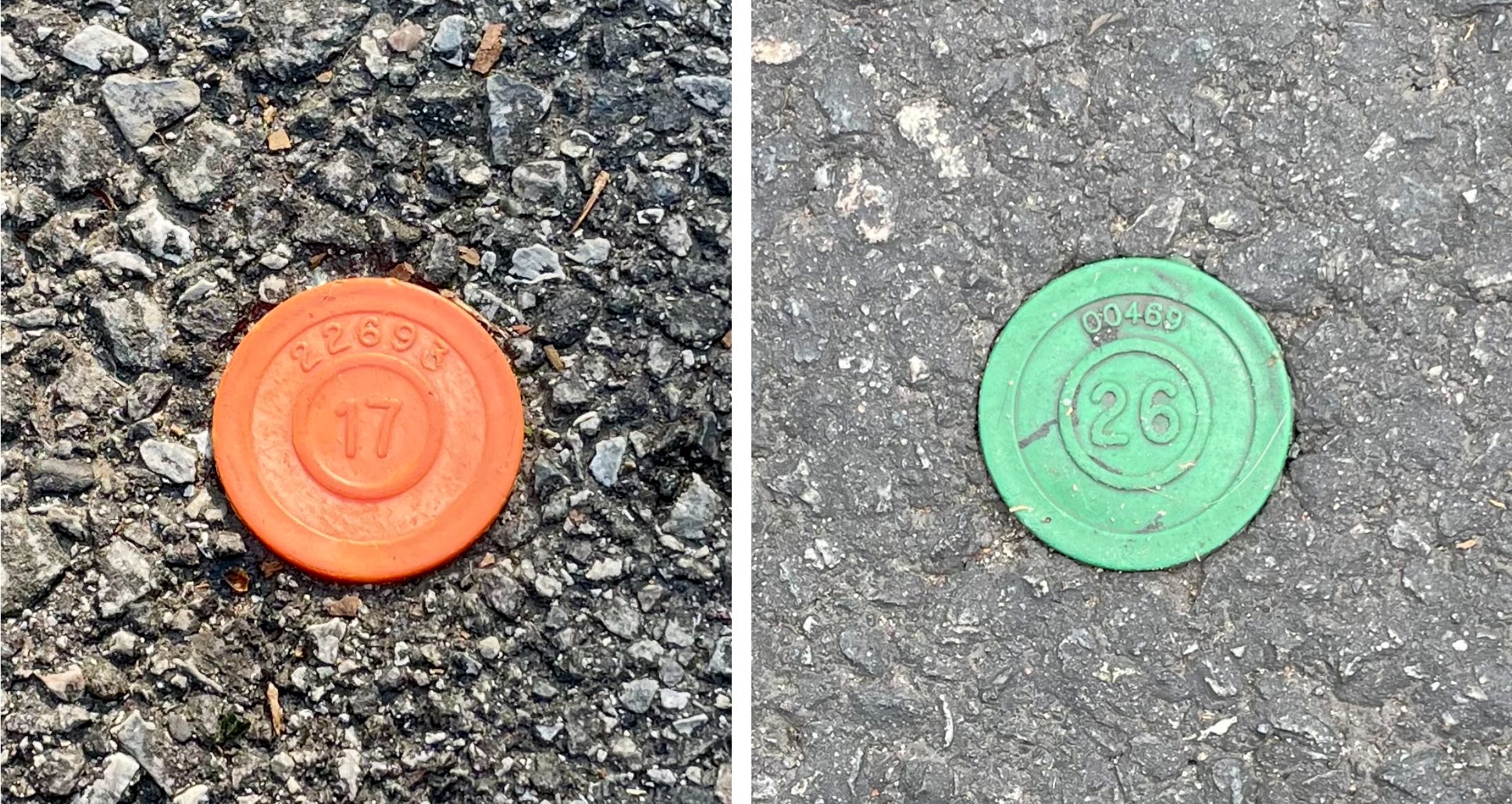
Each tag carries a number indicating the year that the asphalt was patched (“18” for 2018, “23” for 2023, etc.), each broad contracting category has its own color, and each individual contractor or utility is identified either by name or by a unique five-digit number. All of this allows city officials to identify who worked on a given patch, which comes in handy if, say, the patch is starting to sink or buckle and the contractor needs to come back and fix it, or if someone is suing the city after a street-related accident and wants to know the names of everyone who worked on a particular block in the past five years.
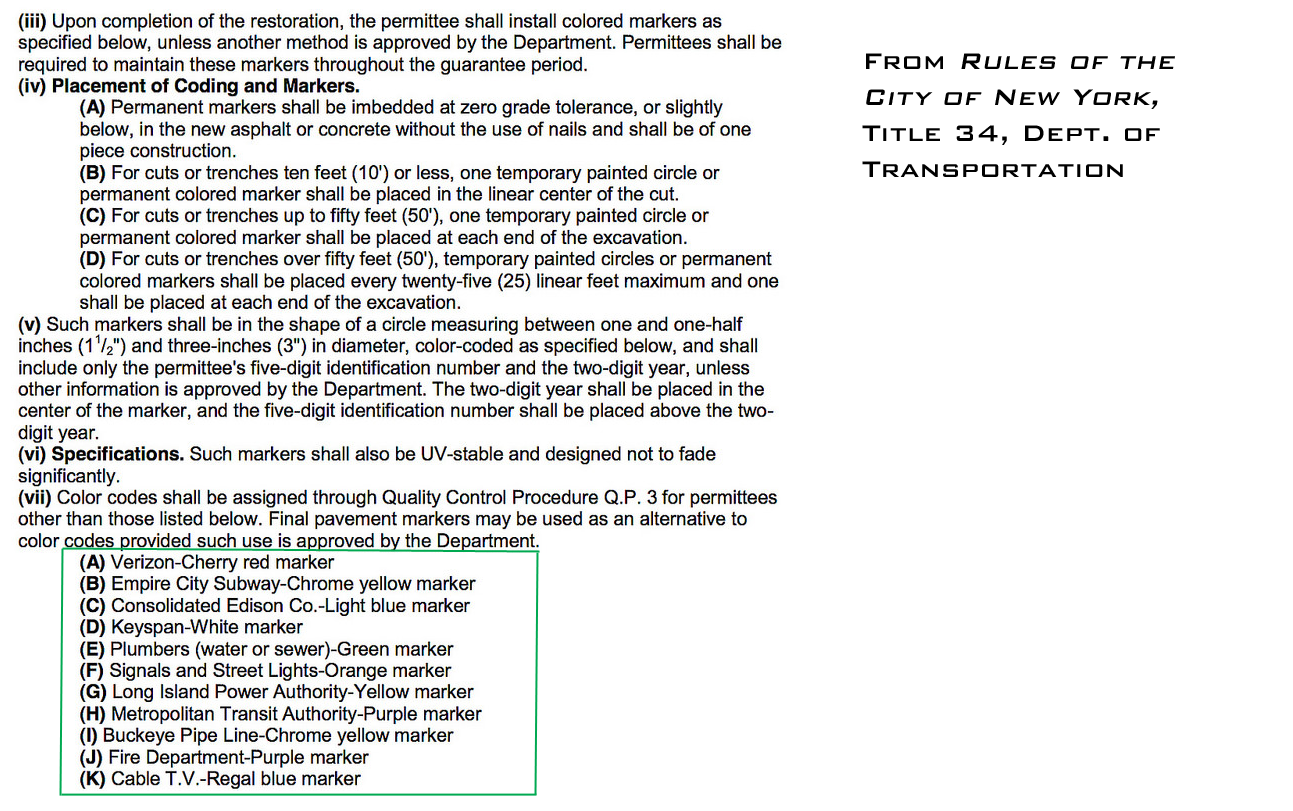
“Before the A-tags, we used painted marks,” says Joseph Yacca, Director of Operations for the New York City Department of Transportation, who helped initiate New York’s A-tag program in 2006. “But the painted marks were just color-coded — they didn’t identify the individual user. For example, every plumber was green, so if you found a green marker, you knew you were looking for a plumber, but you didn’t know who. So we used to have to pull all the old permits and so on. Now we can pinpoint it much faster.”
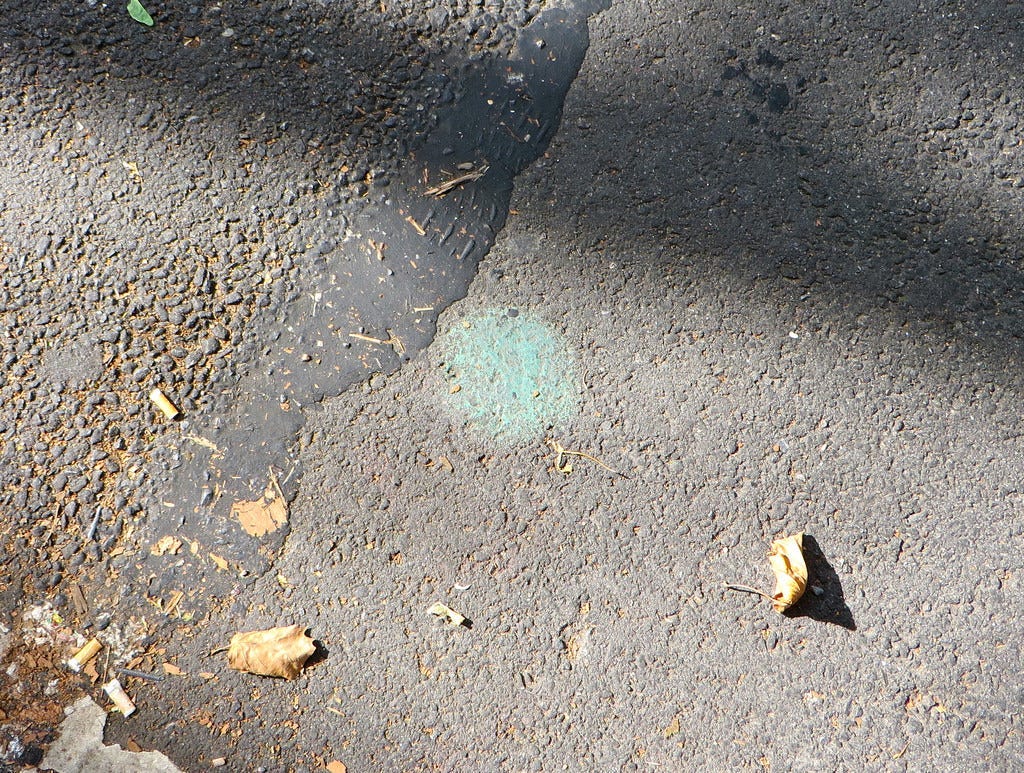
Yacca says contractors like the A-tags, too. “There was initially some resistance, because they viewed it as another annoying regulation, but now they’ve seen the value of it,” he says. “Let’s say three or four contractors have been working on a new row of townhouses. There may have been violations issued to the wrong person because they were in the same area. This new system solves that problem.”
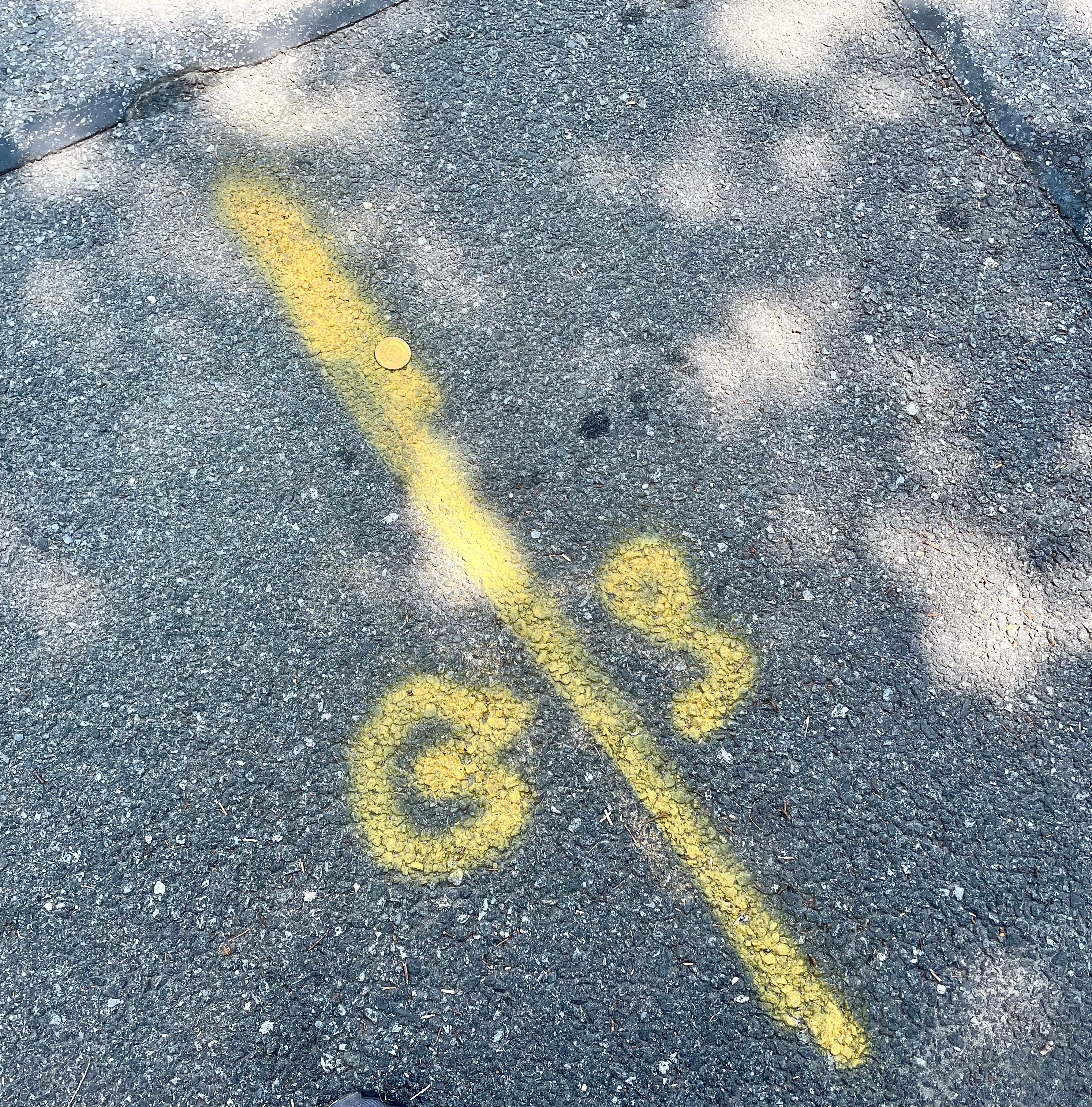
A-tags also allow laypeople and inconspicuists to have a greater understanding of their surroundings. Once you know the system, you can start to fit the pieces together: “Oh, here’s where they put in a gas line for that new house. And this is where they connected the sewer line. And this must be from when they installed that new traffic light.” And so on.
A-tags were patented in 1991 (the official invention name on the patent application was “utility cut patch identification tag”) and brought to market by a Minnesota-based company called Rhino Markers. Rhino was later acquired by Texas-based Trident Solutions, which continues to sell A-tags today (as do several other vendors). Tom Preston, a Rhino executive, describes the little markers with a mix of nonchalance and pride. “You know that little plastic thing that holds up the center of a pizza box? It’s basically a glorified version of that,” he says. “But it’s been a really good success story — we solved a problem for New York City.”
Indeed, New York’s A-tag experience has been so positive that Boston officials started a similar program for their own streets in 2011. “It started when the mayor at the time [Thomas Menino] drove over a patch that had settled, and he wanted it fixed,” says Mark Cardarelli, Supervisor of Utility Coordination and Compliance at the Boston Public Works Department. “He called our department and we couldn’t identify who had done the patch. I checked with all the utilities, and they all said, ‘It wasn’t us!’ So I went online and saw that New York City was using these color-coded tags. I gotta give them credit for coming up with that.”
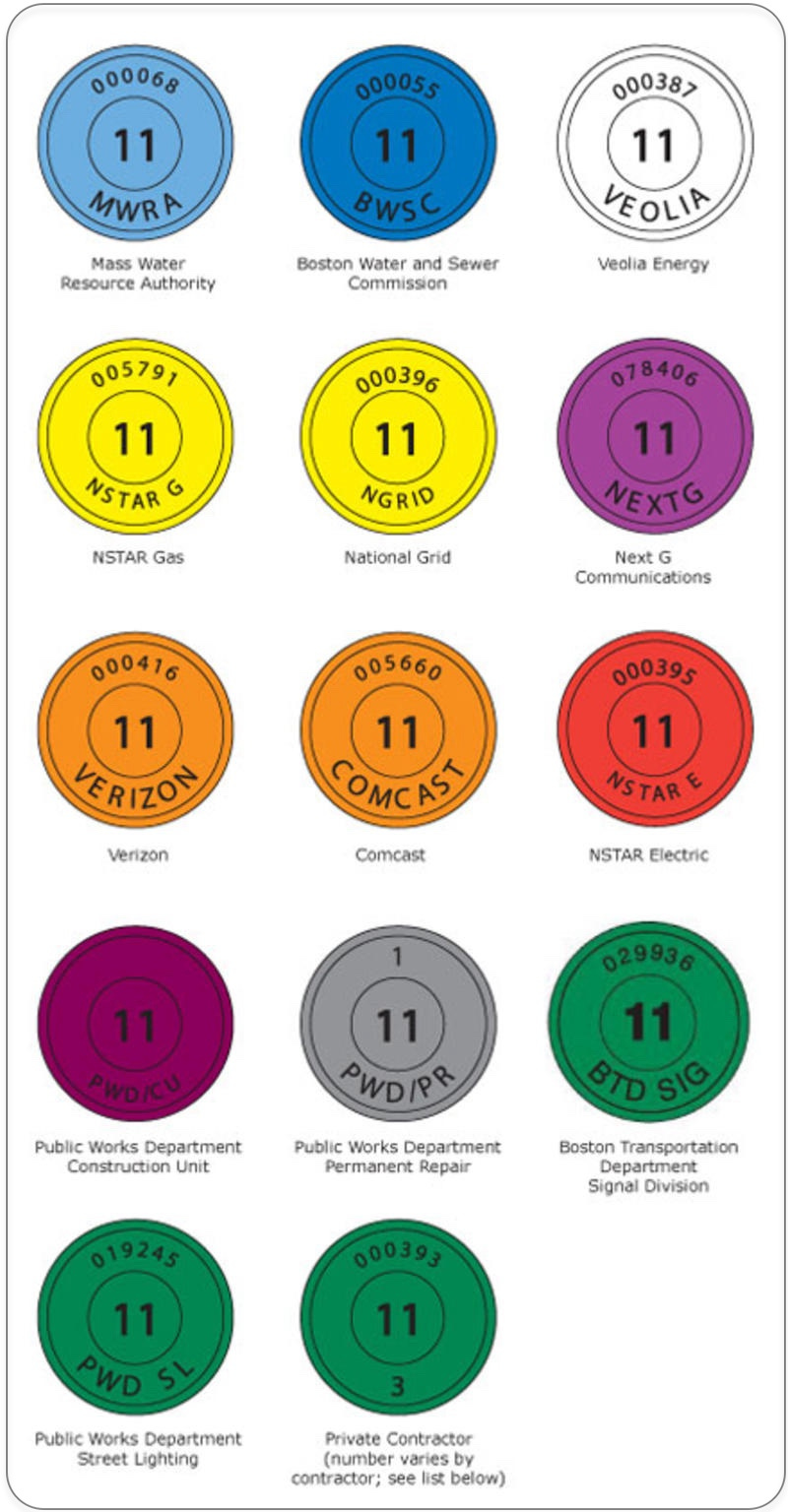
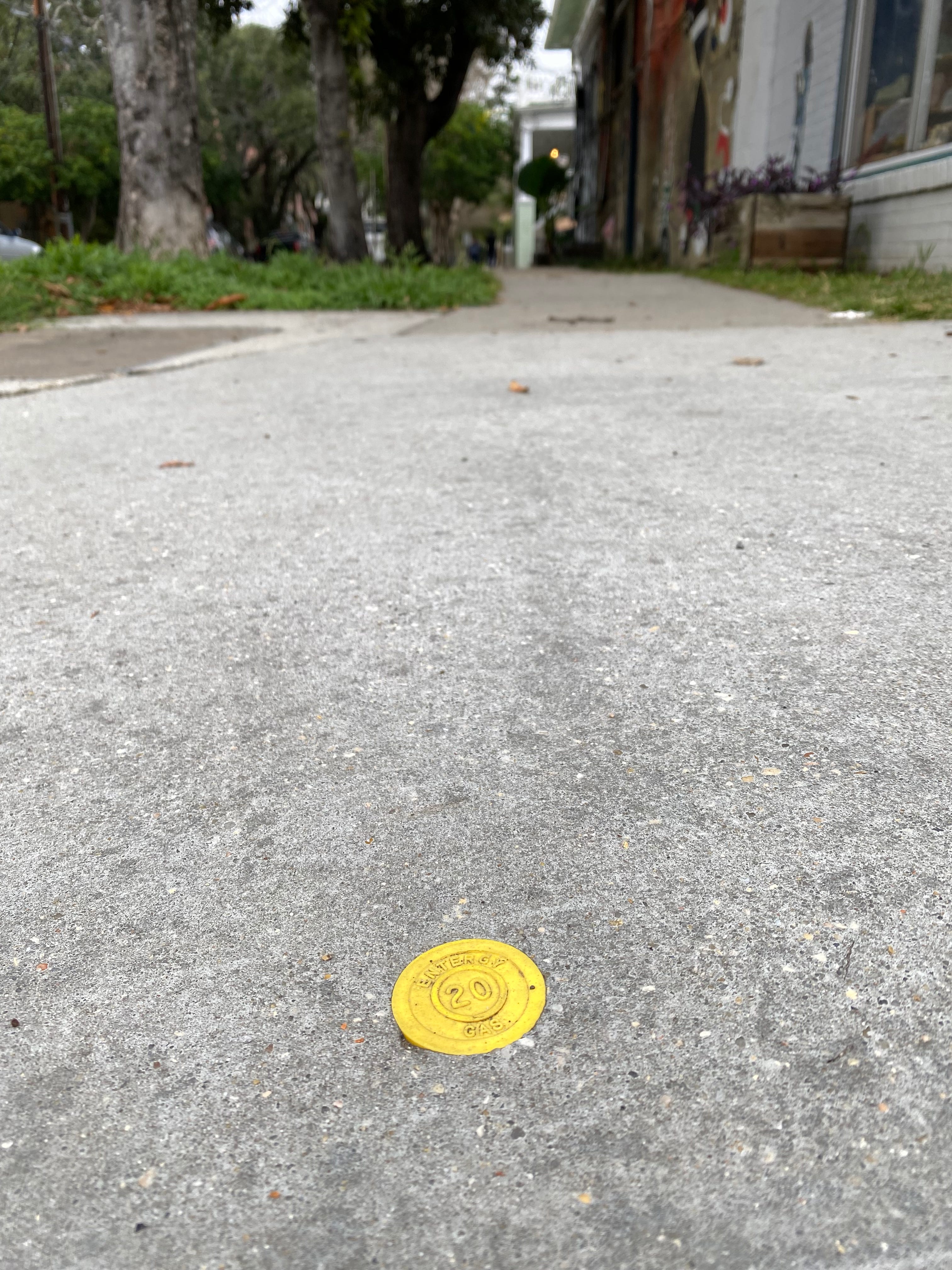
Paul here. When I originally wrote that article in 2014, New York and Boston were the only major municipalities using A-tags. In the dozen years since then, several more cities have gotten on board, including Denver; New Orleans; Pittsburgh; Scranton, Pennsylvania; and Syracuse, New York. There’s no central A-tag registry, but I have a strong hunch that the markers have spread to other cities as well. (If you have more info on this, you know what to do.)
Meanwhile, speaking of colored dots and hidden street-level codes, it’s fairly common here in New York to see storm drains adorned with a series of colored dots. They look sort of like a Morse code version of graffiti:
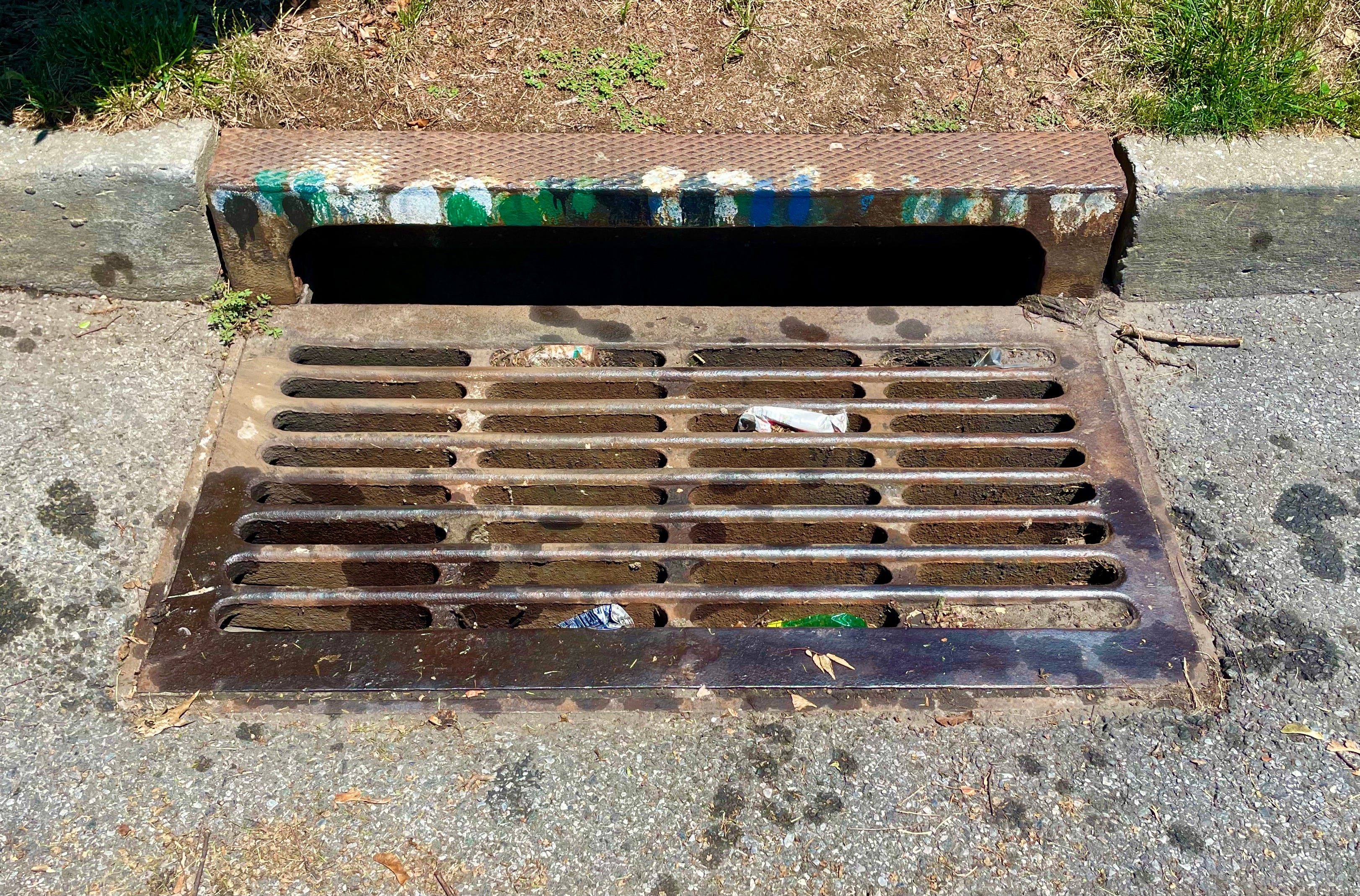
The dots are actually part of the city’s effort to combat mosquitoes. Beneath each drain is a catch basin that helps to prevent drain clogs by sifting debris the storm water. These moist, cozy catch basins are ideal breeding grounds for mosquitos, so the city workers routinely treat them with larvicide. The dots are a color-coded protocol that indicates when the drain was last treated. San Francisco has a similar system.
Do you know of other street-level codes or design systems hiding in plain sight? If so, do tell.

After Looking Down, Try Looking Up

I was at the beach the other day and saw several airplanes towing ad banners (including the one shown above). That’s not a new thing, of course, but it got me thinking. Here are a few musings that crossed my mind:
In our increasingly digitized, internet-driven, and AI-infested world, there’s something endearingly dorky, or maybe even miraculous, about ads still being towed by airplanes.
Related to the above: In a world where an increasing share of the advertising we see is algorithmically micro-targeted to match what we’re interested in (or at least what the algorithm thinks we’re interested in), it’s kinda wild to see that some advertisers are willing to just toss out a message to the undifferentiated mass of people on a beach.
This form of aerial advertising was pioneered in the 1920s and really hit its stride in the 1940s after the introduction of the Piper Cub airplane. In those days, it was a new and modern form of advertising; today it’s old-fashioned. Yet its sense of novelty persists.
Paul Lukas has been obsessing over the inconspicuous for most of his life, and has been writing about those obsessions for more than 30 years. You can contact him here.
Paul, You see life through a different lens then most of us. Thanks for adding to our lenses. Fondly, Michael
lived my whole life thinking the orange ones were gatorade caps some kid stuck into the fresh asphalt