

Collection Agency, a series in which I interview unusual collectors, is an occasional feature of Inconspicuous Consumption. You can see previous installments here.
Also: This post is not paywalled. Enjoy, and happy almost-New Year! — Paul
I grew up in the 1970s, when hand-held electronic calculators became affordable and popular. I asked my parents to get me one for Christmas in 1976, when I was 12, and they obliged. I remember “testing” that first calculator: Did it know how much seven times seven was? Could it accurately determine my favorite baseball players’ batting averages? If I subtracted my birth year from the current year, would it correctly show my age? Seeing the calculator get all of these things right was very satisfying, and the clickety-clack of the keyboard was even better. I was very happy with my present. (Learning about “BOOBIES” would come later.)
I don’t know what happened to that long-ago calculator, but my memories of it were rekindled in late October by a listing in a weekly newsletter devoted to offbeat events and activities around New York City:
The Calcuphile: An Attempt at a Pop-Up Calculator Museum
Sunday, October 26th, 11am-4pmStep into the gritty underbelly of computing history at our Pop-Up Calculator Museum — uncover the raw history of these clunky mechanical beasts that fueled the tech revolution. (A calculator wrote that description.) Come see over 100 calculators focusing on the pre-1980s era that is so experiential: the tactile nature, the sound of the keys, the weight and feel in our hands, and the joys of math. It puts a lot of modern transitions into perspective, given the changes in computing, technology, and life in general since then. Come solve all your problems — math problems, that is. Mathematicians will be on site for counseling.
And then it listed a location in Brooklyn.
I loved the idea of celebrating vintage calculators, and the listing’s playful language seemed to indicate a creative intelligence at work. So on the appointed day, my friend Janet and I went to check out the museum, which turned out to be a tent set up on the curb of a residential block. Standing outside the tent were two guys who appeared to be running the show.
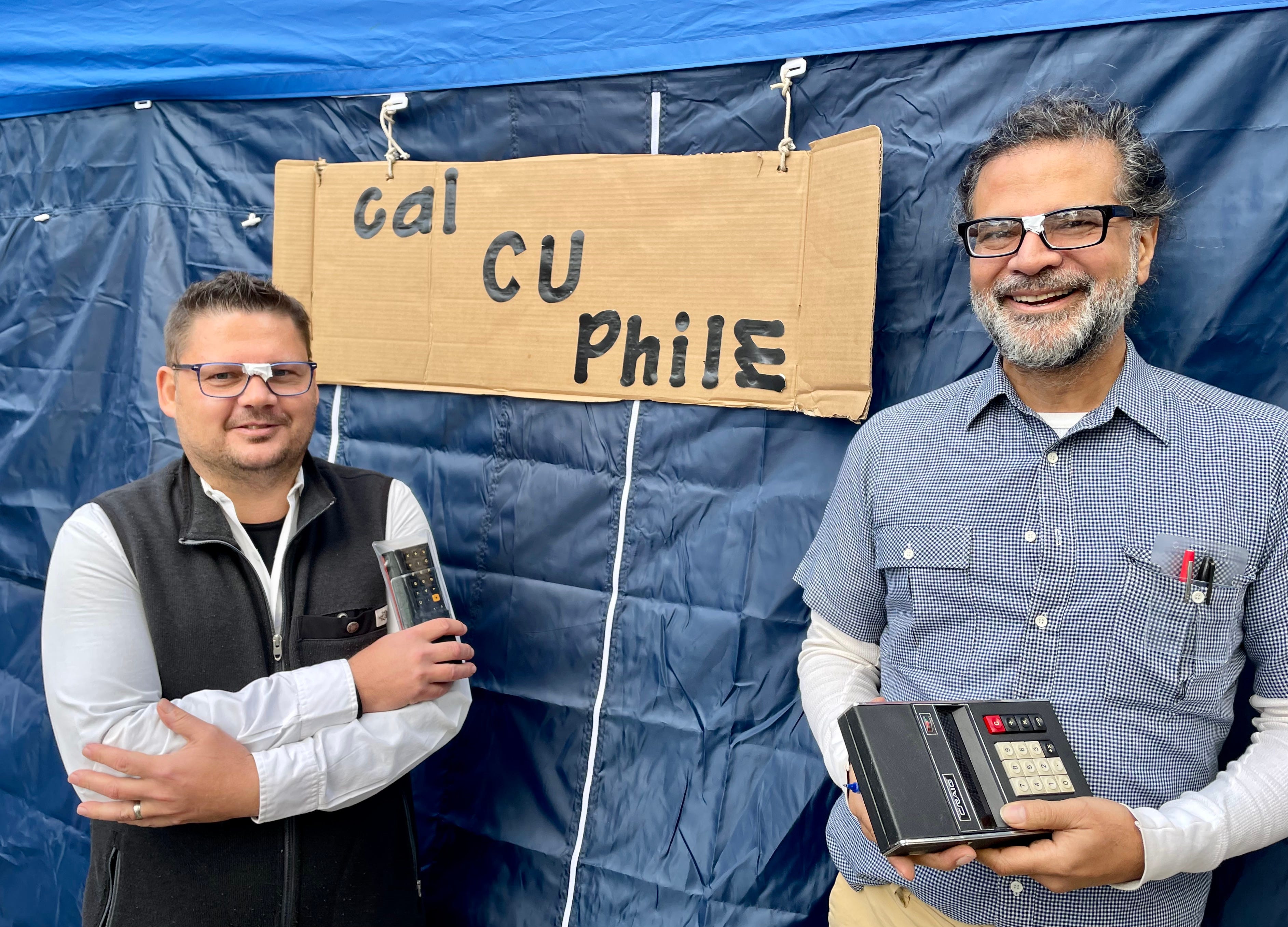
Janet and I introduced ourselves and learned that the museum was the brainchild of a 54-year-old civil engineer named Rahul Saggar (on the right in the photo above), who’s amassed a large collection of vintage calculators and wanted to share them with a wider audience. He and his friend Andrei Kuzin, who was assisting him, had put white tape on the bridges of their eyeglasses as a self-mocking acknowledgment of the project’s geekitude. As you can see, Saggar upped the geek factor by wearing a pocket protector, plus one of his shirt buttons was open, which I initially thought was yet another intentional geek signifier, but it turned out that the open button happened organically, which might be the most endearingly geeky thing of all.
We entered the tent and found makeshift displays featuring dozens of vintage calculators, plus a few pre-electronic adding machines and a slide rule. Unfortunately, the space was cramped and the lighting wasn’t great, so it was hard to get good photos, but here are some shots that will at least give you a sense of the experience (you can click on the thumbnails to see larger versions):


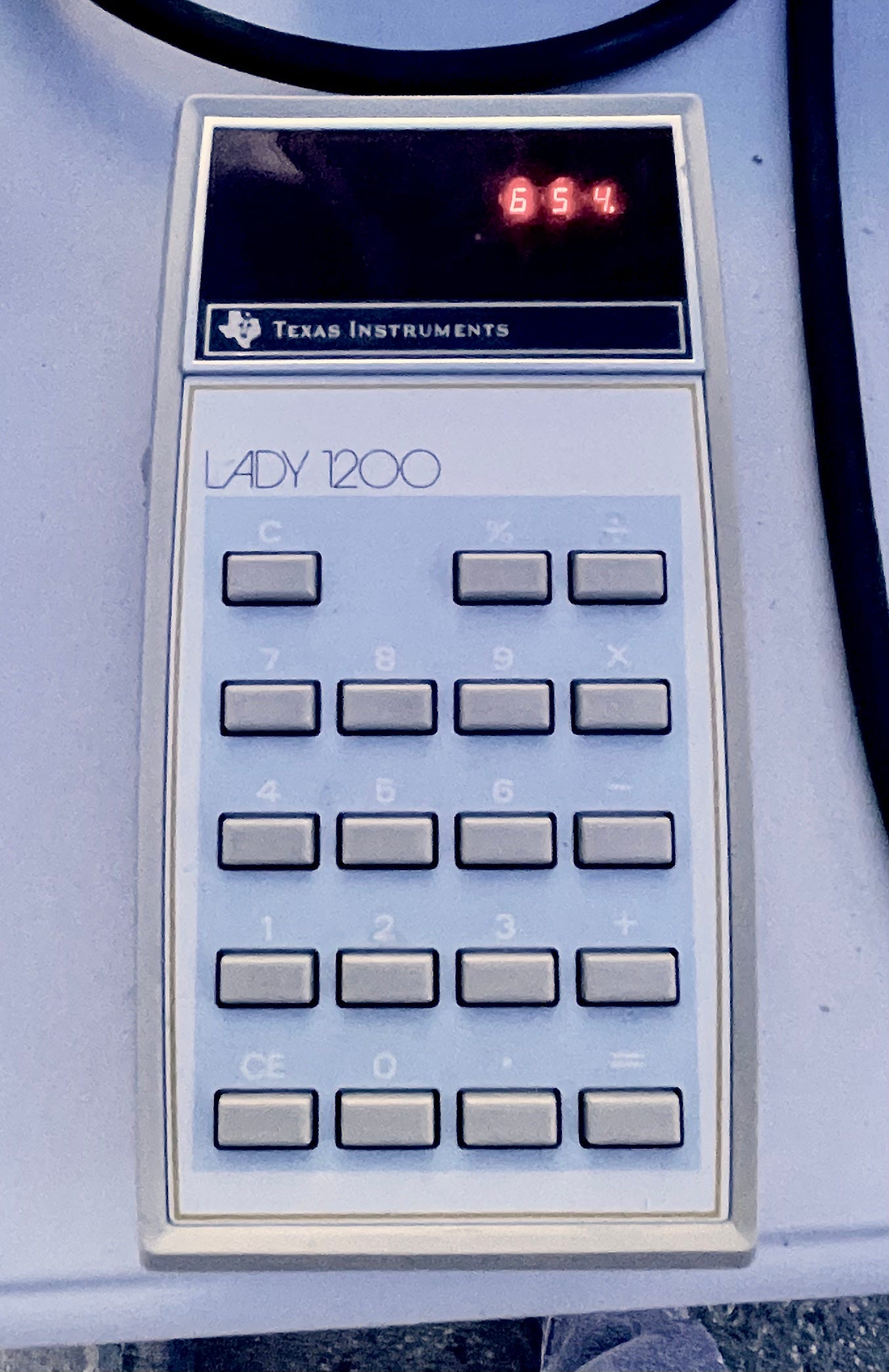
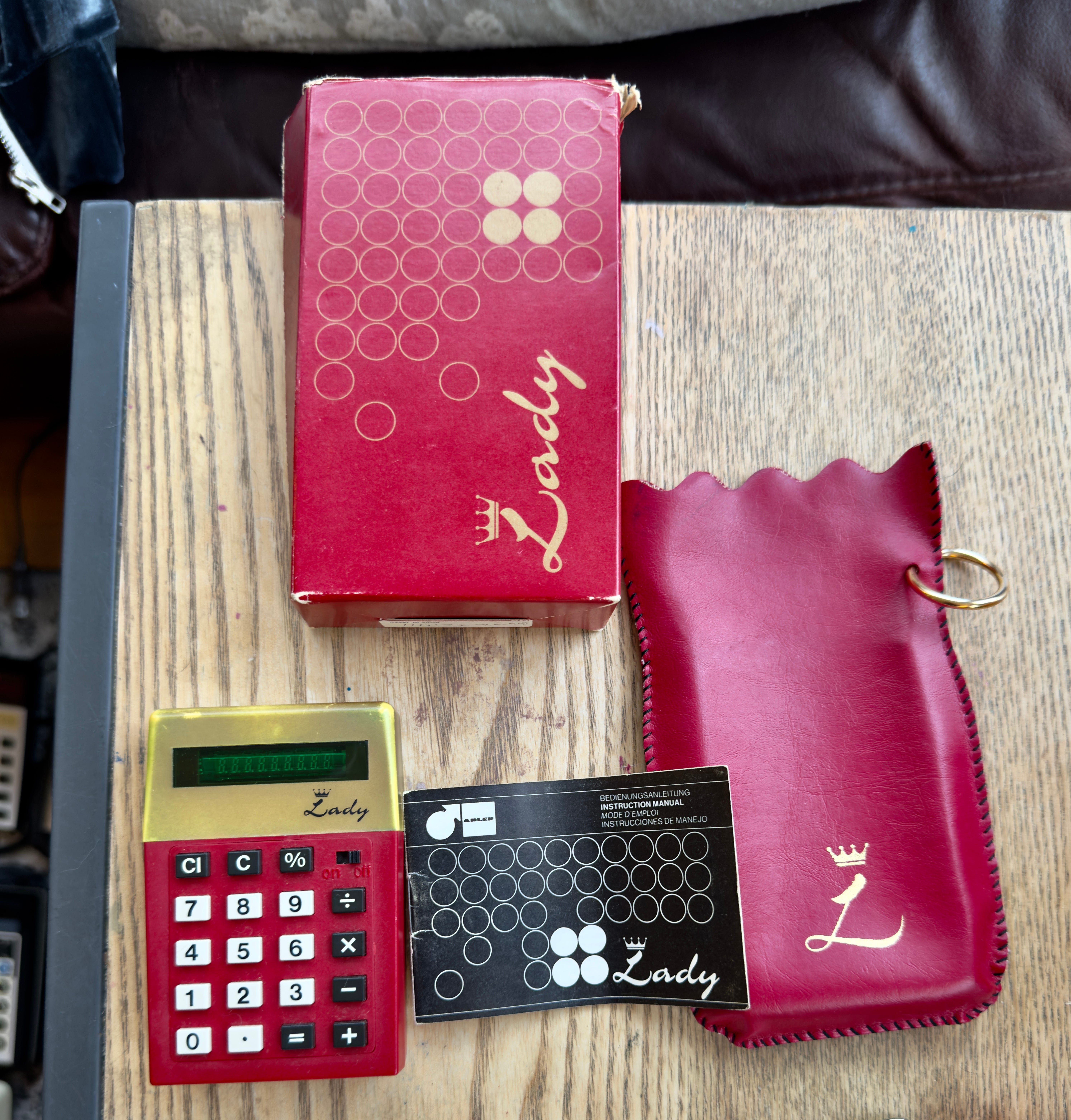
It was fun to see all the old-school designs, and there were some interesting surprises lurking within the collection. For one thing, I hadn’t realized (or maybe just hadn’t remembered) that some companies tried to appeal to the women’s market in the 1970s by putting out “Lady”-branded calculators:
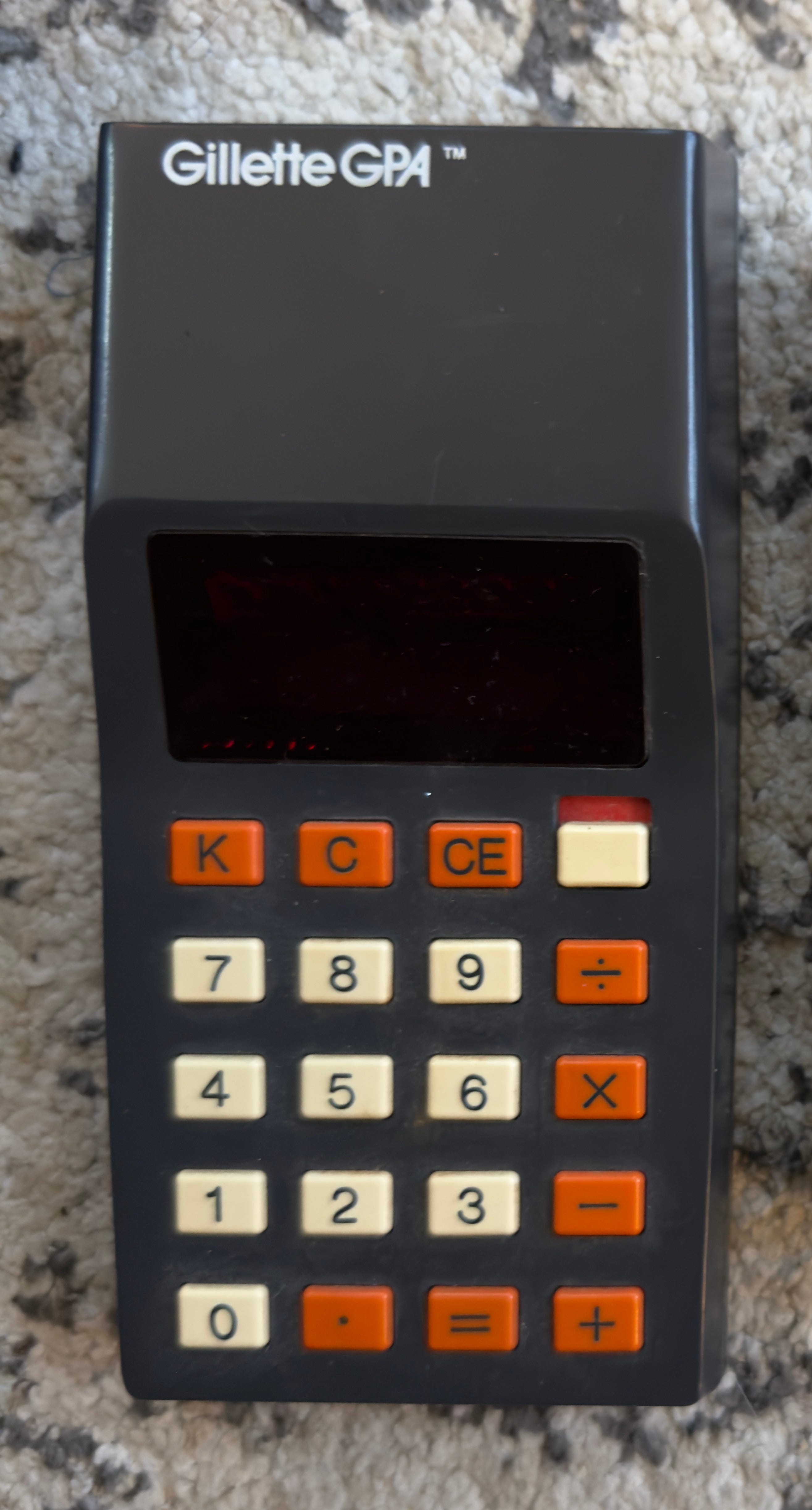
I also didn’t realize that Gillette — the shaving brand — had at one point been in the calculator biz:
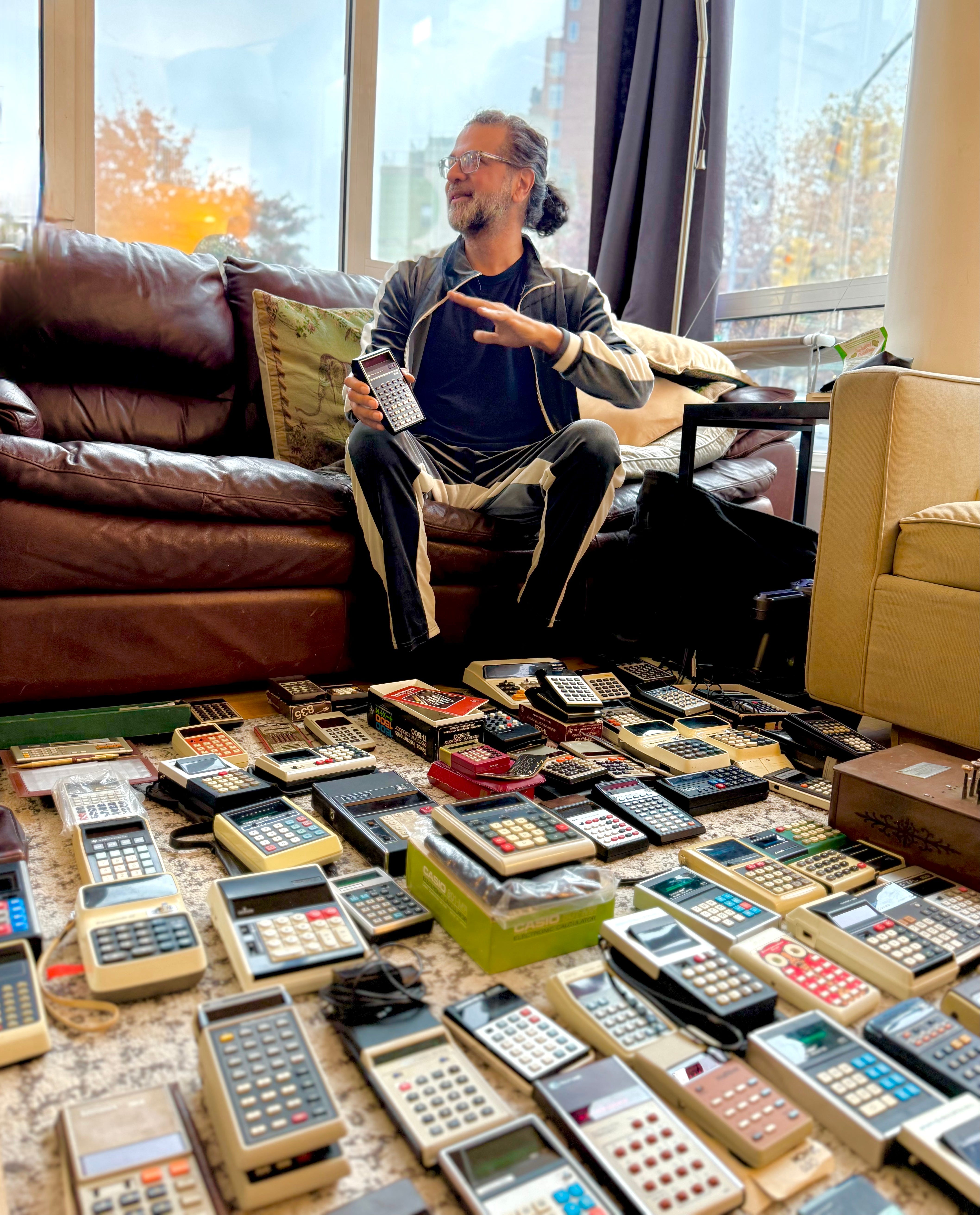
I wanted to learn more about Saggar and his calculator fixation, so I asked if we could set up an interview at his Brooklyn home. He agreed, and a few weeks later I arrived at his apartment, where he had dozens of calculators spread out on his living room floor for me to see (but no longer had the white tape on his glasses or any other performative stylistic cues).
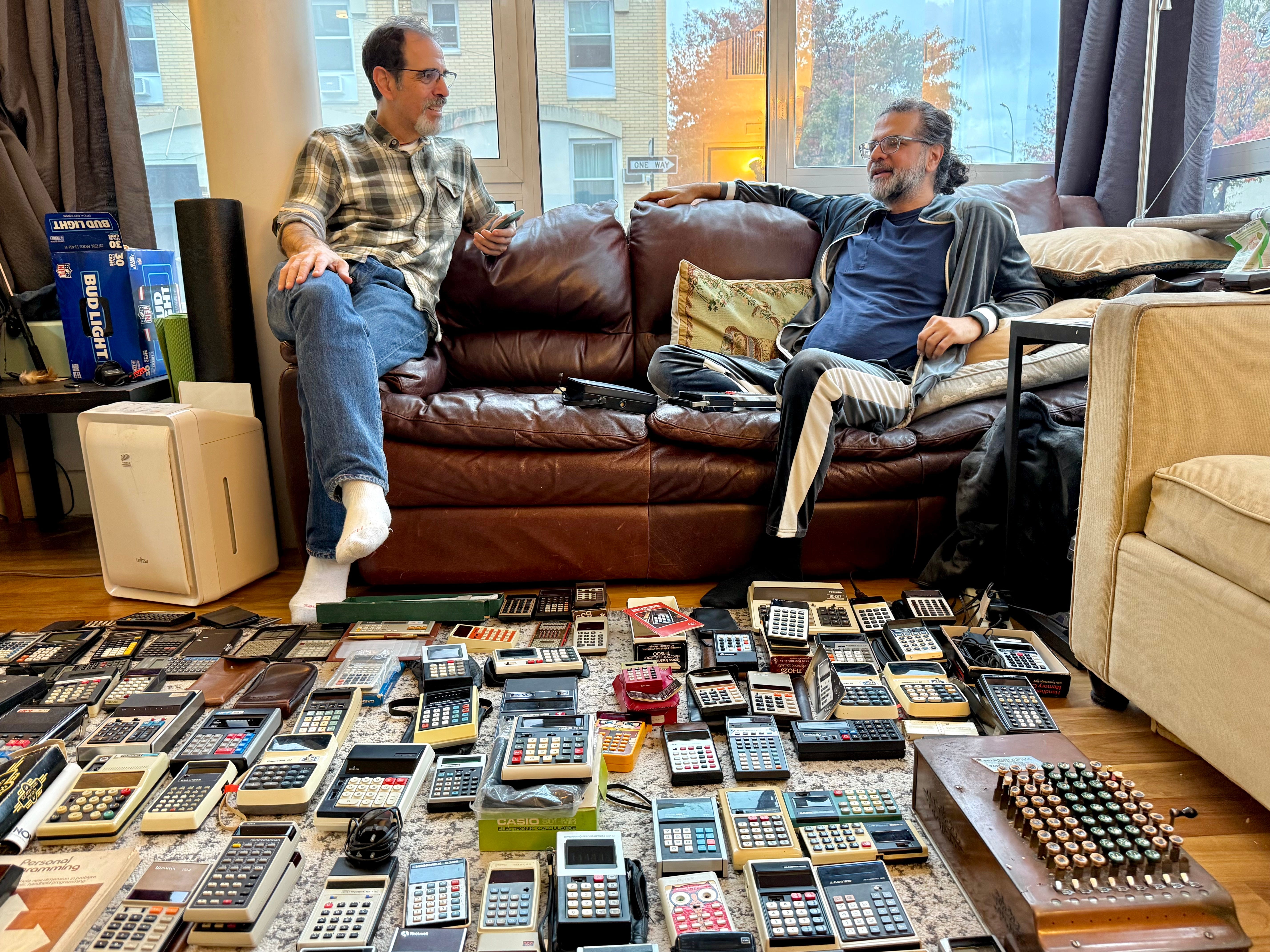
Janet came along to take photos, plus she ended up making a key contribution to the interview. Here’s a transcript, edited for length and clarity.
Inconspicuous Consumption [gesturing at the floor]: How many calculators are we looking at here?
Rahul Saggar: About 100. But I have about 40 or 50 more in Ohio, where I grew up.
IC: So the whole collection is about 150. Are they all in good working order?
Saggar: The majority of them are, but not all of them.
IC: I’m assuming you don’t normally have them on the floor, so where do they usually live? Like, do you have a special display for them?
Saggar: I used to have them displayed. And then when my girlfriend moved in with me, she was like, “We’ve got to move this stuff.” So now I have them sitting in boxes, mainly.
IC: So they’re not really displayed at present?
Saggar: No. That’s part of why I did the pop-up museum. I’d love to find a permanent location for them, like a real museum.
IC: Huh. So is this kind of a treat for you, seeing them all spread out on the floor like this?
Saggar: Yeah. I kind of want to lie down and then roll around in them!
IC: How did you get started on all of this?
Saggar: When I first started working at this big engineering firm right after graduation, around 1995, they had me clean out a cubicle so I could sit there. So I went into this cubicle and there was this random box with these old calculators. I showed it to them and they were like, “Yeah, we don’t know what to do with that. You can take it or throw it away.” And I’m like, throw it away? They were so cool! So I saved them, and then I started telling people in the office how much I loved them, and people started giving me their old calculators. Some of these people I was working with had been engineers in the 1960s and even the ’50s, so they had some really great old calculators.
Then there were the people who wouldn’t give me their calculator. They were still using old ones, like 20 years old, and there were more modern ones they could have used instead, but they would not give up their old one. And I’d say, “Oh, could I have it when you retire?” and they were like, no. But still, a lot of people in the office did give me theirs, and that’s kind of how it started.
IC: What is it about a calculator that you find so appealing, both as an individual item and as something to collect?
Saggar: So it’s not all calculators. That one there [pointing] is the one I actually used in college — I’m not particularly in love with that one, or that whole style. But the ones I really love, from that era around the ’70s, I think they have their own little story about them. They were bulkier, more interesting. Once you get into the ’80s, when they got more into the liquid crystal displays and all that, it’s not as interesting to me.
IC: Do you like ’70s design in general, or just for calculators?
Saggar: I like the ’70s aesthetic, and calculators are a particularly good example of that. Also, the older ones were being used for changing so much of the world at that time. Think of all the structural things that were built based on the calculations done with these machines! And the struggle that people had to go through just to get one back then — they were so expensive at the time. I think at the beginning of the ’70s they were around $200 to $400. And then by the end of the decade, they’d gone substantially down in price.
IC: So when your co-workers started giving you their old calculators at that first engineering job in the ’90s, would they tell you which projects they used the calculators for?
Saggar: Yeah, so that was very interesting too, because you would hear the stories. There’s one that a guy used for a 1973 rehab project on the Verrazano Bridge.
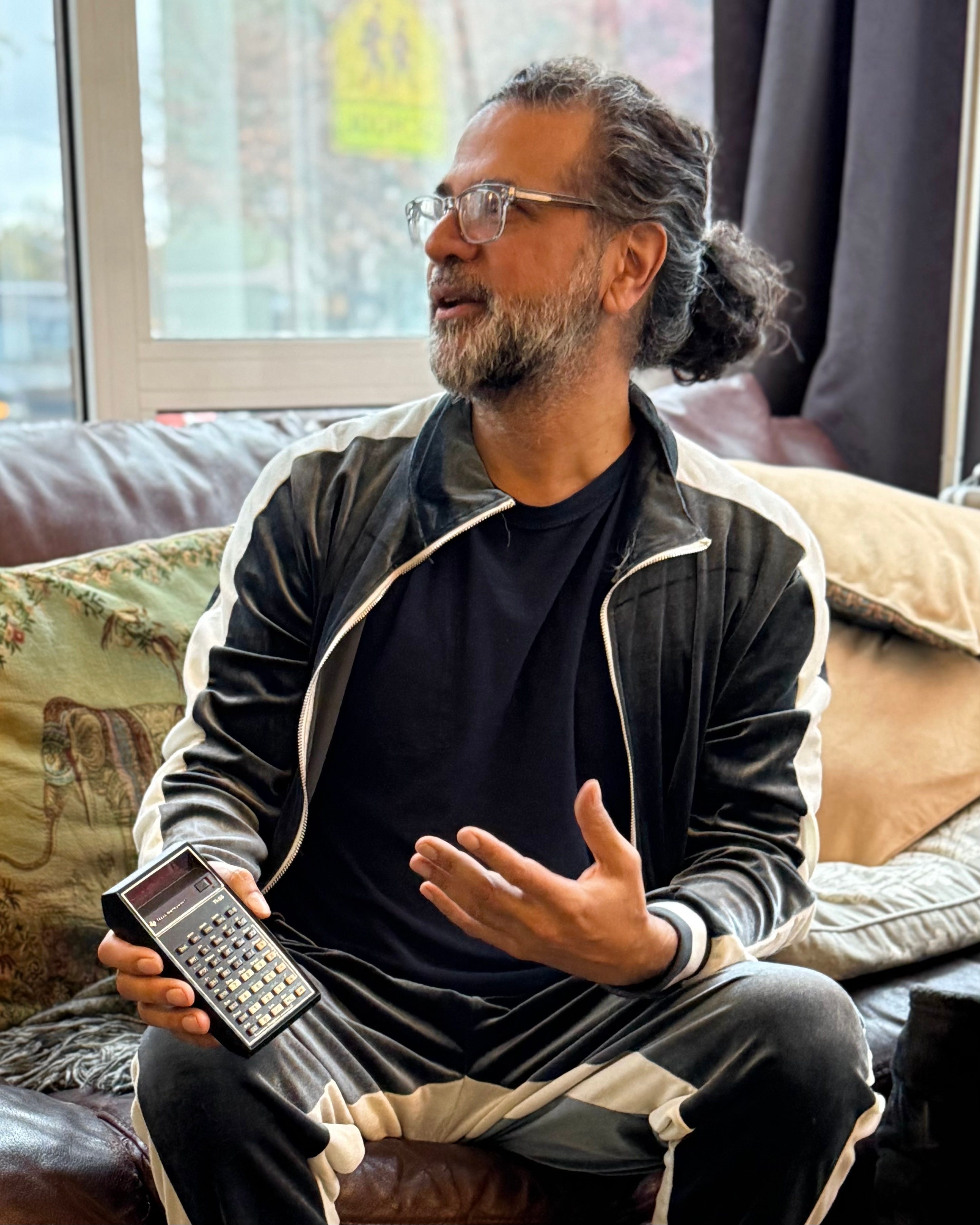
IC: Do you recall when you got your first calculator?
Saggar: It was probably my dad’s, and we would use it for school. But then when we were required to buy one for high school, I got my own.
IC: Do you still have it?
Saggar: Yeah.
IC: So you saved it, even though you weren’t already a collector at that point. Why did you do that? Are you just the kind of person who saves things?
Saggar: Yeah, I think I am.
IC: Have you collected other things?
Saggar: When I was a kid, I had a pencil collection, which is still in my room at my parents’ house in Ohio — thousands of pencils. They had to put limitations on my daily pencil buying in elementary school, because I would save up my lunch money and buy out all the pencils and then there were no pencils left for any of the other kids.
I also had childhood collections of stuff like bottle caps, bugs — until my mom found out. Thinking about all of that reminds me of how I felt that some things were alive or maybe had a soul, so discarding them would not be nice. I still kind of believe that.
IC: How many of the calculators in your collection are from that period in the ’90s when co-workers were just giving them to you?
Saggar: A few dozen, probably not even 40.
IC: And when did you start seeking out additional calculators on eBay, at flea markets, or wherever?
Saggar: Not until maybe 2014, 2015. Maybe a bit earlier.
IC: Oh — that’s a big gap! What got you back into it?
Saggar: I have a friend who’s a winemaker. They were cleaning something out at his winery and they found this amazing old Singer calculator, with its original case and everything. That thing’s amazing. So that got me back into it.
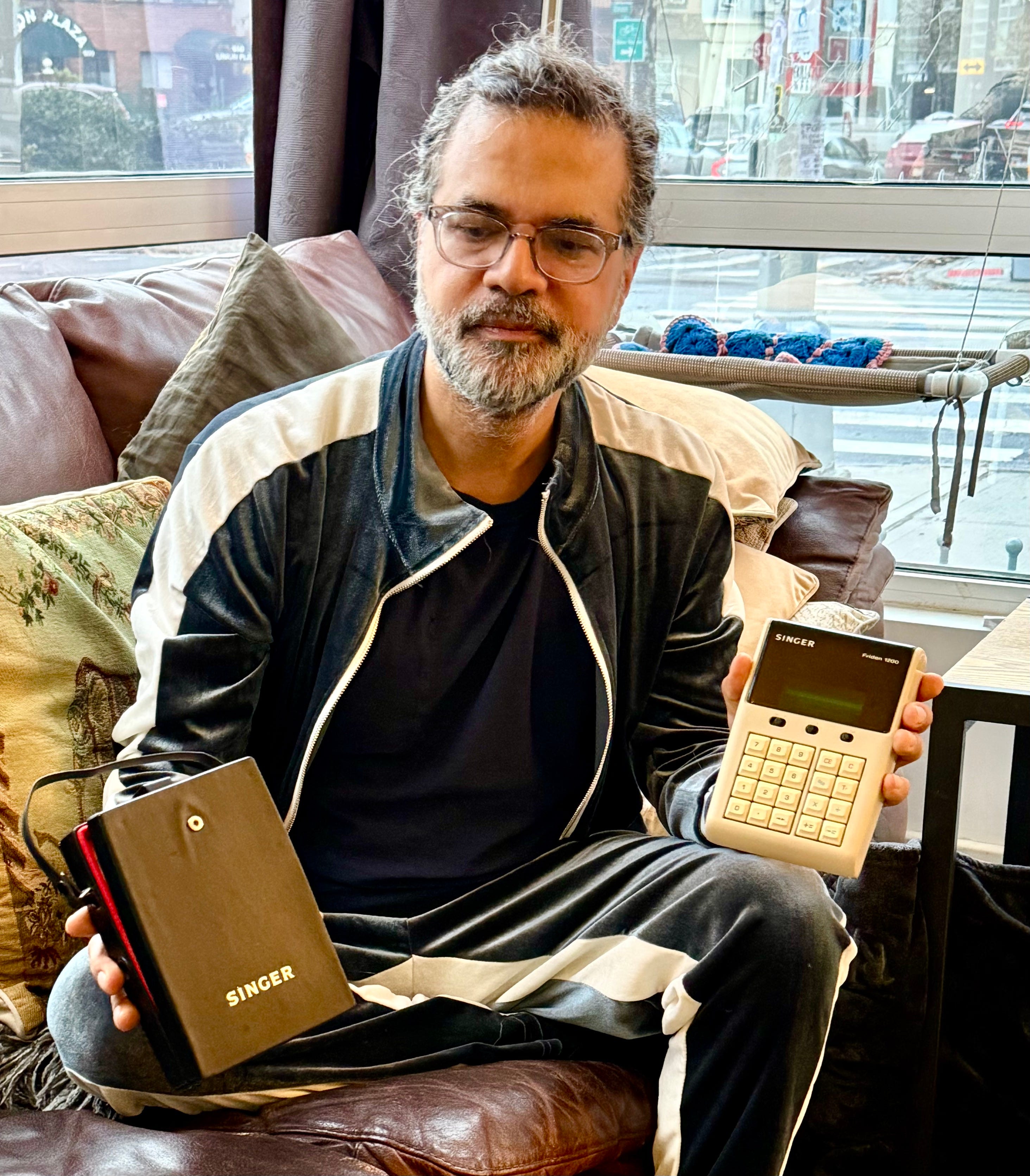
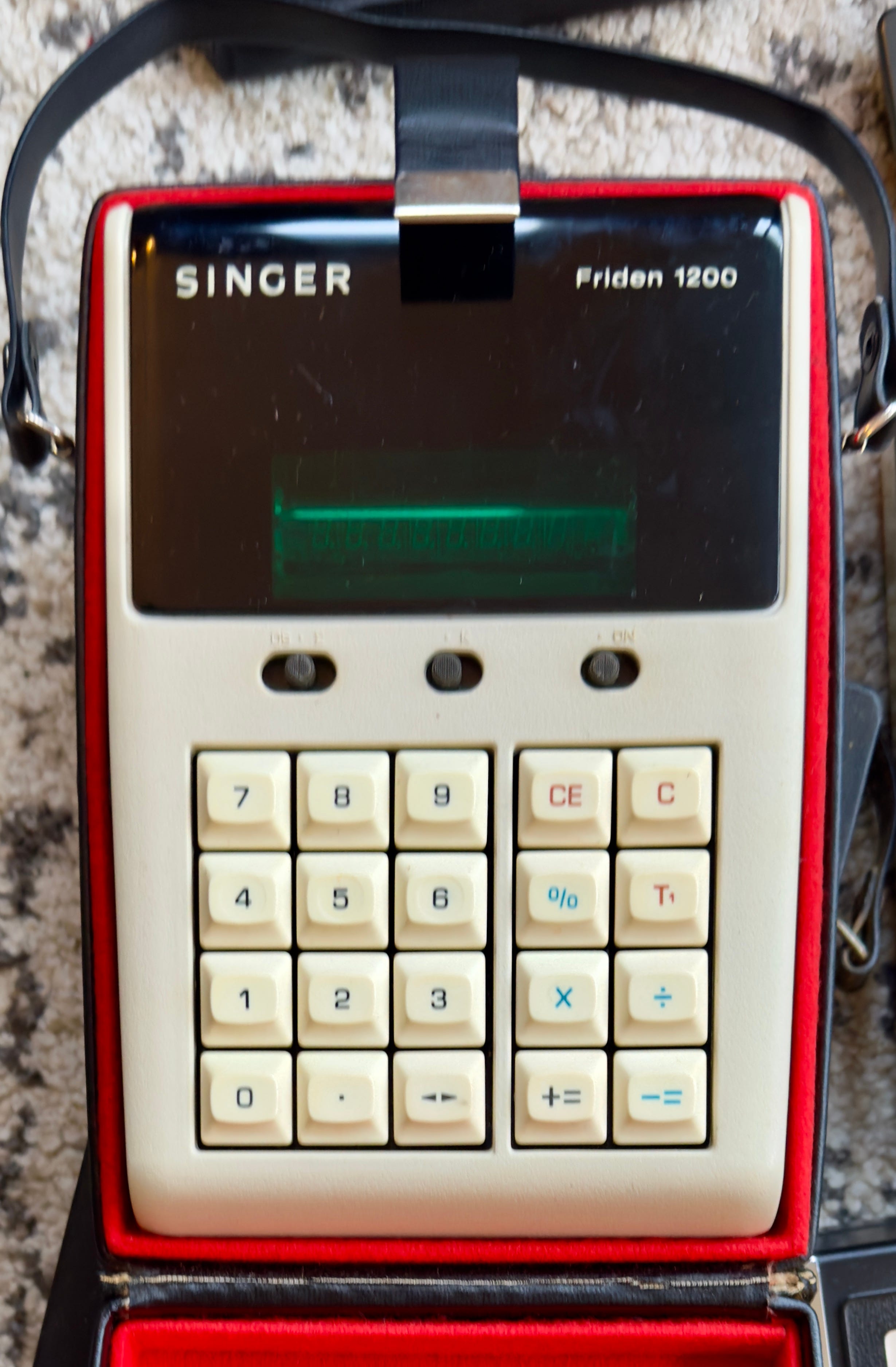
Saggar [continued]: Also, around that same time, I went to a party at a big industrial loft space, and they had this museum-style display of some clunky old thing. It looked like a calculator, but I wasn’t even sure what it was. And when I saw that, I thought, “This thing is so beautiful, and the way it’s presented is so beautiful — I want to do that too.”
IC: So that’s when it sort of clicked in your head that you wanted to build out the collection and display it?
Saggar: Yeah.
IC: How did you go about acquiring more of them?
Saggar: So my parents have a flea market —
IC: This explains so much!
Saggar: It’s sort of a neighborhood garage sale, like a block long. It usually happens around Labor Day, and I would go back and help my mom out, because she’s always trying to get rid of stuff. And then I’d just wander around and ask everyone, “Do you have any calculators?” I asked this one lady, and she’s like, “Well, I have a Burroughs adding machine. My mother used to work for Bell Labs.” I think she let me have it for $10.
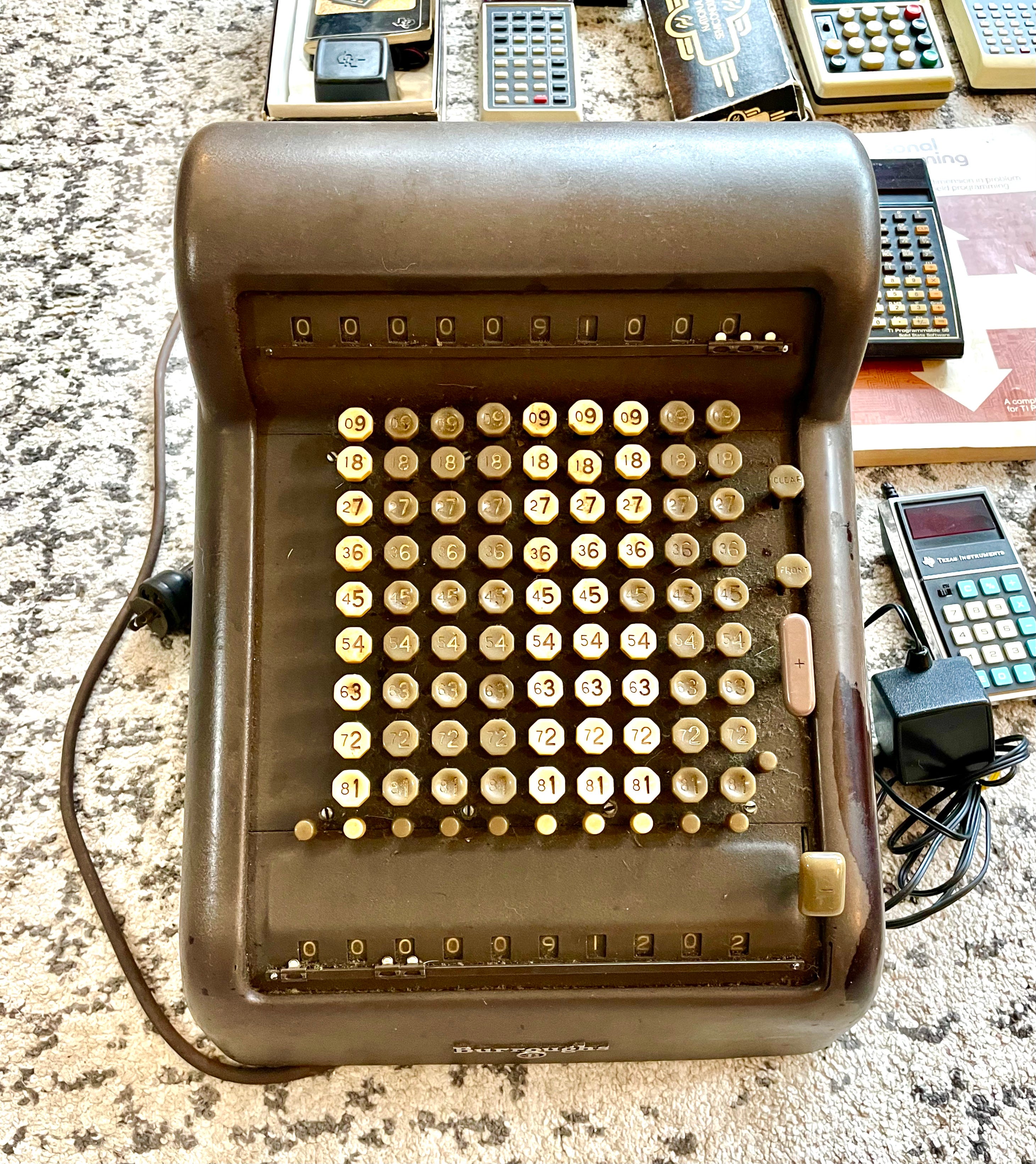
IC: Wow. When she said, “Burroughs adding machine,” did you know what that was?
Saggar: Yeah. I hadn’t really researched it, but some of the old-timers at work would say, “Oh yeah, I remember the Burroughs.” So it was really neat to get that.
IC: Do you have any other lucky finds, or major scores?
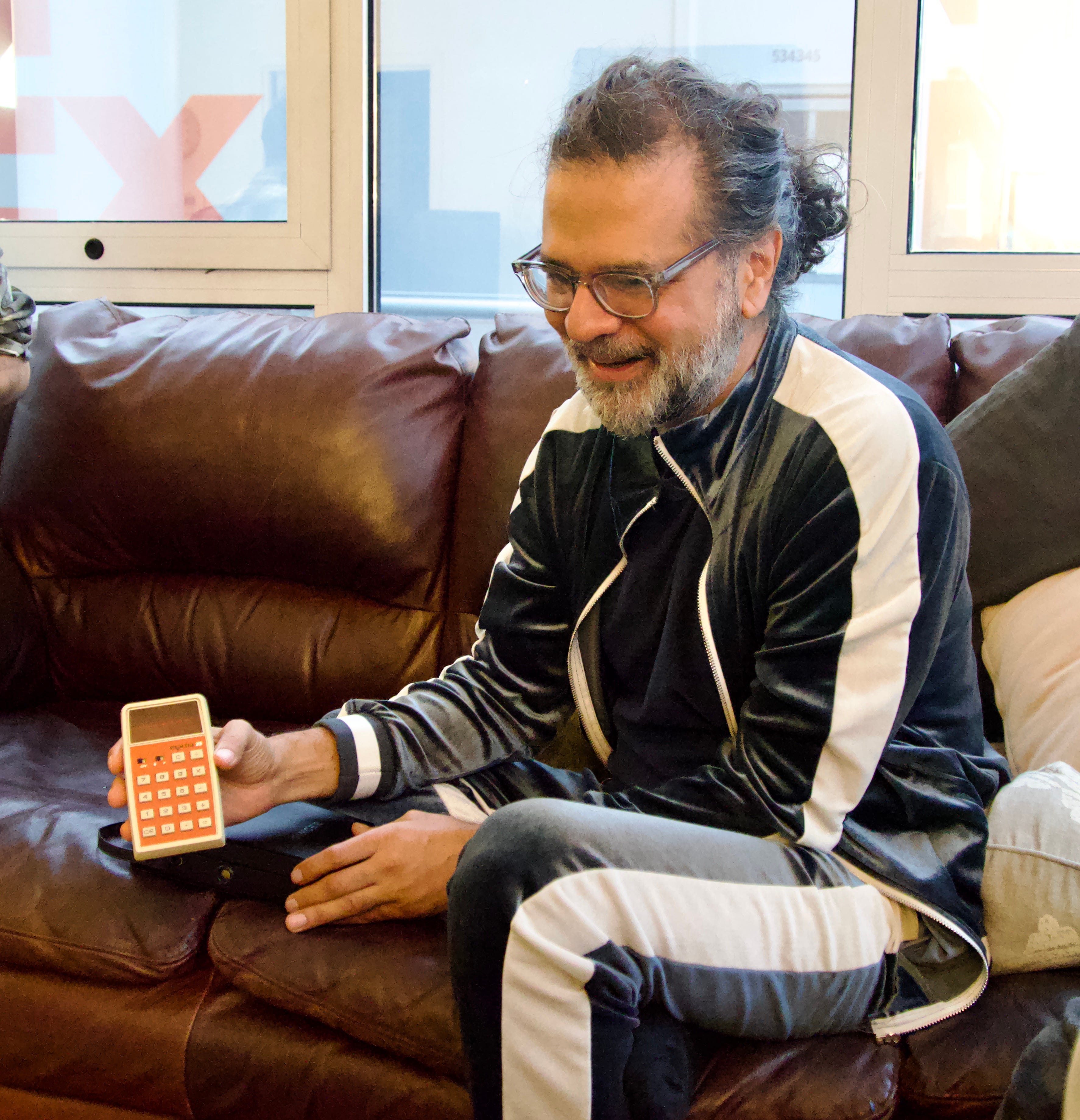
Saggar: One time I was at this holiday market in Cleveland, in this giant warehouse. And in the basement, they had an old calculator for $1, so I bought it. And then I looked it up, and people online were asking like $200, $300 for it. So I researched it, and it turns out that the display is the same display they used for the original lightsaber in Star Wars. So all these geeky cosplay types or whatever, they buy these specific old calculators, they take ’em apart, and they re-create the original lightsaber.
IC: Are you still actively acquiring more, or do you feel like you’re done?
Saggar: I’m not done. When I did the pop-up museum, something inside me exploded again. I have so many calculators on my eBay watchlist. But they’ve gone up in price from when I started buying them, so I have to be careful.
IC: If you had to pick one, just one, as your favorite, which one would that be?
Saggar: Hmmm, there’s a couple. But just one? I really like this one [pointing]. It reminds me of the communicators in Star Trek. And then just the way it feels in the hand, and then the buttons, the sound of the buttons, all of that. I love that.
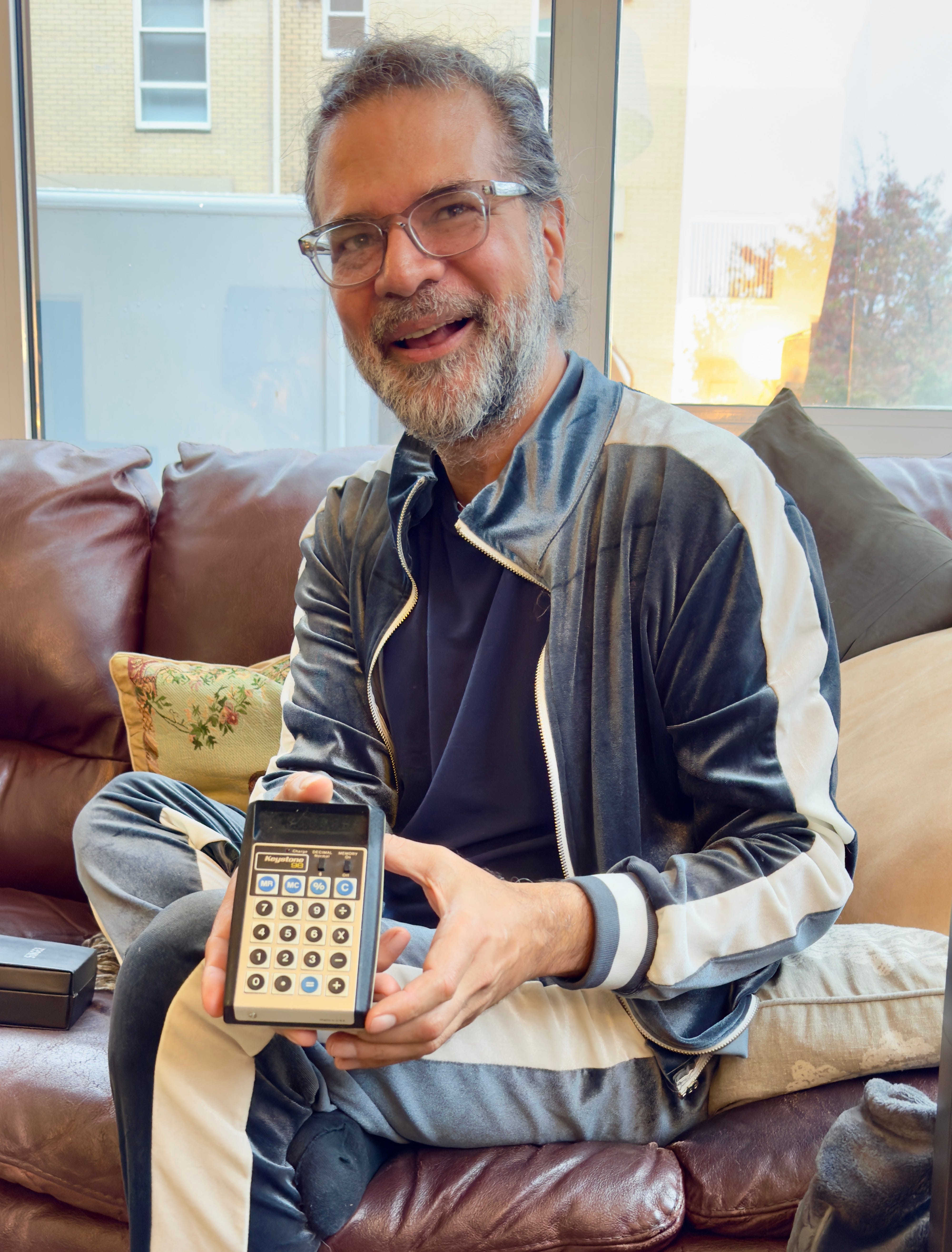
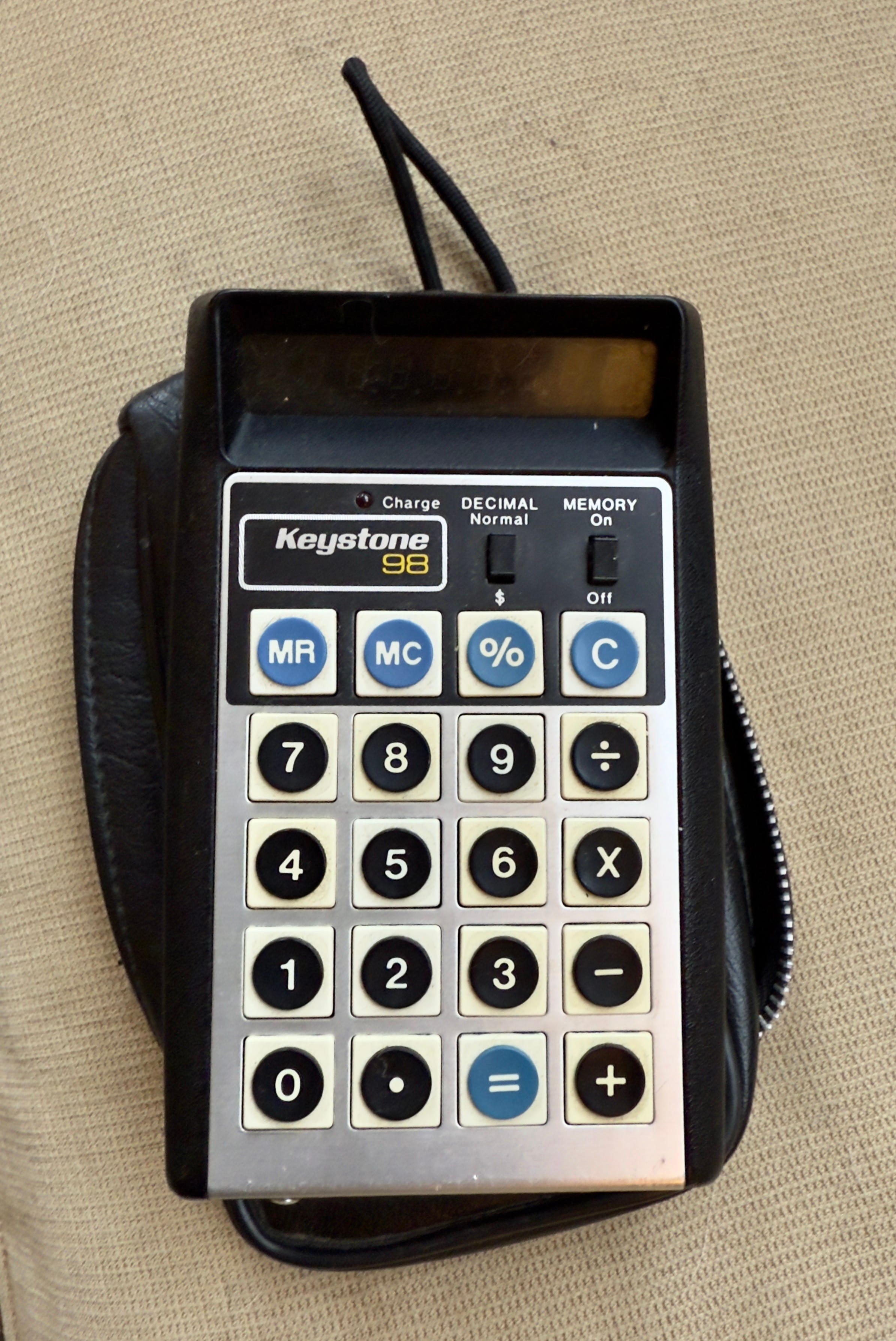
IC: When did you acquire it?
Saggar: That was one that I found in the cubicle.
IC: Oh, so that was one of the very first ones! So in a way, it’s been all downhill from there.
Janet Joachim [looking up from her camera]: I’m into birds, and in birding they have this thing called a spark bird, which is the bird that got you into birding. So instead of saying it’s been all downhill, maybe look at that one as your spark calculator.
IC: Oooh, I like that.
Saggar: Me too.
IC: Do you ever use the calculator app on your smartphone, or do you have contempt for that?
Saggar: “Contempt” is a strong word, but I don’t actually use it that often. My phone is very old, too. I’m resisting getting a new one.
IC: You mentioned earlier that you’d like to find a permanent location where the collection could be displayed. Would that have to be here in New York City?
Saggar: I would prefer that. I would want to be able to be there, to talk to people. Like, I set up a Instagram page, but I haven’t posted much there because I think a big part of why the pop-up worked was that people could touch the calculators, and I could talk to them. If you’re just posting photos, it’s almost like exploiting the calculators.
IC: Oh, like calculator porn.
Saggar: Yeah, exactly. That’s exactly it. But in a live setting you’re actually having a relationship with the calculator. That’s what I want.
And there you have it. It’s hard for me to express how much I love that Saggar doesn’t want to “exploit” his calculators for cheap Instagram thrills!
A few follow-up notes:
If you don’t share Saggar’s aversion to internet calculator porn, you may want to check out this vintage calculator online museum, which is run by a UK-based collector.
The Burroughs adding machine that Saggar got from one of his parents’ neighbors for $10 was made by the Burroughs Adding Machine Company, whose founder was the grandfather of beat writer William S. Burroughs!
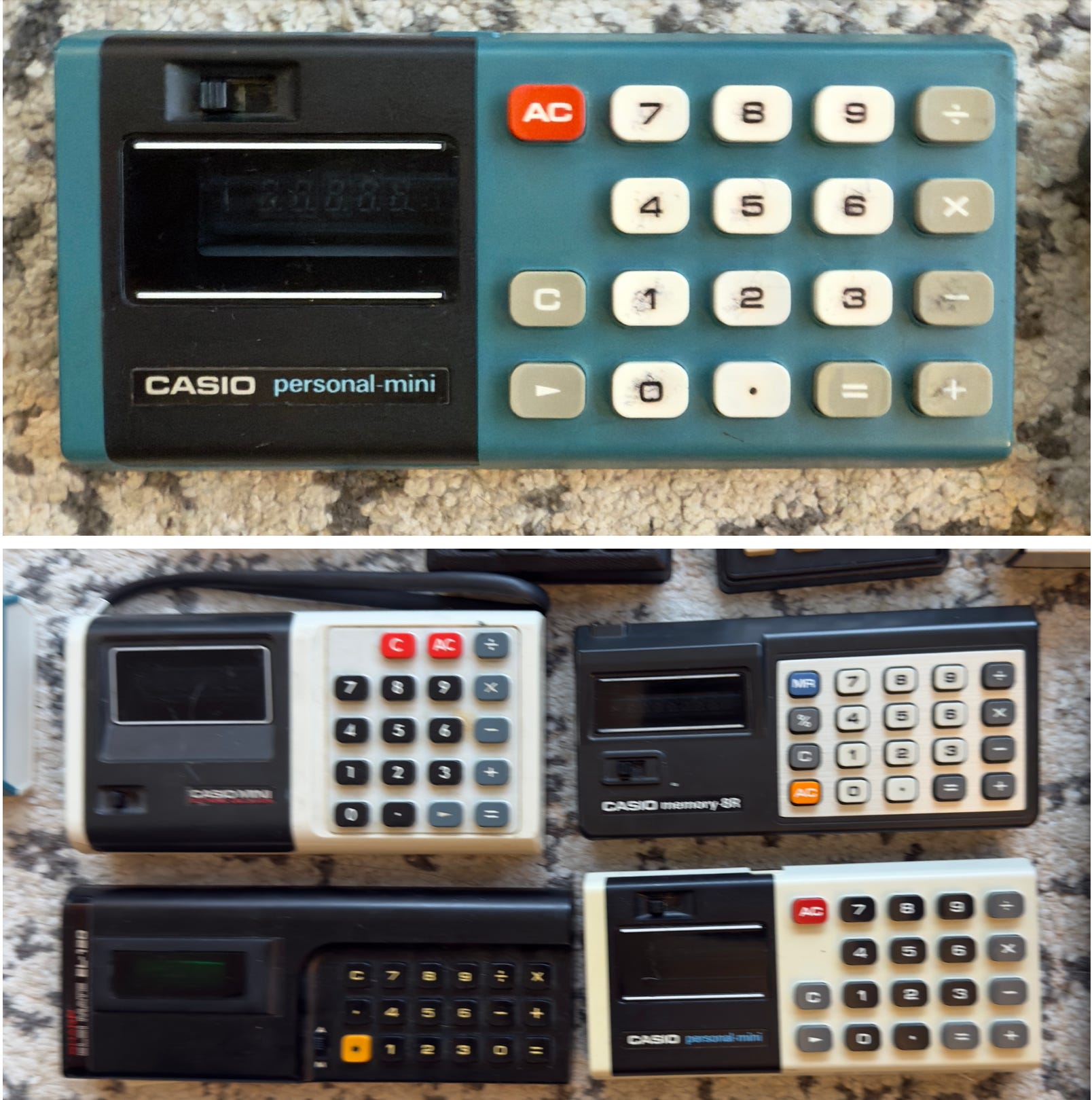
It was interesting to see that some of calculators in Saggar’s collection are oriented horizontally, with the display on the left and the keyboard on the right, instead of the more familiar vertical format:
Saggar and I didn’t talk about the names of the various calculator models. But as I looked through Janet’s photos, I saw that many of the model names were pitched toward various professions: “The Mathematician,” “The Financier,” and so on. Check these out:
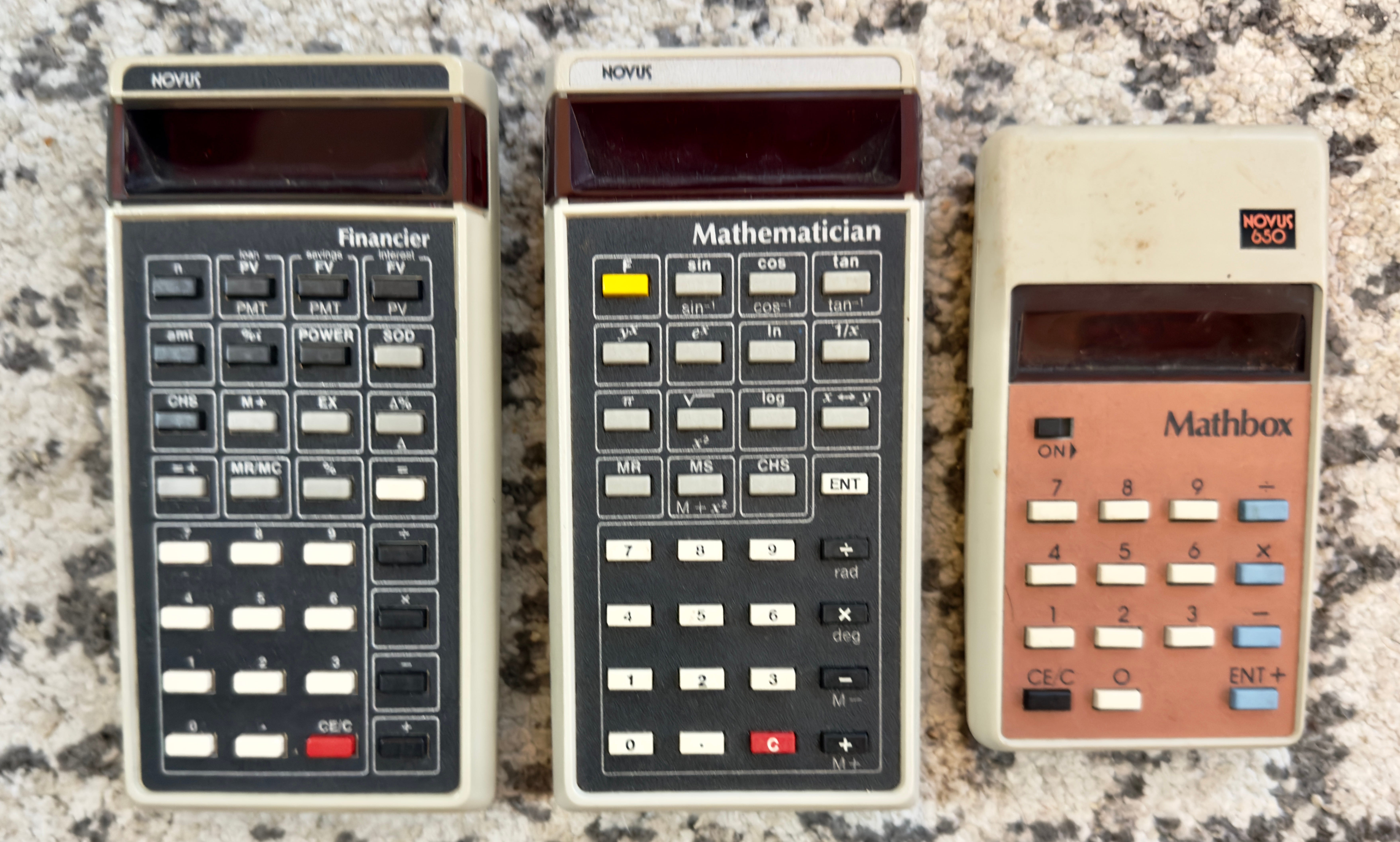
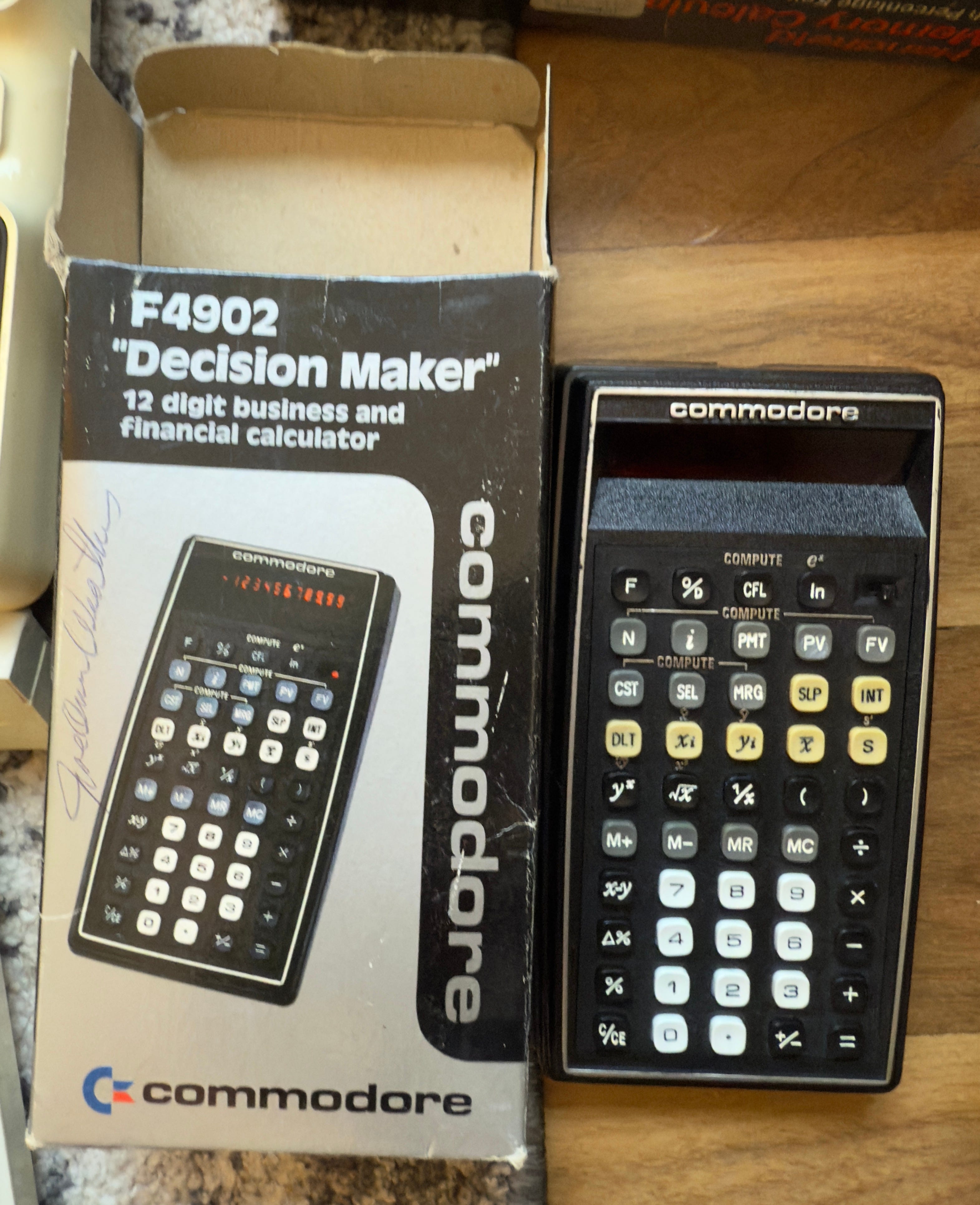
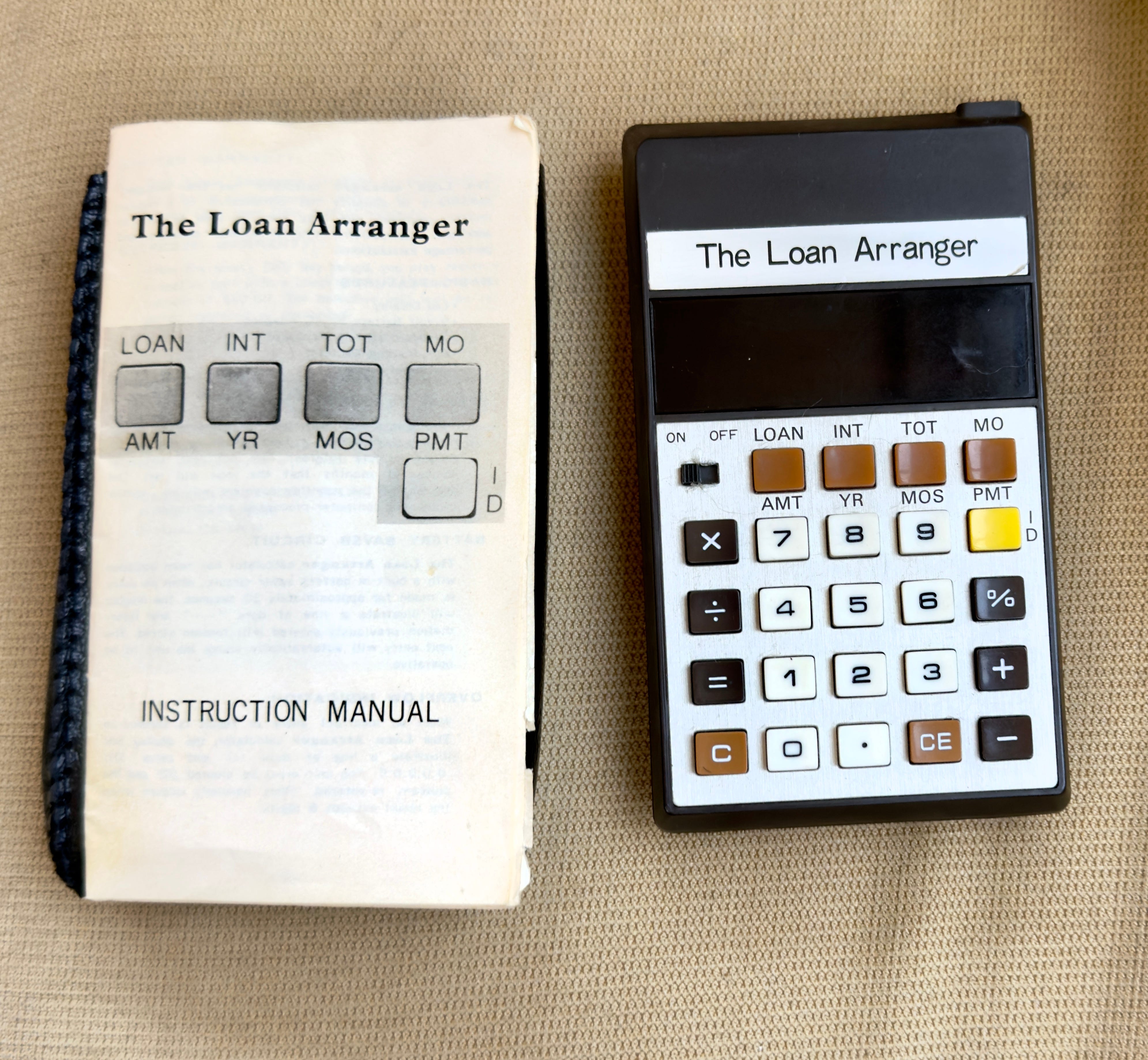
I particularly like that last one, which seems to imply that the calculator will personally get you approved for a mortgage — plus it’s a pun on the Lone Ranger!
That concludes this installment of Collection Agency. If you have an unusual collection that you think might be good for this series, or if you know someone else with an interesting collection, let me know.
(Special thanks to Janet Joachim for her photos, her interview cameo, and some key editorial contributions.)
Paul Lukas has been obsessing over the inconspicuous for most of his life, and has been writing about those obsessions for more than 30 years. You can contact him here.
I'm trying to remember if I had that TI Little Professor calculator as a kid or if I just *wanted* it so much that I have a false memory of having it.
Never thought about a calculator collection till reading about Rahul. Love seeing these types of collections.
Here in Germany, specifically in Berlin, they have Technical Museums that show inventions and technology. At the Deutsches Technikmuseum, they have a section for office technology and I recall seeing some examples similar to what Rahul shows here in this interview. Very cool stuff!