

Collection Agency, a series in which I interview unusual collectors, is an occasional feature of Inconspicuous Consumption. You can see previous installments here.
This post is not paywalled. It includes lots of photos of relatively small items; if possible, try to read it on a computer instead of a phone. Enjoy! — Paul
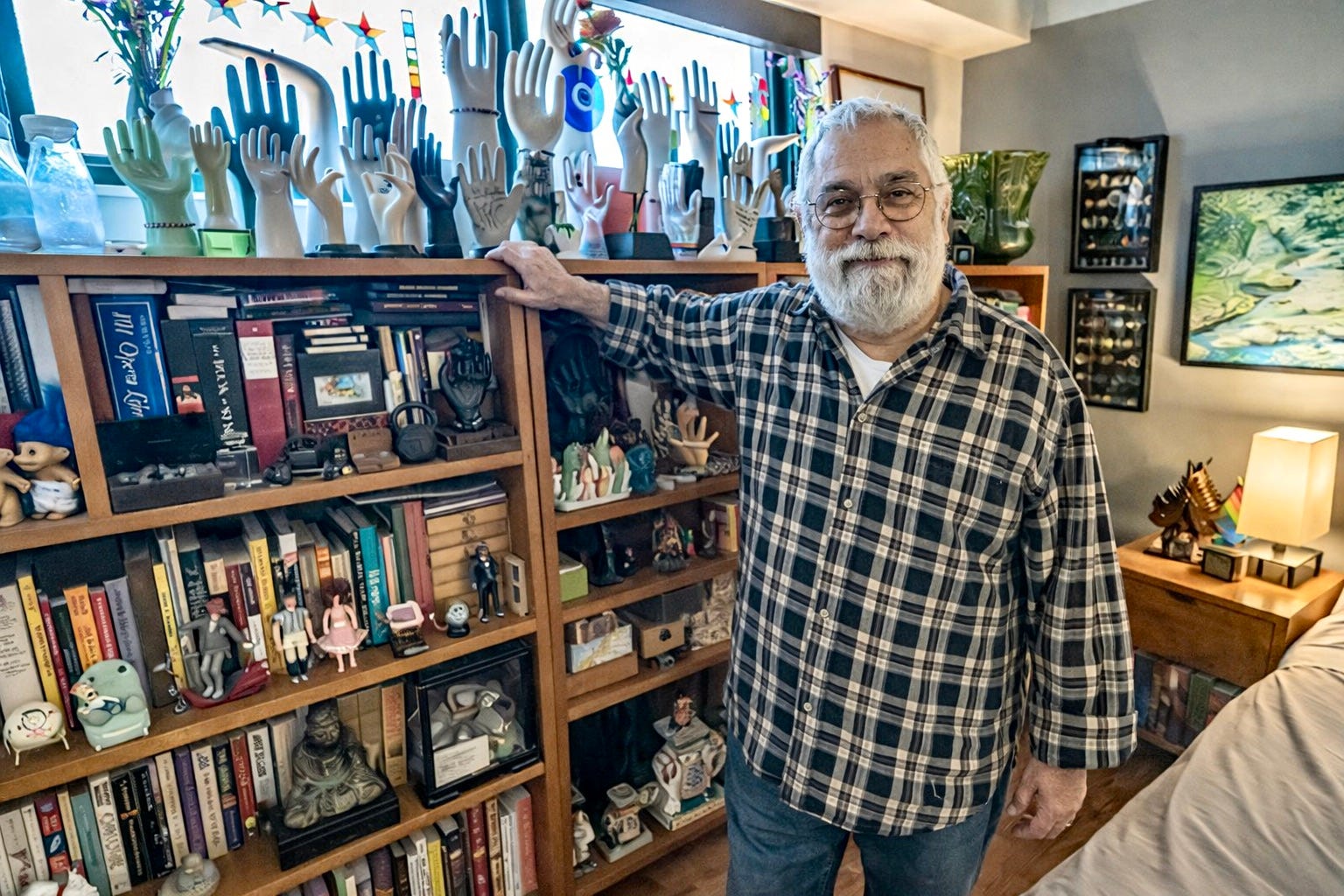
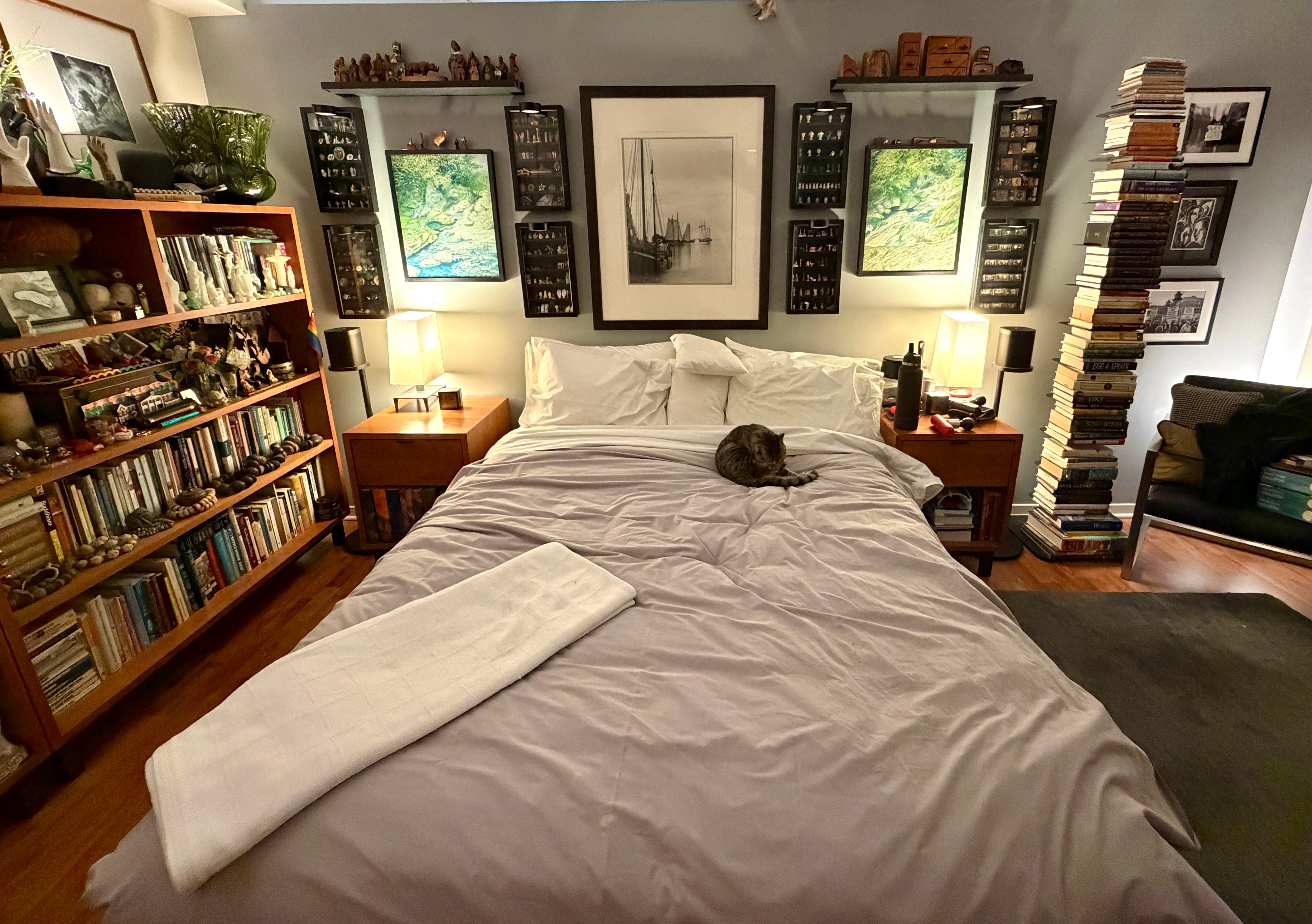
I recently became aware of a guy named Michael Horvich. That’s him in the photo above, posing in the bedroom of his condo in Evanston, Illinois. As you can see, the bookshelves behind him hold a lot more than just books. Here’s a better view, so you can see everything Horvich has displayed on those shelves:
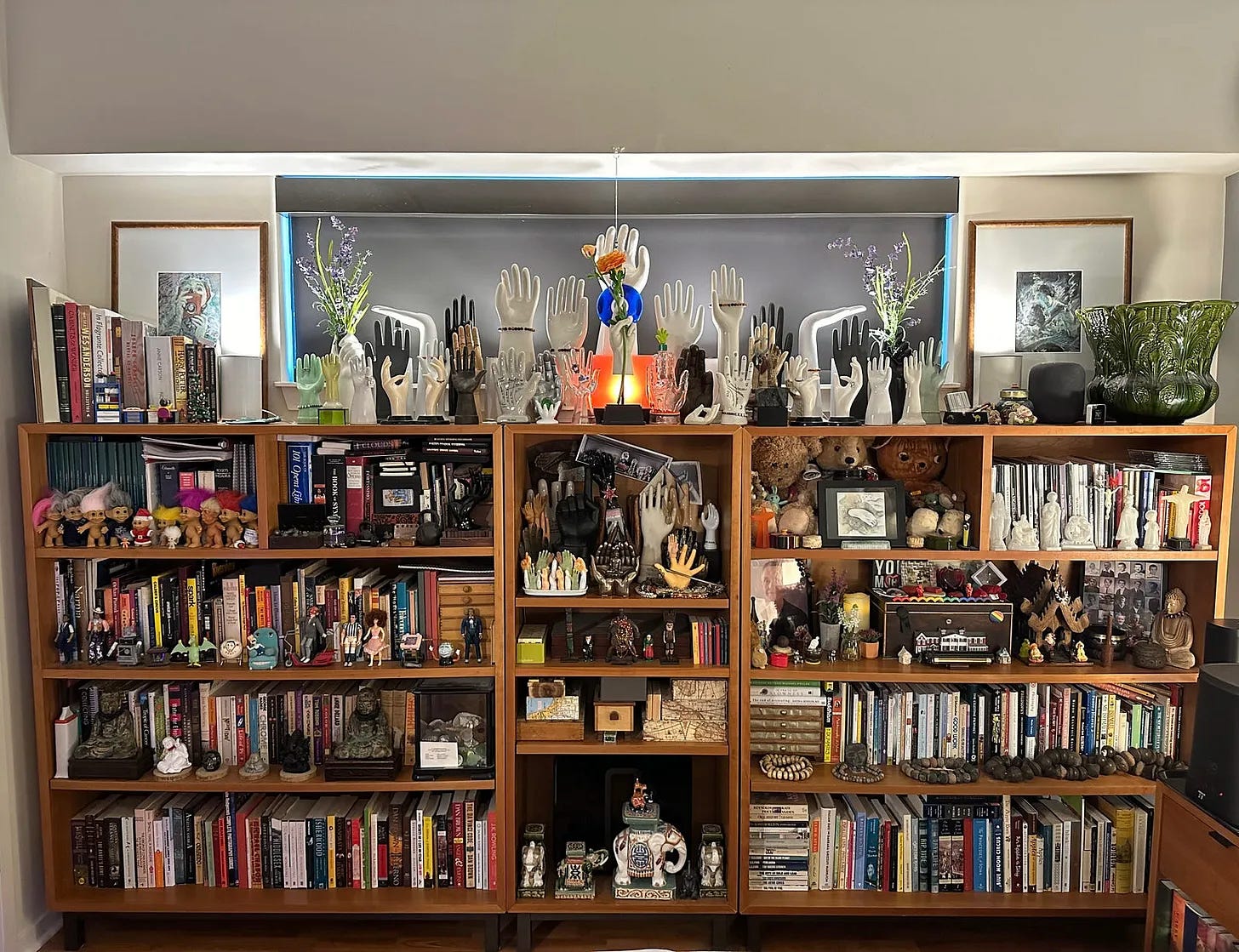
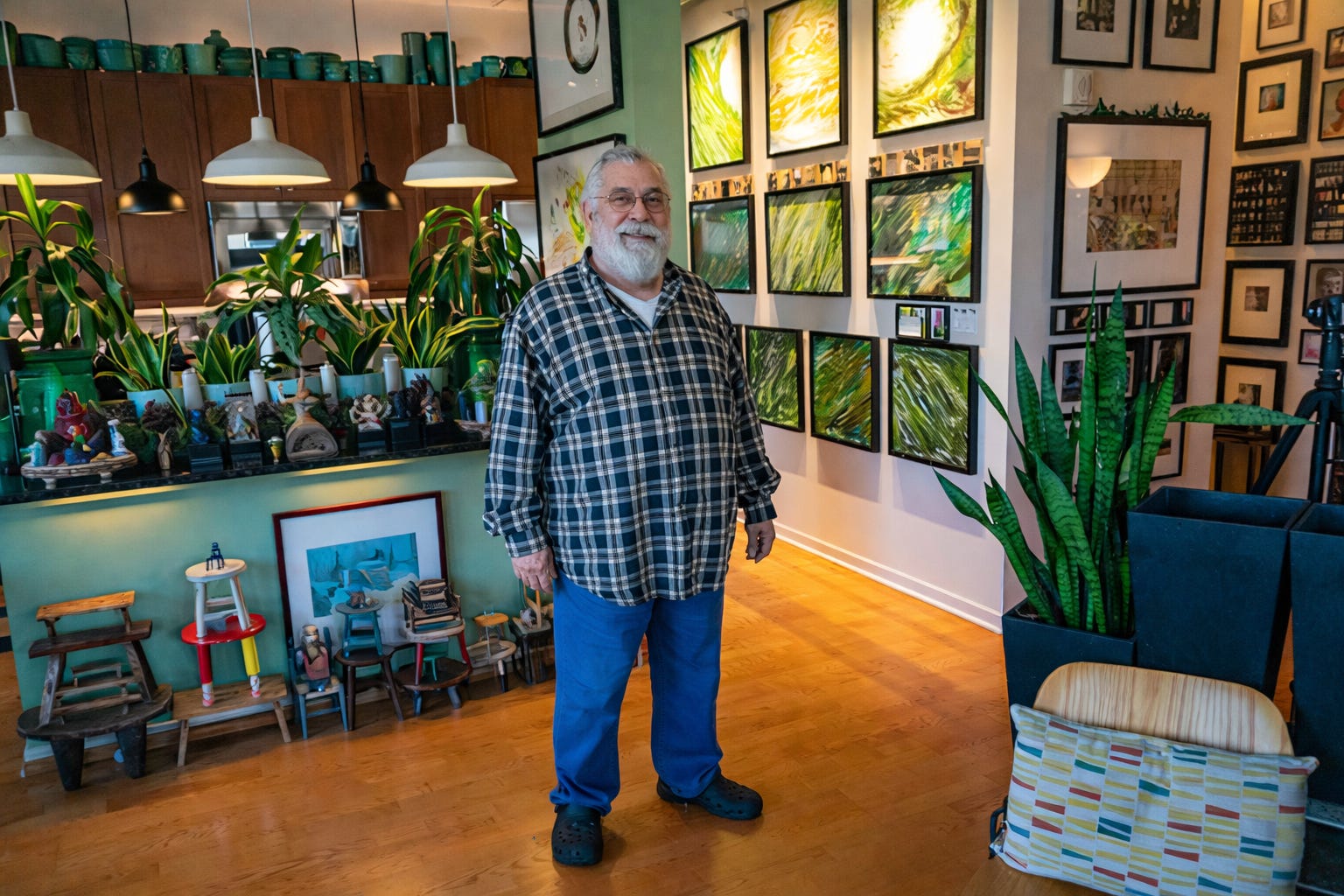
There are lots of collections there: hands, elephants, trolls, teddy bears, Jesuses, Buddhas, bead strings, and more. But that doesn’t tell the full story, because Horvich — a retired elementary school teacher who turns 81 today (happy birthday, Michael!) — is a serious collector, and no single image can capture the scope of his stuff. He refers to his home as Michael’s Museum, and every bit of it is filled with things he’s collected over the past half-century. I suspect you have to be there in person to get the full effect, but here are some additional photos that at least provide a sense of the layout (click on any thumbnail to see full-size versions):


And that’s just the home version of Michael’s Museum. Since 2011, the Chicago Children’s Museum has had a permanent exhibit called “Michael’s Museum: A Curious Collection of Tiny Treasures,” which consists of 105 collections — totaling tens or even hundreds of thousands of individual objects — that Horvich donated.
In short, Horvich is no ordinary collector. Nor is he just a collector — he’s also a poet, a writer, a photographer, a bookbinder, and a lot more. His website announces itself as the home of “Michael A. Horvich Creativity Ltd.,” which sums up his approach to life. But collecting seems to be the cornerstone of his creative enterprise.
I like interviewing collectors, so of course I wanted to talk to Horvich. But instead of talking about his collections, which I figured he’d already done countless times, I thought he’d be the ideal person for a conversation about the larger phenomenon of collecting. Here’s the transcript of a video call we recently had, edited for length and clarity:
Inconspicuous Consumption: You are obviously a formidable collector. Do you consider yourself to be a professional collector?
Michael Horvich: No, it’s just what I do. It’s who I am and part of my life.
IC: What are some of the things you collect?
Horvich: Bakelite pieces, Indigenous people miniatures, bowling pin sets, books — distinguishing between teeny books, small books, and little books, all those distinctions. Hmmm, I’m thinking. I have an urban dollhouse. It’s like a high-rise presentation of the dollhouse. There’s game piece movers…
IC: Like the race car in Monopoly, or something like that?
Horvich: Right, right. But there’s like about 300 of them — different colors, shapes, textures, purpose.
IC: Your collections aren’t just about you — some of them also touch other people’s lives because they’re exhibited publicly, like at the Chicago Children’s Museum.
Horvich: Yes. They get about a half a million visitors a year, and they tell me that Michael’s Museum is one of their most popular exhibits.
IC: Why do you think your collections are of interest to so many other people?
Horvich: I think part of it is because it’s a collection of collections, where any one object or even one collection doesn’t hold too much importance, so people can make of it what they want. It’s not like going in the water-play area and pretending that you’re in the water, or going in the store area and letting the kids pretend they’re running a grocery store. Michael’s Museum just is.


IC: What do you think is the value of children learning about collecting?
Horvich: I think everybody collects, including children. Even if you can imagine some of the poorest children with the most difficult life, you’ll find that they collect interesting rocks off the street, or things that are important to them.
IC: And do you think that’s some sort of pattern-recognition thing that we have as a species, or an instinct to impose order and systems onto the world around us?
Horvich: I think it’s intellectual, cognitive, emotional, and visceral. And so for kids, classifying, categorizing, labeling, sorting, those are all very important activities of learning.
And that never really stops. One morning when I was at the Children’s Museum, I saw an eight-month-old little girl, not even a year old. She was leaning against the glass of one of the display cabinets and pointing at each item in the display. There was something about them that intrigued her. Later that afternoon, I came back from lunch, same cabinet, and there was an 80-year-old woman doing the exact same thing.
IC: How many of something do you need to have for you to consider it a collection?
Horvich: Two. Around the museum, there are “Michael’s Quotes,” and one of those is that it takes two items to make a collection.
IC: In addition to being a collector, do you think of yourself as a curator? And if so, what’s the distinction?
Horvich: Definitely, definitely. My collections are not just helter-skelter — they’re all curated, their arrangement is carefully thought out, how they look when you first see them, how you can interact with them. People have said that it’s not just a collection of stuff, but it’s more like a small shrine that’s in honor of that stuff.
IC: What do you consider to be the difference between a collector and a hoarder?
Horvich: Oh, that’s easy, because I’ve written about that. In some ways, collecting and hoarding have nothing to do with each other, except maybe the volume of items. With a collector, the items are important. They have meaning, they have purpose. It’s not about being afraid of being hungry; it’s not because of being afraid of having less. It’s a healthy way of looking at things.
Whereas hoarding starts to border on unhealthy and in many cases can actually be dangerous, health-wise and physical-wise, to the person who’s hoarding. There is such an emotional attachment to things that, much like alcoholism, it starts to inhibit and slow down the person’s ability to exist in a healthy, normal fashion.
And again, it has to do with the respect and the reason for the items. I have a lot of stuff, but I don’t have 15, 20 toasters that I ordered from Amazon and haven’t opened yet. Almost every surface is in my condo is covered, but people tell me it’s calm, it’s tranquil, it’s peaceful, it’s meditative, even though there’s all this stuff around.
IC: When did you begin to have the urge to collect? Does it go back to your childhood, or was there a specific incident that triggered your collecting instinct?
Horvich: Ever since I was a little boy, I collected. My earliest memory is that a friend and I would sit on a stairway that led to his apartment and look through a cigar box filled with things that his mother helped him collect: sparkly things, broken jewelry, rhinestones, gems. Not worth anything, but I remember thinking how wonderful that collection was. I think that had a big influence on me.
At a certain point, maybe when I was 30, 35, I did a mental exercise and said, “Okay, what if there was a fire and I had to save just one thing?” So I put together a cigar box with my most important things in it. And again, that reminded me of that childhood experience. Today, what would happen if there was a fire? I would probably just grab the cat and leave, because in some ways it would be easier to lose everything than to try and choose.
IC: Why do you think some people are drawn to collecting, as you were from an early age, and others aren’t? Is it almost like a genetic thing? Why do you think some people sort of have that button waiting to be pushed and others don’t?
Horvich: That’s interesting — I don’t know. I mean, it might be fun to think about it being somewhat genetic. It might also be interesting to think about it being like nurture versus nature. Maybe your mom and dad helped keep you busy with all these things you could play with, so in adulthood maybe it’s a way of holding onto your youth. Or maybe it’s a fear of mortality — if I have a lot of things, then I can hold onto them as I’m being taken away by the angel of death. I don’t know.
But as I mentioned earlier, one thing I believe — and some people might argue with me about this — is that everyone collects, even if not everyone does it the same way. One time I was giving a talk to a group of about 25 people, and I asked, “How many of you collect?” Some people raised their hands and some didn’t. And I told them, “By the time we’re done here, when I ask that question again, I’m going to guess that everybody will raise their hand.” I said, “How many of you collect memories that you can tell stories about? How many of you collect photographs from vacations? If you you like to cook, do you collect recipes or cookbooks?” It doesn’t have to be a lot of little things, it doesn’t have to be things that you were given or that you purchased. You might say, “Oh no, I don’t collect anything,” and I’d look at your desk and say, “Well, what are all those pens?” “Oh, those are just different pens that I use — sometimes I like a thicker pen or a finer-line pen.” And I’d say, “Collection.”
IC: That’s interesting, because my next question was going to be “Do you get along with people who aren’t collectors?” But your answer to that is that everyone’s a collector.
Horvich: Yes.


IC: Can collecting be an art form, or at least be a form of creativity? And do you consider it that for yourself?
Horvich: Definitely. In many ways, my home is my studio. It’s my museum, but it’s also my studio. I consider it my art, the art of display, the art of collecting and curating.
Now, maybe you could go to school to become a curator, or take a course in display, design, and layout. I’ve never done any of that — it just comes to me kind of naturally. That’s more of a passion. Maybe it’s my way of still playing with things, like a child. I have a couple other friends who are avid collectors and we talk about playing with our things.
IC: That’s funny. Just last night I had drinks with a friend, and I brought along this little tin can I’d recently acquired, and I said, “I brought something for show and tell,” which of course is a children’s activity. Years ago I even hosted a monthly object-based live event called Show & Tell. So I definitely relate to that notion of childlike delight coming from our relationship with objects.
But here’s a question: Until about 30 years ago, the only way to really collect old things was to go to yard sales, garage sales, flea markets, estate sales, antiques shops, and so on, and you’d piece together a collection one or two items at a time. Nowadays, you can go on eBay, search on “vintage beer tray” or whatever, and boom, you can have an instant collection. In your mind, does the ease of finding things in a digitally connected world devalue the resulting collection, or even devalue the very practice of collecting, or is it just another example of people adapting to changes in technology?
Horvich: Getting a full collection of something all at once is not something I’d do myself — I like the search, the excitement, the uniqueness, the scarcity — but that doesn’t make it less important. If that’s what someone wants to do, that’s fine.
But for me — well, I have several jars full of beach glass, and I found each piece of glass myself on the beach, one at a time. And there was this garage sale I went to where they had two or three jars full of beach glass. I was half-tempted, but then I thought, no, it’s not the same.
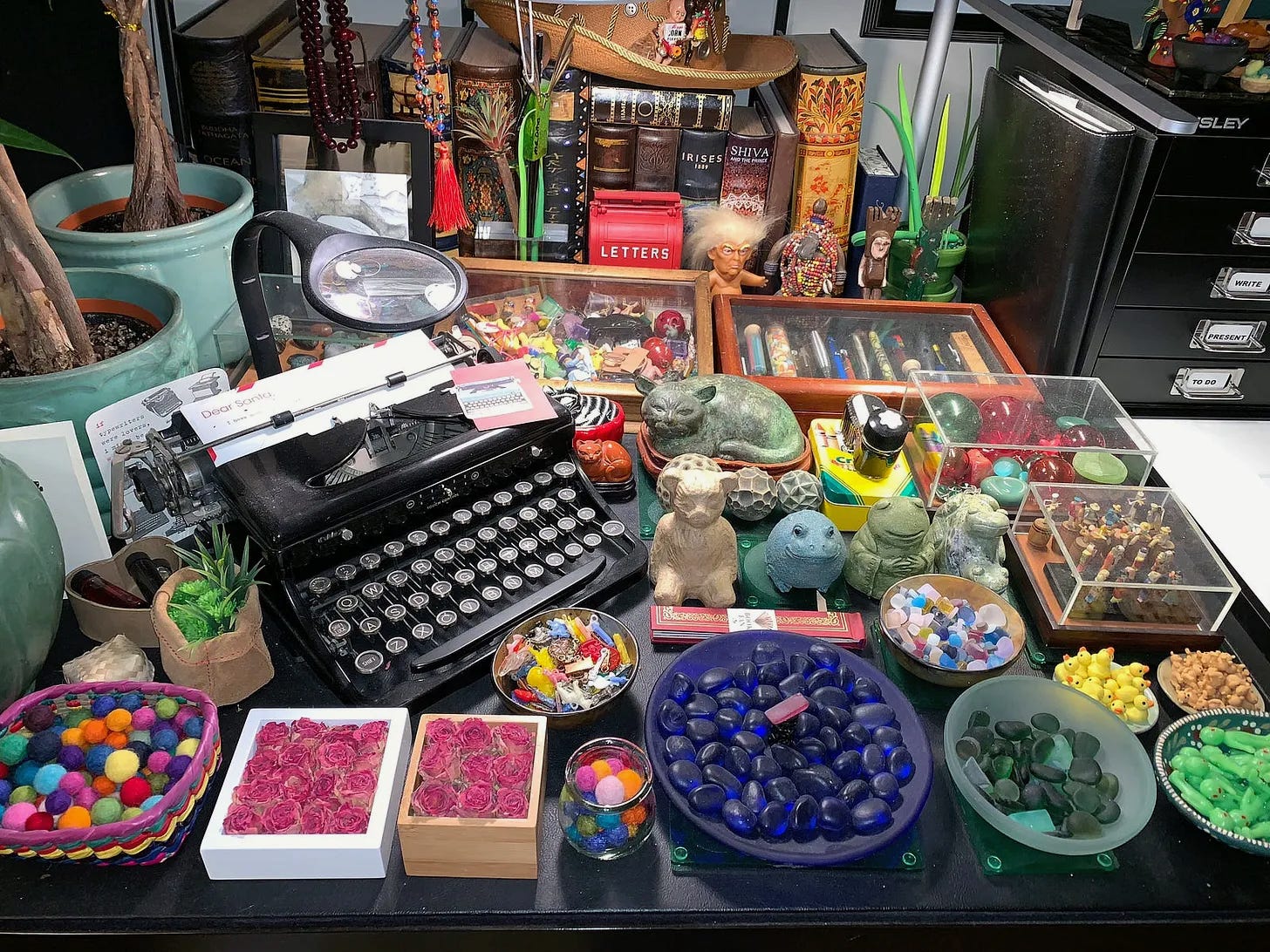
IC: We live in a very materialist culture — so much so that people sometimes refer to shopping as “retail therapy.” And that has led to the rise of certain anti-materialist counter-movements, like the decluttering movement or Marie Kondo-style minimalism — which is also sometimes described as therapy. I also keep hearing the phrase that people should seek experiences, not things. What is your response to all that?
Horvich: I think everything you said is true. I consider myself a Buddhist, and so I have given a lot of thought to the idea that you’re not supposed to become attached to things. Acquiring stuff, shopping just to shop, is not collecting. It’s not attributing or respecting or understanding or learning about the objects that you’re getting. That’s on the continuum towards not normal or healthy, like hoarding.
IC: Some people might say it’s very normal. I mean, it is literally the cultural norm in our society.
Horvich: Yeah. Maybe the definition should be argued over, but shopping just to cheer yourself up is on the continuum toward hoarding, whether the person wants to admit that or not.
IC: Do you ever get something new for one of your collections to cheer yourself up?
Horvich: Sure, but I also have a huge list of other things that cheer me up — I don’t need to shop. Sometimes I’ll go to an antiques shop and leave without anything. And there are other times where I’m thinking, “Well, I don’t want to go to the antiques shop today because I don’t really want or need anything.” So I’ll stay home and read a book or cook something or do something else to cheer myself up.
IC: When I mentioned that phrase about people embracing experiences, not things, you rolled your eyes. Why did you do that?
Horvich: I think people should experience everything. So to me, it’s not an “either or” situation. Collecting, curating, displaying — that’s an experience, too. So I reject “experiences vs. things” as a false choice.
IC: You’ve mentioned going to an antiques shop. Do you only look for collectibles at brick-and-mortar shops, or do you also poke around on websites like eBay and Etsy?
Horvich: I love to touch. I love to be at the shop. I love to discover. I don’t like as much to use eBay or the internet, but I’ll do it if there’s a particular item I’m seeking that I haven’t been able to find.
IC: I don’t mean to bring up an unpleasant topic, but as you get older, have you made plans or arrangements for what will happen to your collections after you’re gone? After all, as the cliché goes, you can’t take it with you.
Horvich: Yes, I definitely have made arrangements. My niece and nephew are the curators of my estate and will get my condo and its contents. We’ve talked about it — sometimes we’ll do what we call the “death walk,” where I’ll tell the stories and say, “This is a one-of-a-kind thing, it was $500 when I bought it, today it’s probably worth $5,000,” just so they know.
But I’ve told them that I don’t expect them to turn the condo into a mausoleum in my name. I said, “If there are things that you value, keep them; if not, get rid of them, sell them.” Since they’ll own the condo, they’ll have plenty of time to get antiques dealers and people who will offer them good prices.
They’ll also be approaching the Children’s Museum to see if they’d like to add to their collections, and I’ve already had conversations about that with the museum administration. So everything will be accounted for. In some ways, having everything go back into the stream and being available to other people for other reasons is kind of exciting.
Paul here. I have to say, I love that last comment from Horvich about other people getting to enjoy his stuff. And that’s on top of all the stuff he donated to the Children’s Museum! Some collectors can be very selfish — like, “Mine, mine, mine!” — but Horvich, for all his possessions, clearly has a strong spirit of generosity. As a collector myself, I find that pretty inspiring.
Big thanks (and happy birthday!) to Michael Horvich for sharing his story with us. You can learn more about him on his website.

Inconspicuous News Roundup
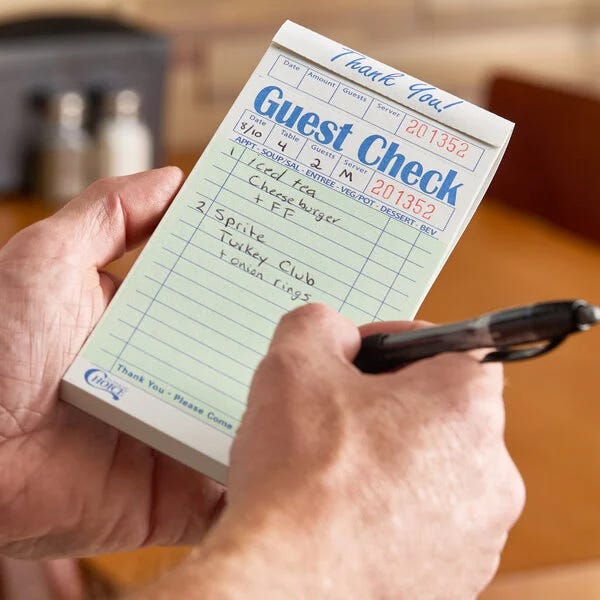
Here’s a nice tribute to the restaurant guest check, which has become an increasingly endangered species in the digital era.
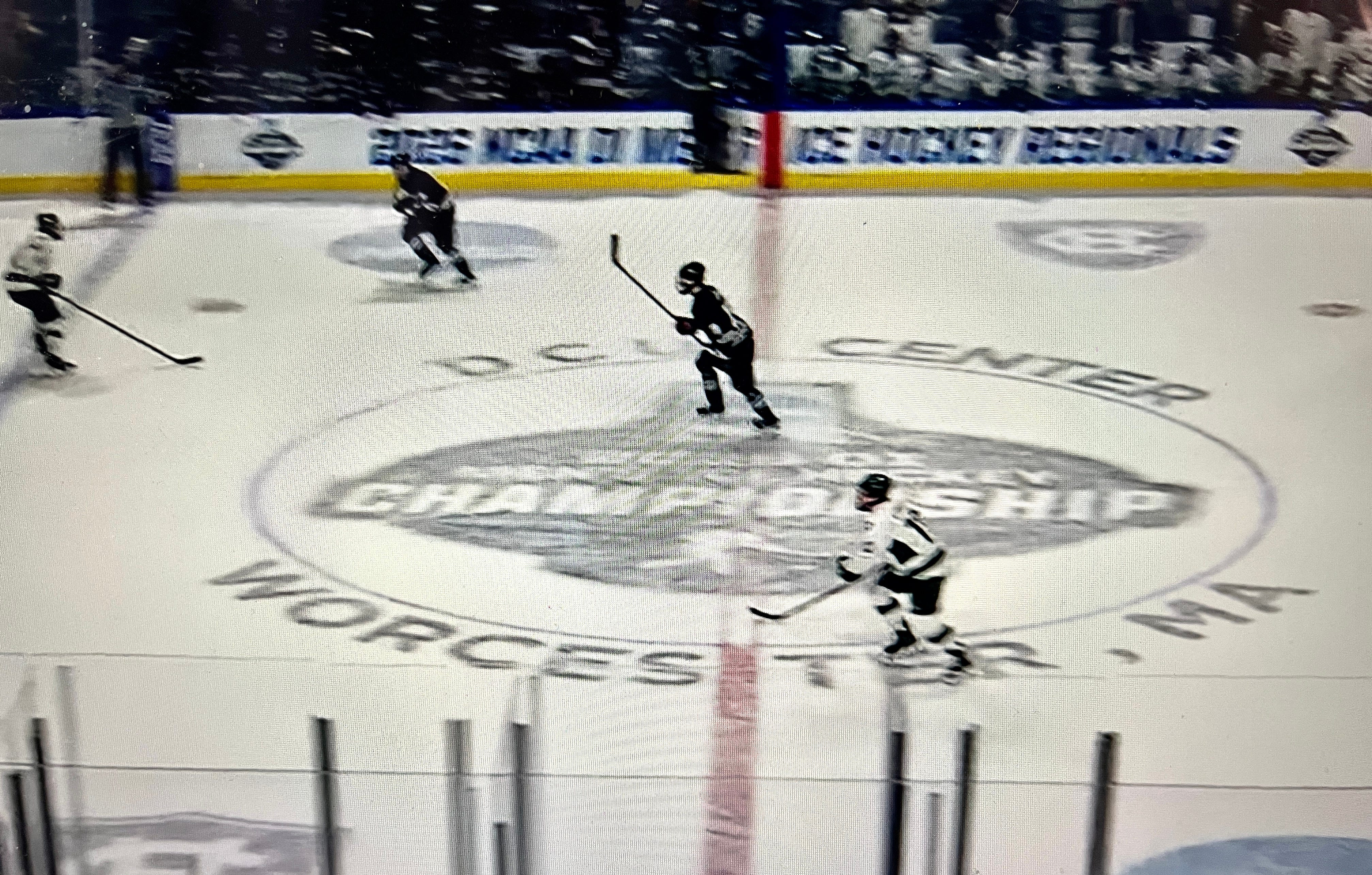
Reader Matthew Algeo notes that there’s something very strange going on with the center ice design at the NCAA men’s hockey tournament. Check out this wayward comma:
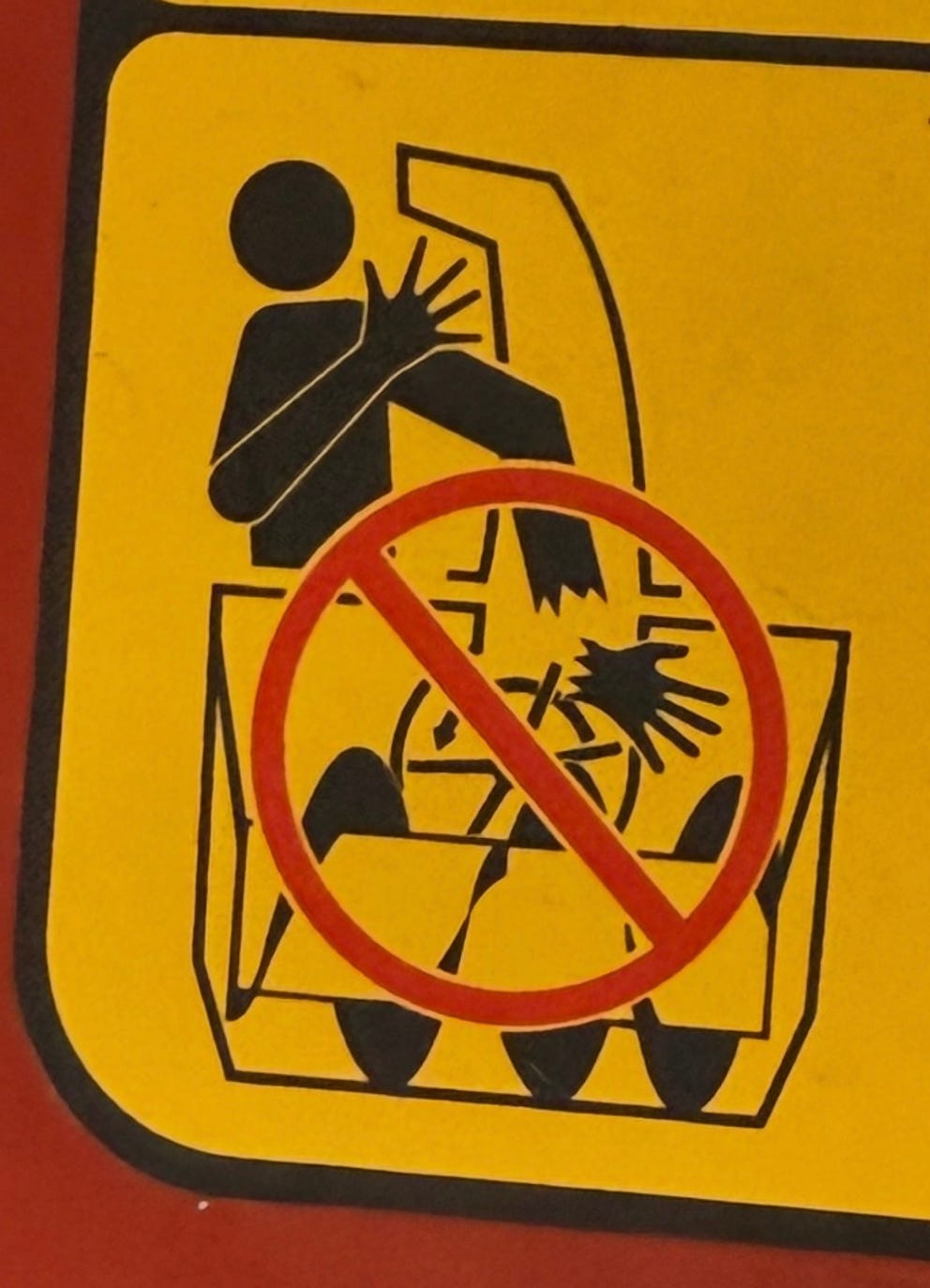
New stick figure in peril! Reader Janet Joachim spotted this one on a snow blower:
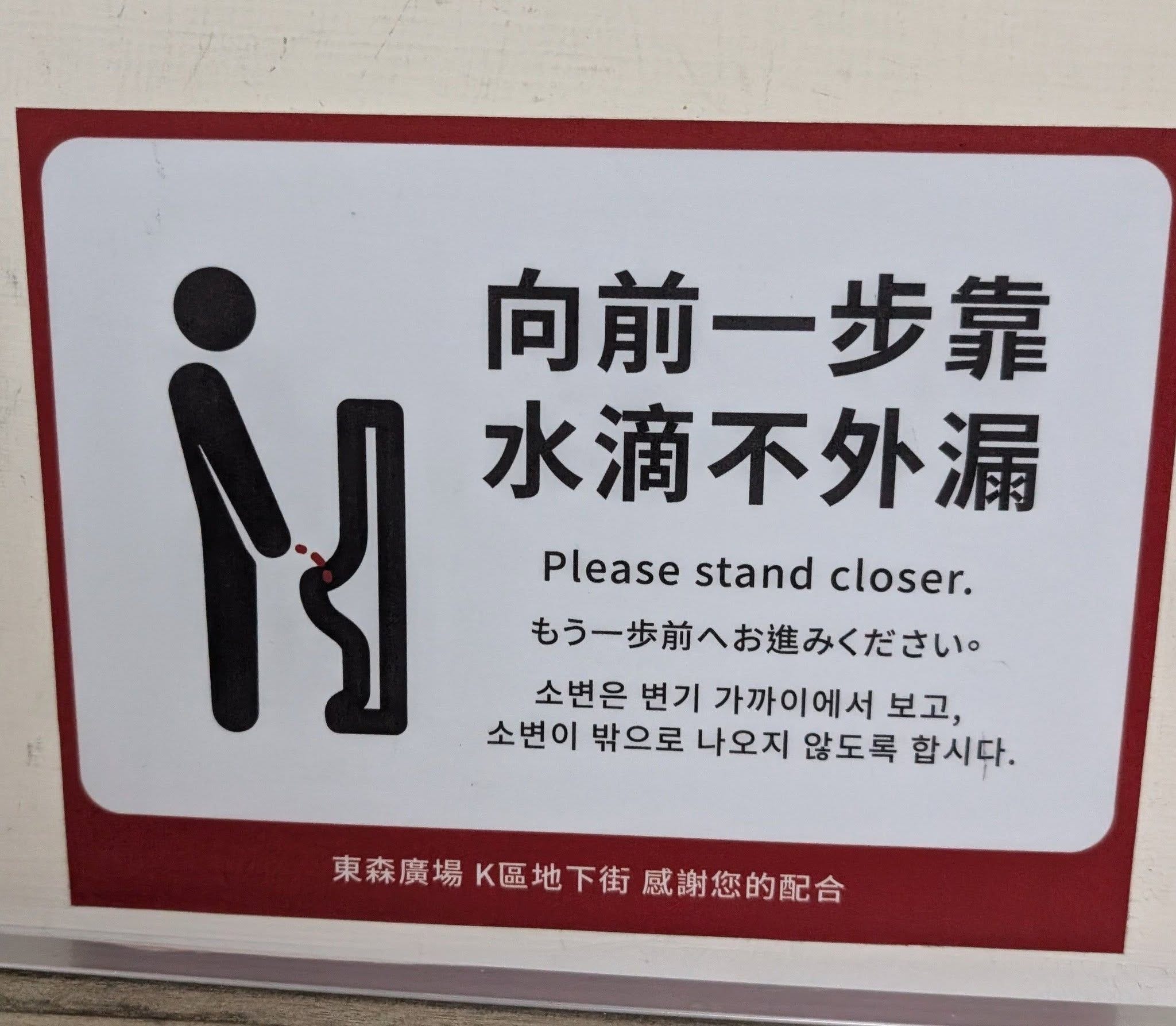
Here’s another stick figure — not necessarily in peril, but still worth sharing:
Paul Lukas has been obsessing over the inconspicuous for most of his life, and has been writing about those obsessions for more than 30 years. You can contact him here.
Paul, Am so pleased with your handling of our interview. This article is wonderful! Fondly, Michael
Lovely! Thanks for this Paul.
"My earliest memory is that a friend and I would sit on a stairway that led to his apartment and look through a cigar box filled with things that his mother helped him collect: sparkly things, broken jewelry, rhinestones, gems. Not worth anything, but I remember thinking how wonderful that collection was. I think that had a big influence on me."
I had a VERY similar experience(s). Very formative for me. To this day I like to have boxes -- including cigar boxes -- of special (though rarely valuable) things scattered around.
At flea markets I'm really drawn to those glass-topped boxes most dealers have, in which you'll find a gold pocketknife, a lead soldier, a silver dollar, etc. If I were a wealthy man I think I'd just buy that entire box from each of those vendors and THAT would be my collection. Imagine a room with 100 of those on display. Probably I'm describing the inside of my brain...