
Note: This post includes some video clips that are essential to the story, so I strongly recommend that you read the web version, not the emailed version. Enjoy! — Paul
It all started when my friend Liz sent me a text, asking, “Is there a special name for that one-handle-drive USPS cart? I picture it having one — you know, like the ‘Robinson Cart’ or something like that.”
I knew what she was referring to, of course — the familiar pushcart that U.S. Postal Service letter carriers use to tote the mail when making their daily rounds. But I didn’t know its name, so I figured I’d look it up. And that’s when I made a key error: The pushcart has four wheels, but I mistakenly thought it had only three (my mind’s eye had collapsed the two small front wheels into a single wheel), so I Googled “three-wheeled letter carrier’s cart.” And that’s when a wondrous chapter in postal history opened up to me.
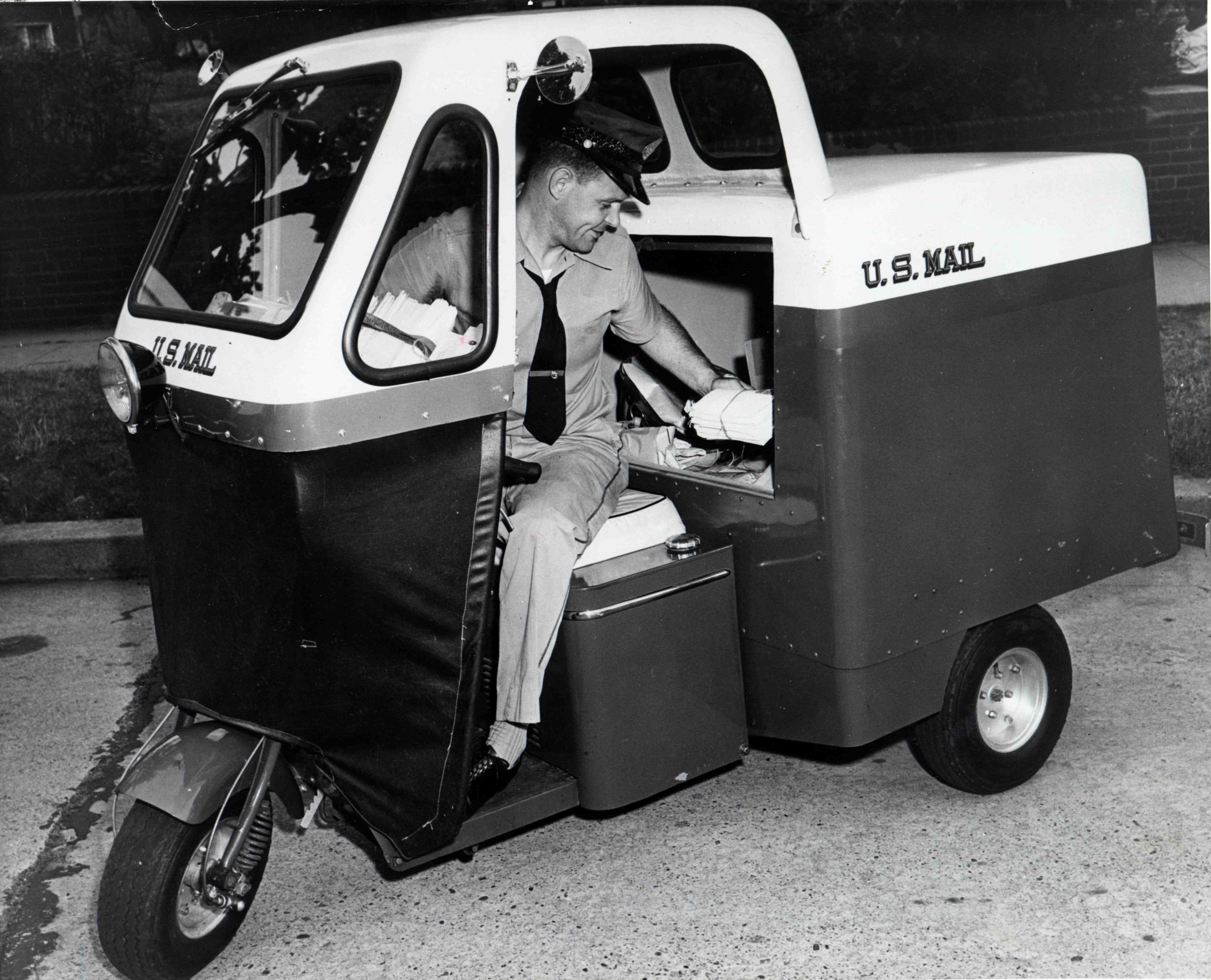
Instead of telling me about the pushcart, Google gave me a series of links about a three-wheeled fiberglass buggy that letter carriers drove on their routes during the 1950s and ’60s. As you can see in the photo above, it had a great-looking design. It also had an irresistible name: the Mailster.1
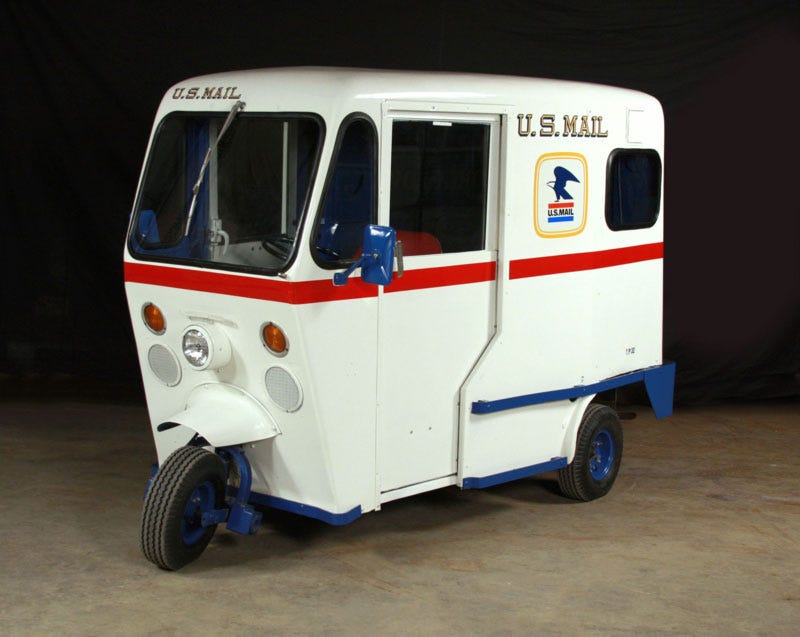
I love mail and I love midcentury design, but the Mailster was new to me. According to this article on the National Postal Museum’s website (entitled “Mail on Three Wheels,” so it was at the top of my search results), Mailsters were first road-tested by the Postal Service in 1950, with about 5,000 of them in service by that decade’s end. They were made by seven different manufacturers, which resulted in some design variations. The one shown at the top of this page, for example, has a sort of minivan-ish silhouette, but there was an earlier version with more of a cab-and-trailer profile: