

Sometimes you think you understand a situation, or you just assume that it works in a certain way, and then you learn that it actually works in a completely different way — a way that kind of blows your mind with surprise and delight. That recently happened to me, and I’m excited to tell you about it today.
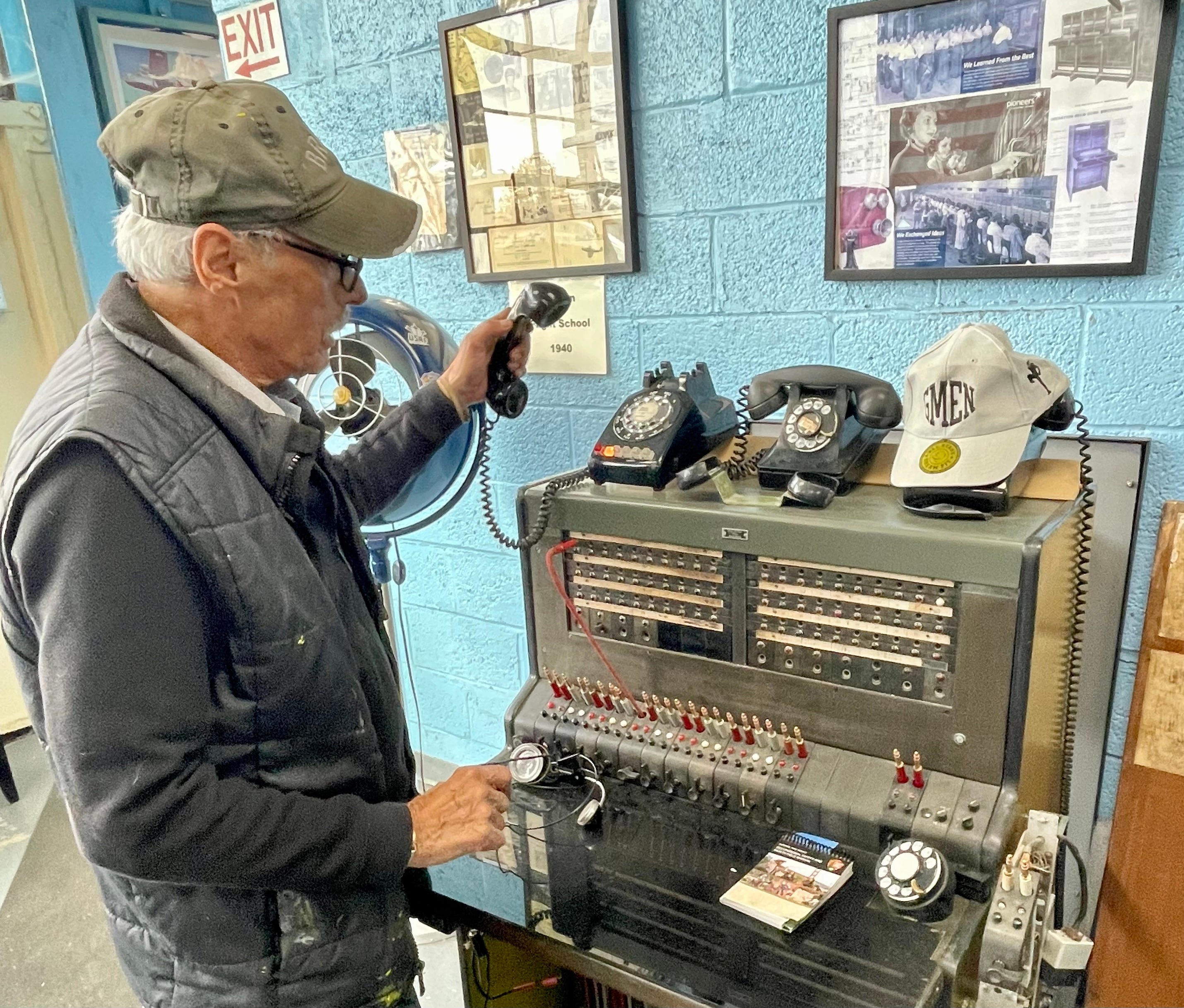
It started a few weeks ago, when my friend Dave (he’s the one who took all those photos of Brooklyn tire shops) invited me to bike with him out to Floyd Bennett Field, a decommissioned airfield on the outskirts of Brooklyn. One of the old hangars houses an aviation museum, which we spent a bit of time checking out (you can see some photos I took here). But before you get to the hangar’s main area, you have to pass through an anteroom that features an old-fashioned telephone switchboard, full of cables, plugs, sockets, and the like. The photo above shows a museum volunteer named Victor demonstrating how the switchboard works.
Victor encouraged us to play around a bit with the switchboard, so I pulled on one of the cables, like so:
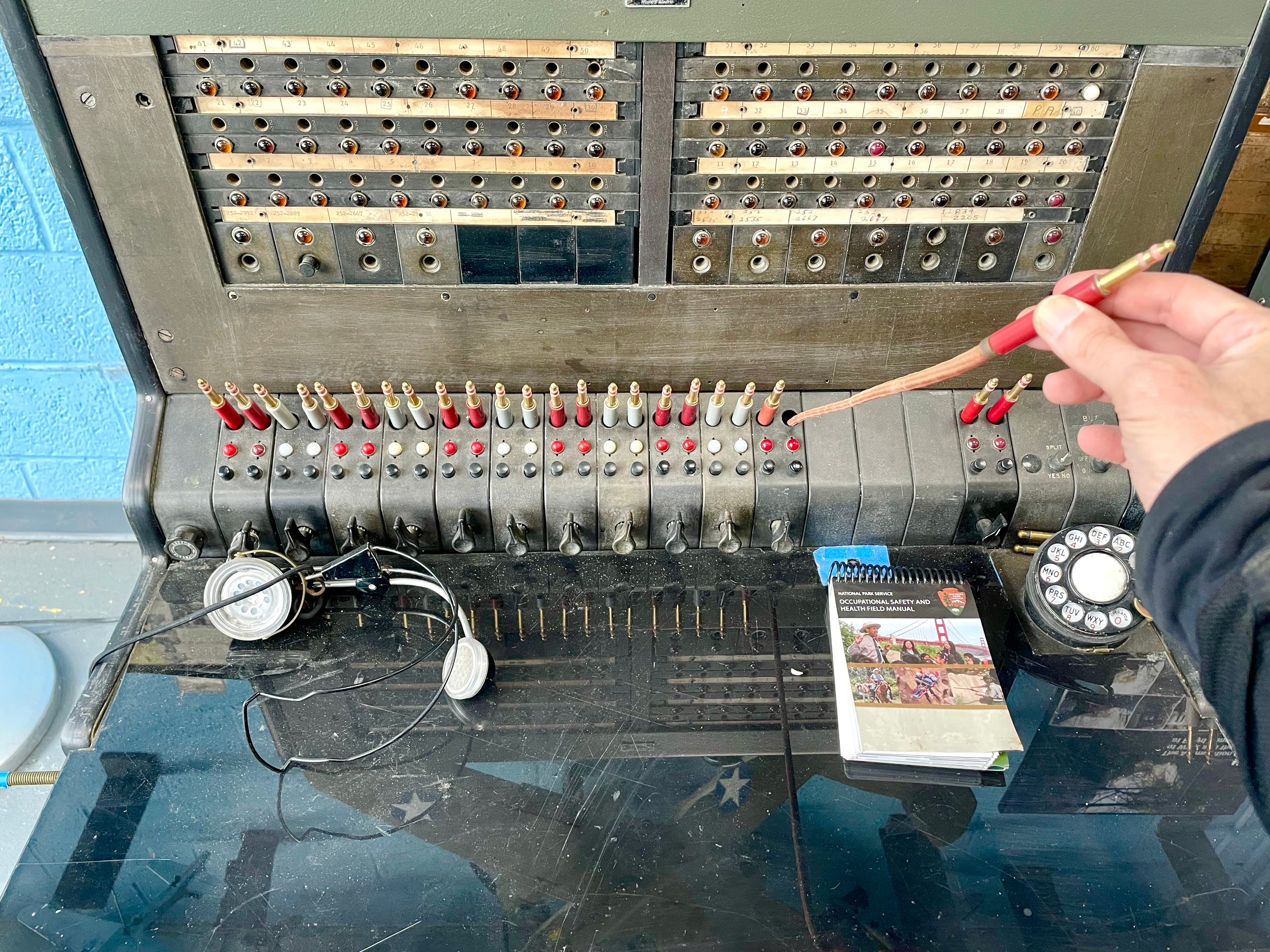
I plugged the tip of the cable into one of the jacks, then pulled it back out and let the cable retract back down into its original position. I assumed that the retracting action was achieved via the same kind of spring-based mechanism that retracts the cords on many vacuum cleaners, irons, and other appliances, and I mentioned to Victor that I was impressed by how smoothly the springs worked on the old switchboard.
That’s when Victor blew my mind. He said there were no spring mechanisms. So how did the cables retract? Victor pointed down to the switchboard’s lower compartment, which I hadn’t noticed up until that point. I looked where he was pointing and saw that each cable had a little pulley mounted on it, and attached to each pulley was a small lead weight, like so: