


Note: This post is not paywalled. Enjoy!
The short video embedded above shows a long bank of small drawers, each featuring a different enamel pin. This is the “Pin Wall” at the offices of Goldner Associates, a Nashville-based company that specializes in corporate promotional products. The Pin Wall is a de facto company archive, showing nearly 800 pin designs that Goldner has produced for various clients over the years
That video was shot by Goldner employee Mark Dancer, who happens to be an IC reader and thought — correctly! — that I might be interested in the big pin collection. I’ll hand the microphone to him so he can tell us more of the story.
The Goldner Pin Wall
By Mark Dancer
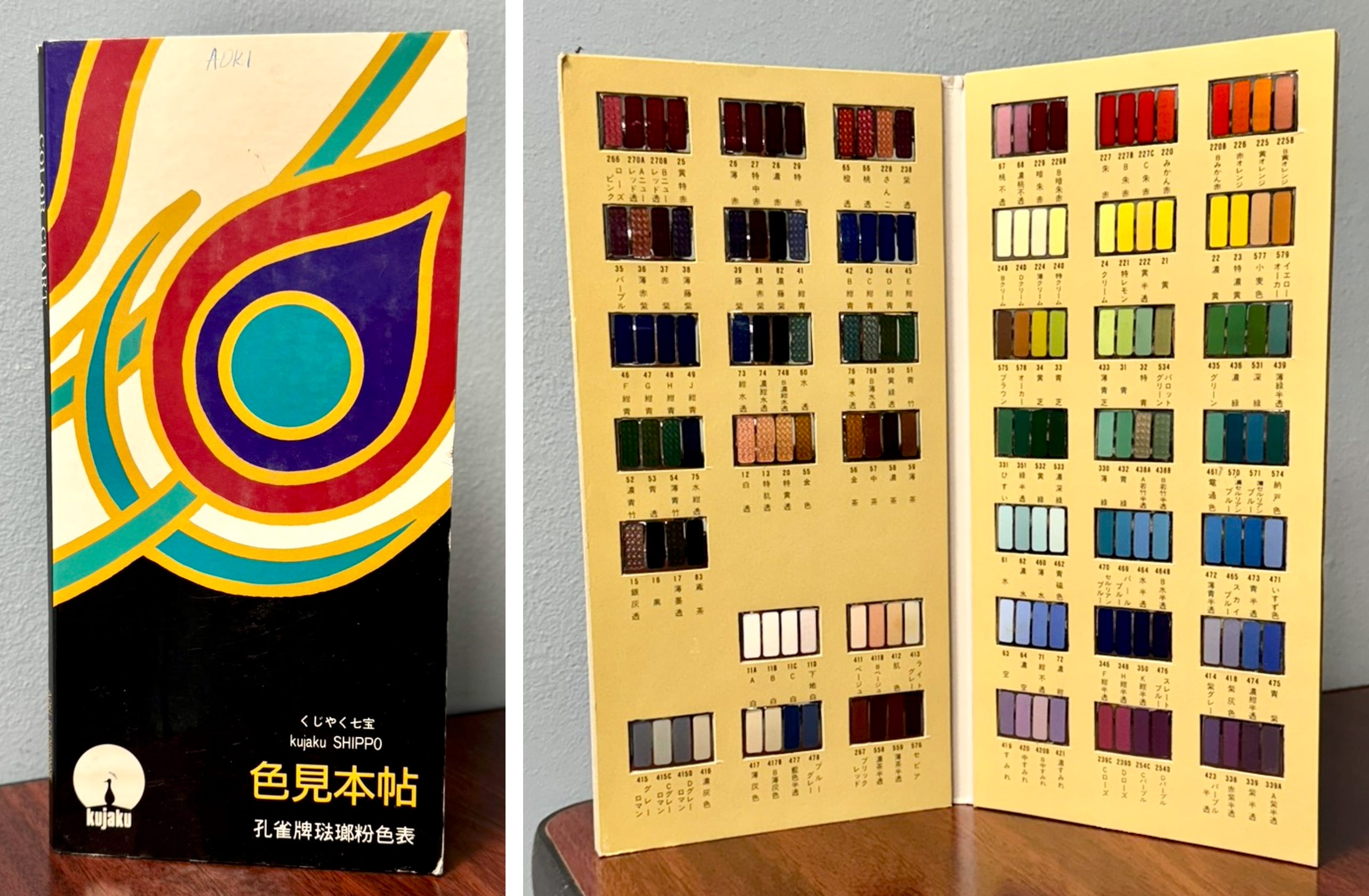
Goldner’s origins lie in a jewelry store that was operated in downtown Nashville by Fred Goldner. The store expanded its product line in 1951, when Goldner’s son-in-law, Bill Neaderthal, noticed that the shop’s corporate customers were buying and engraving items such as Zippo lighters and Cross pens to use as corporate gifts. So at that point the business transitioned from a jewelry shop to a corporate merchandise company.
According to company lore, Goldner’s was among the first American companies to offer custom enamel pins. Every pin was custom-designed and unique; we refused to reproduce existing designs, and there was no pre-existing inventory. Communication with pin factories in Taiwan was initially done via teletype and then fax.
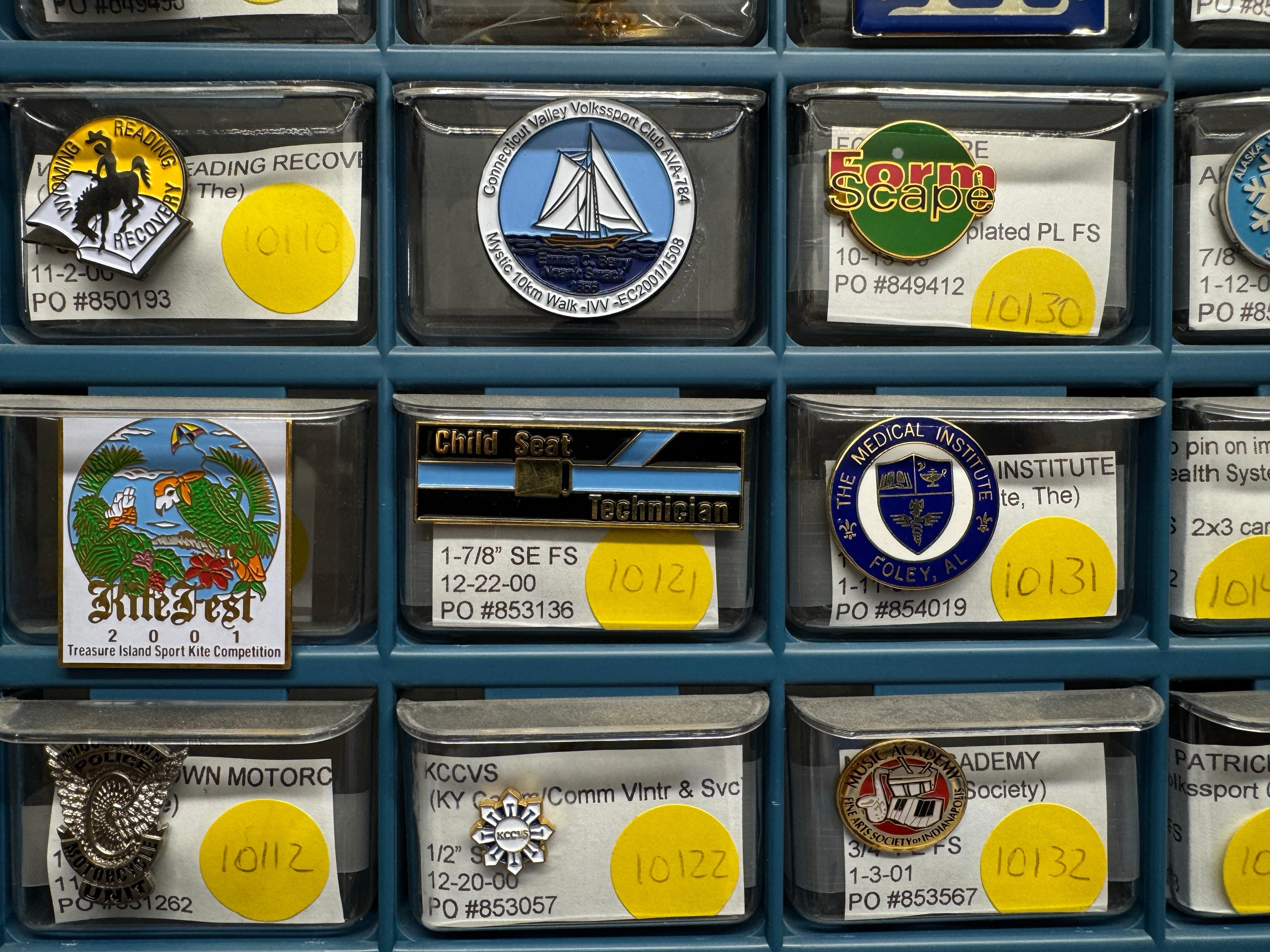
The drawers that became the Pin Wall were originally used for storing overruns that also served as samples, and then the Wall became an interesting visual representation of the company’s history. We often show it to people who are visiting the office for the first time. The pin categories include sports, municipal and government agencies, awards, the Red Cross, keys to the city, and more. The oldest one I’ve found is from January of 1974 — the key to the city for Smyrna, Tennessee — although the bulk of them were produced in the 1980s and ’90s, when enamel pins were a huge part of Goldner’s business.
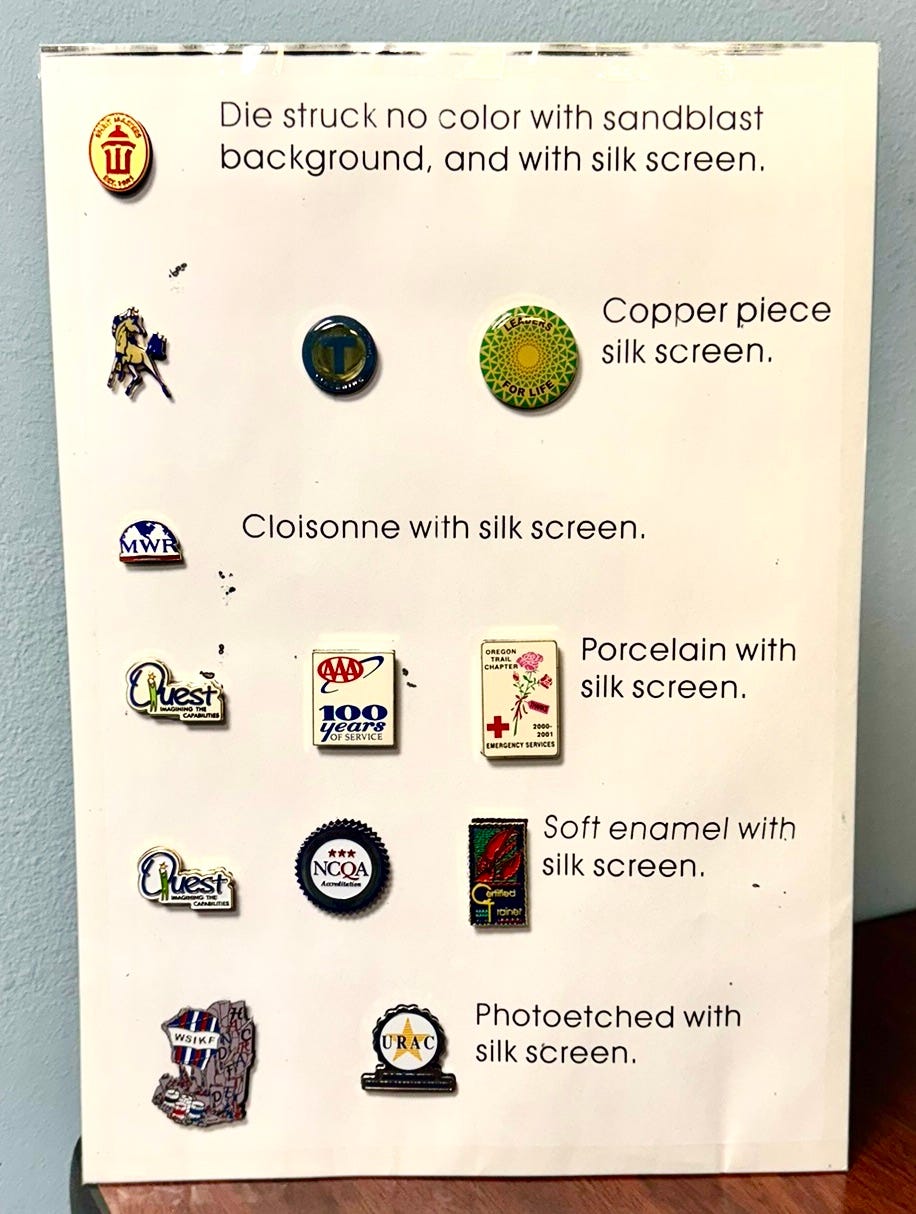
Some clients had special terms and conditions. The Red Cross, for example, would not allow their pins to be used in any of Goldner’s advertising, or to be used as samples shown to prospective clients.
Each drawer is labeled with the item name, item number, size, material, manufacturer, order date, and, in most cases, the original purchase order number. The yellow or pink stickers were used as a bin number for reference. (There’s no significance to one color over the other; it was just based on which stickers were most readily available.) As we started using a computer system, we tied the bin number to the order number.
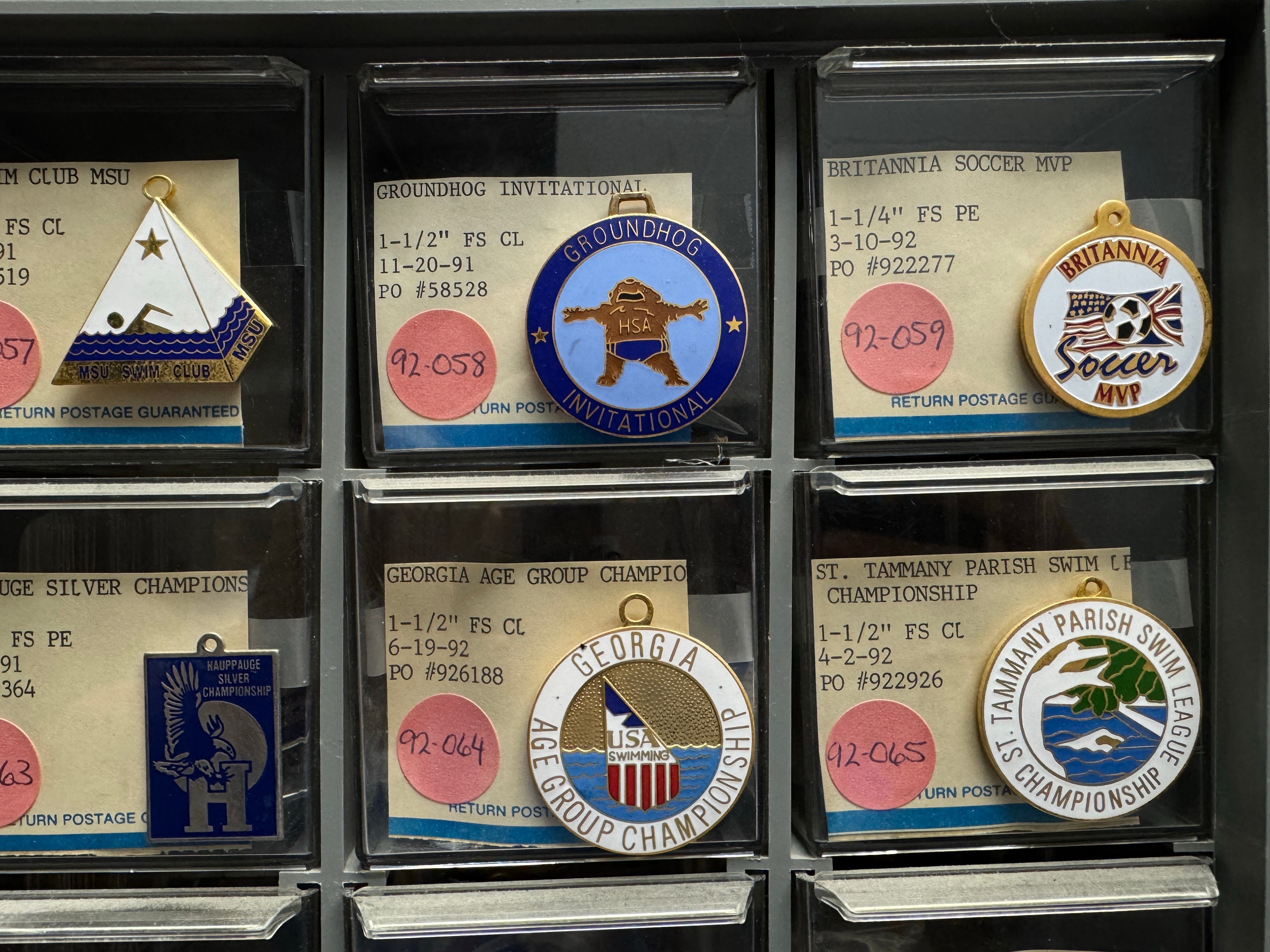
Almost every time I walk past the Pin Wall, something new catches my eye. Here are some I’ve noticed lately:
Burning Man (2001)
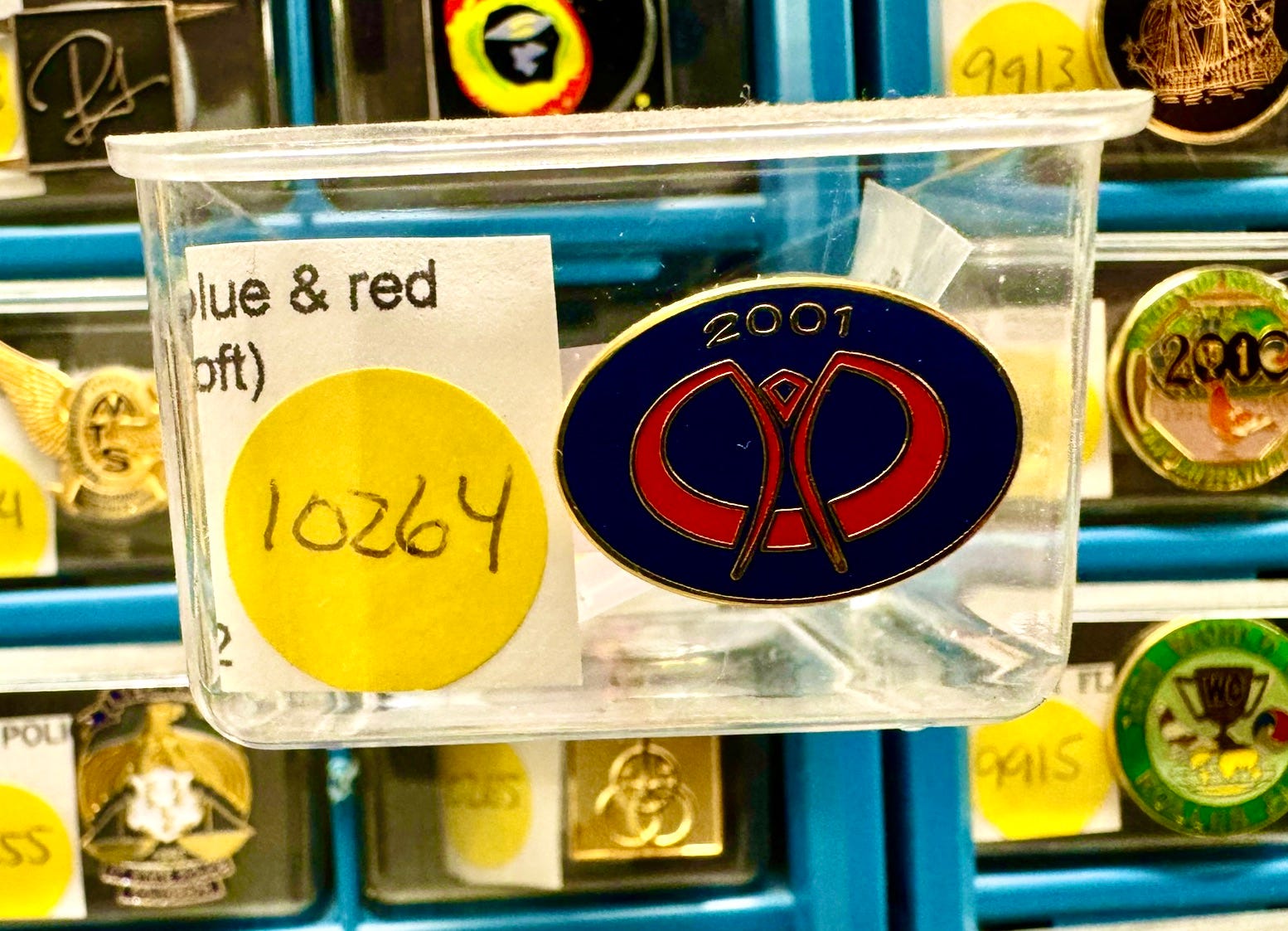
This order came from the owner of a company that did pins for kites. He was attending Burning Man.
Oklahoma City bombing (1995)
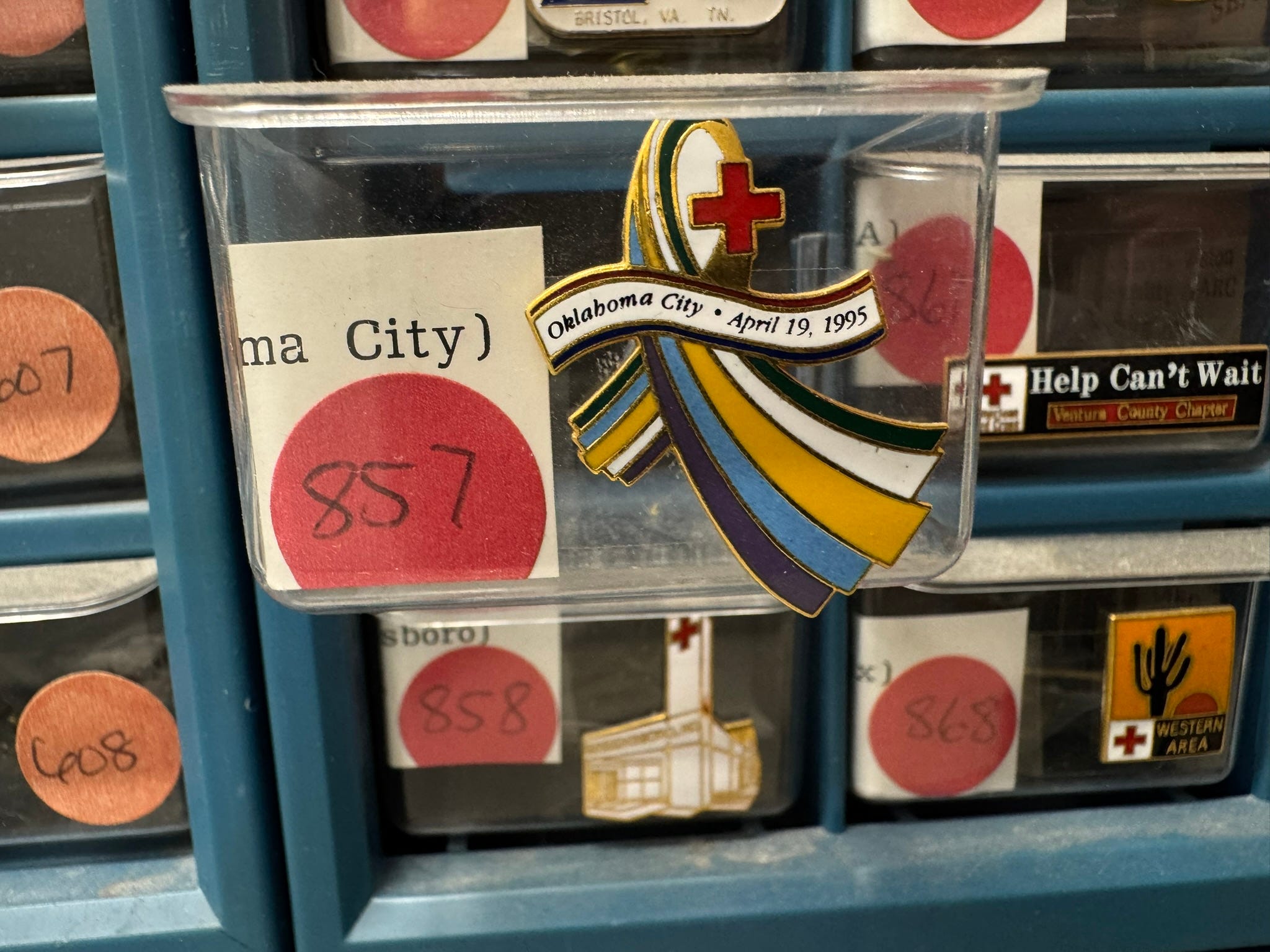
This pin was done for the Red Cross. The use of memorial ribbons was a newer thing at that time.
U.S. Powerlifting Federation (1996)
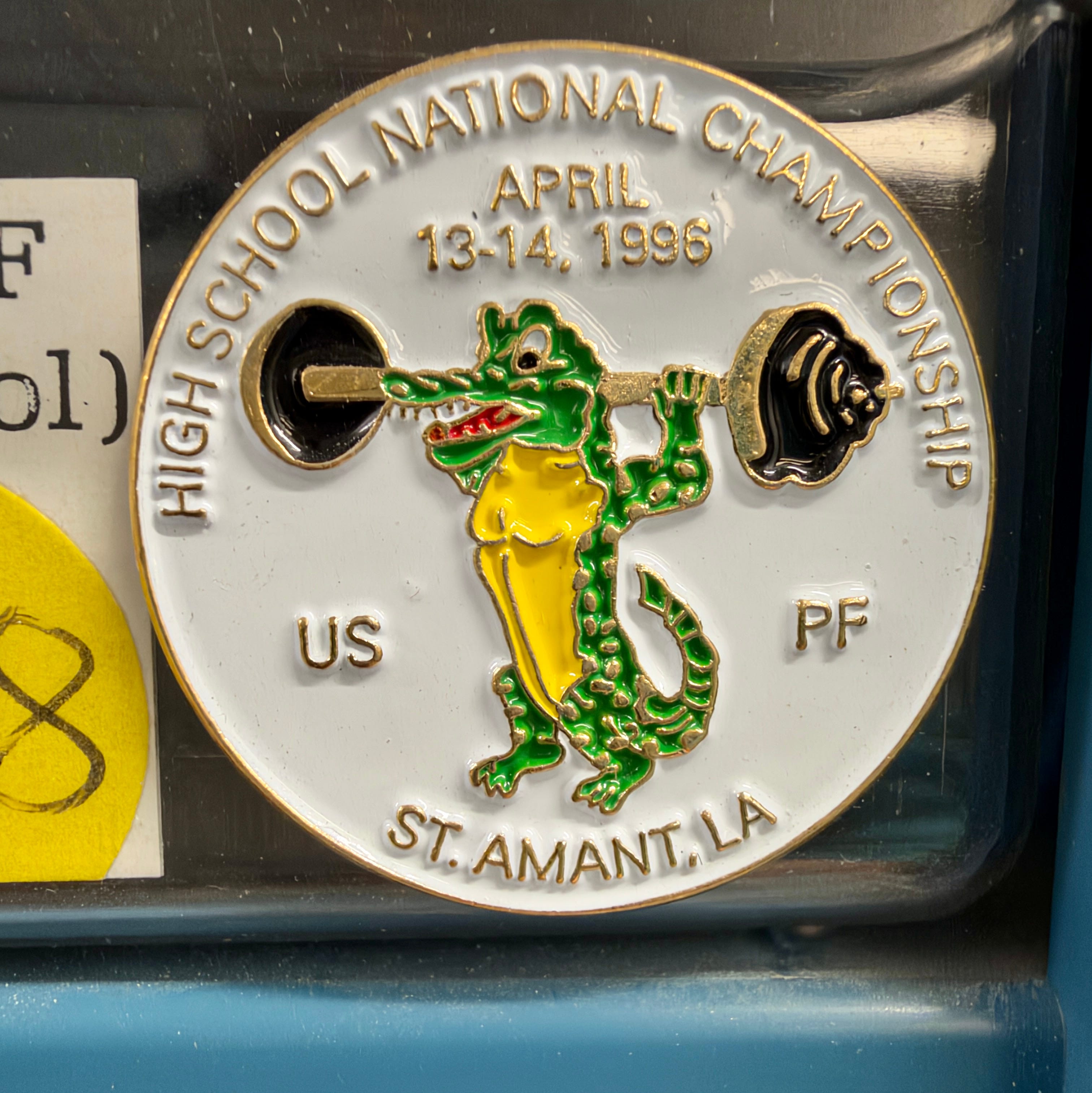
The U.S. Powerlifting Federation held its 1996 high school national championship event in St. Amant, Louisiana — hence the powerlifting gator on the pin.
Howard University Bison (1995)
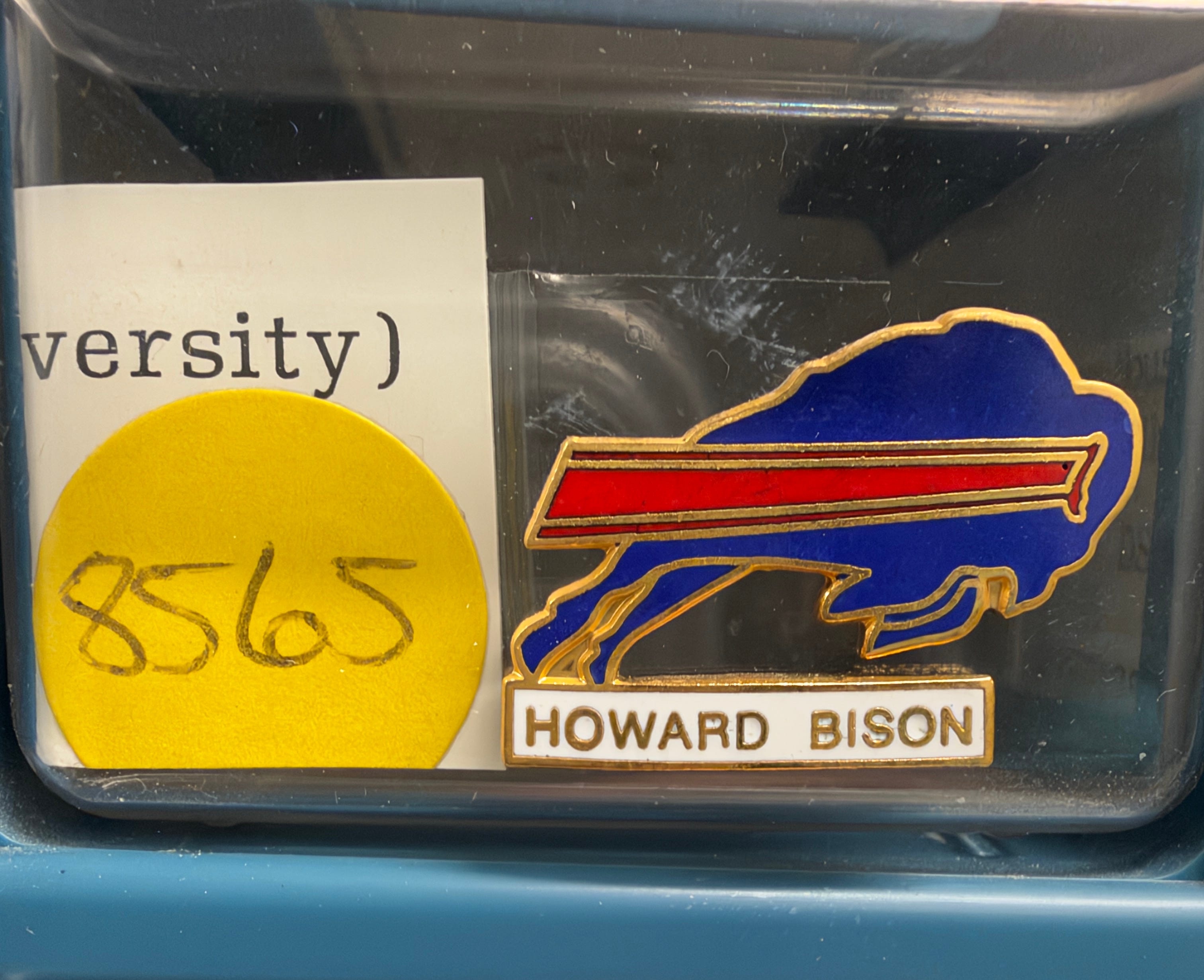
You might know that Howard University’s teams are called the Bison, but did you know that they used to use a Buffalo Bills-inspired logo? For more than 40 years, in fact!
Track & Field News Sydney Olympics Tours (2000)
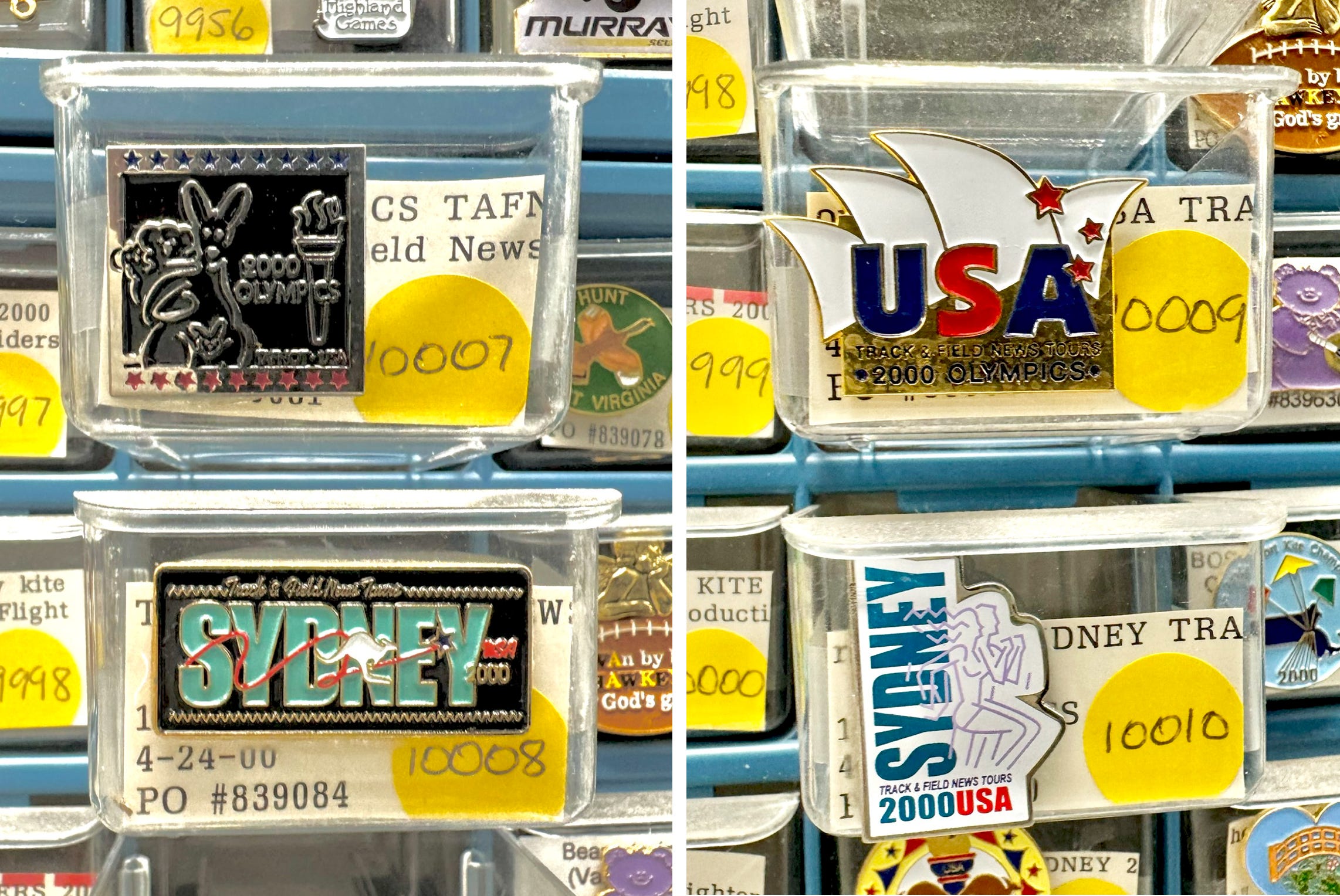
We did not do official Olympics pins, but Track & Field News magazine would take people to the Olympics as a tour group, and we did pins for those tours.
American Volkssport Association
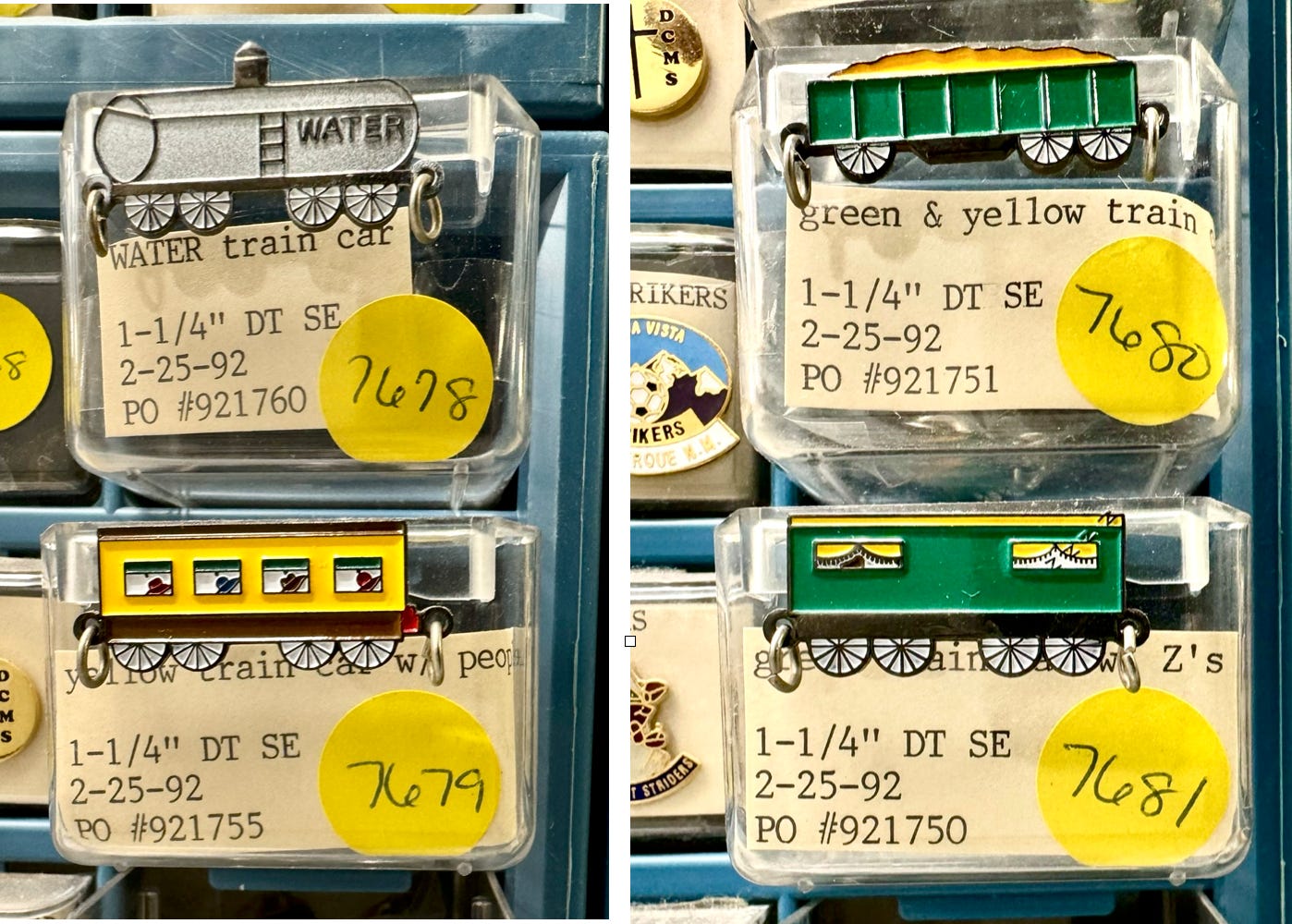
We did a lot of pins for the American Volkssport Association, which promotes group walks. One chapter did a train car for each walk, and you could link the cars together.
Wet Ass Award
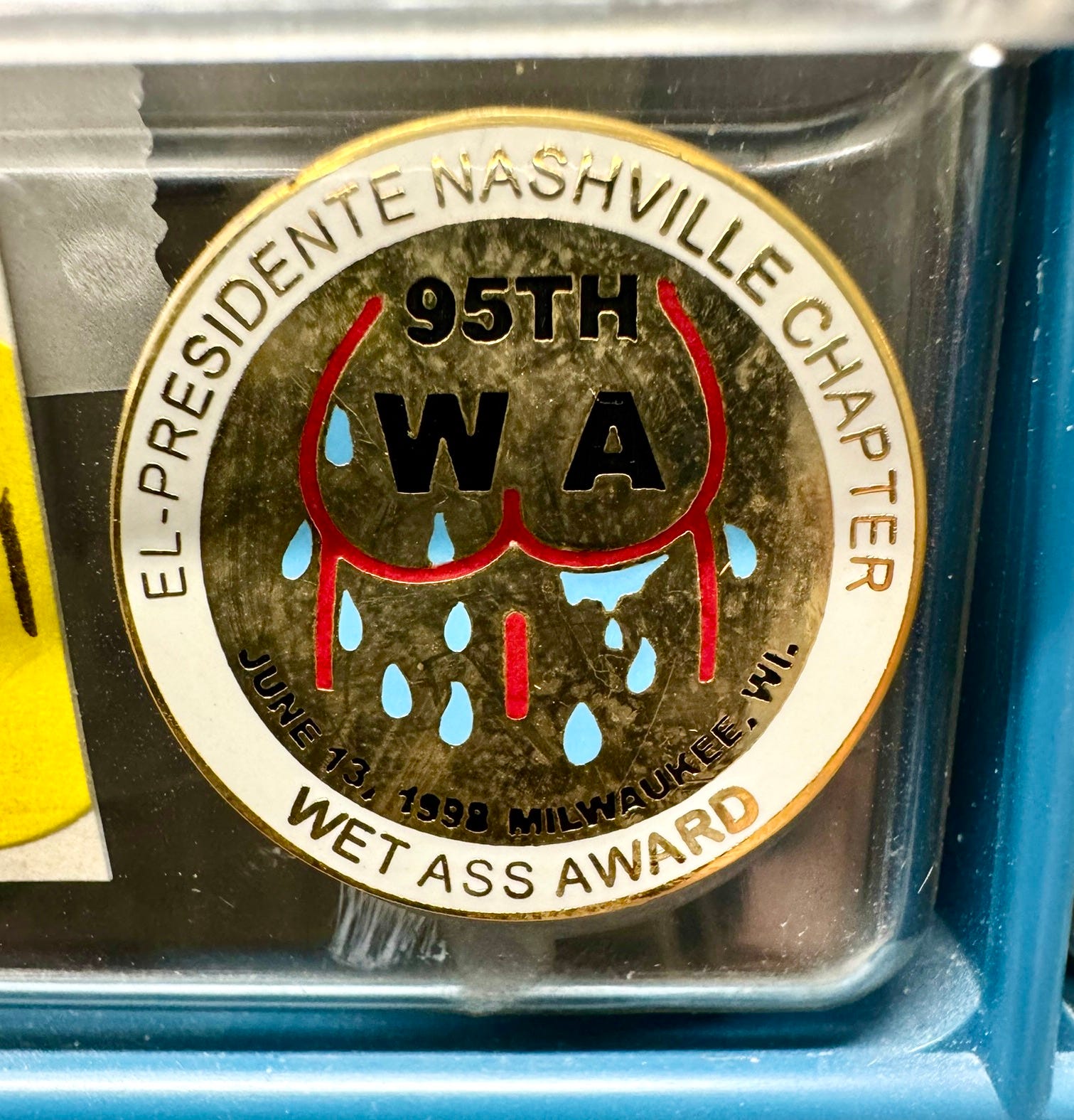
I have no idea what this was for, but it was too odd not to include.
Duck Dressed as a Nun (1991)
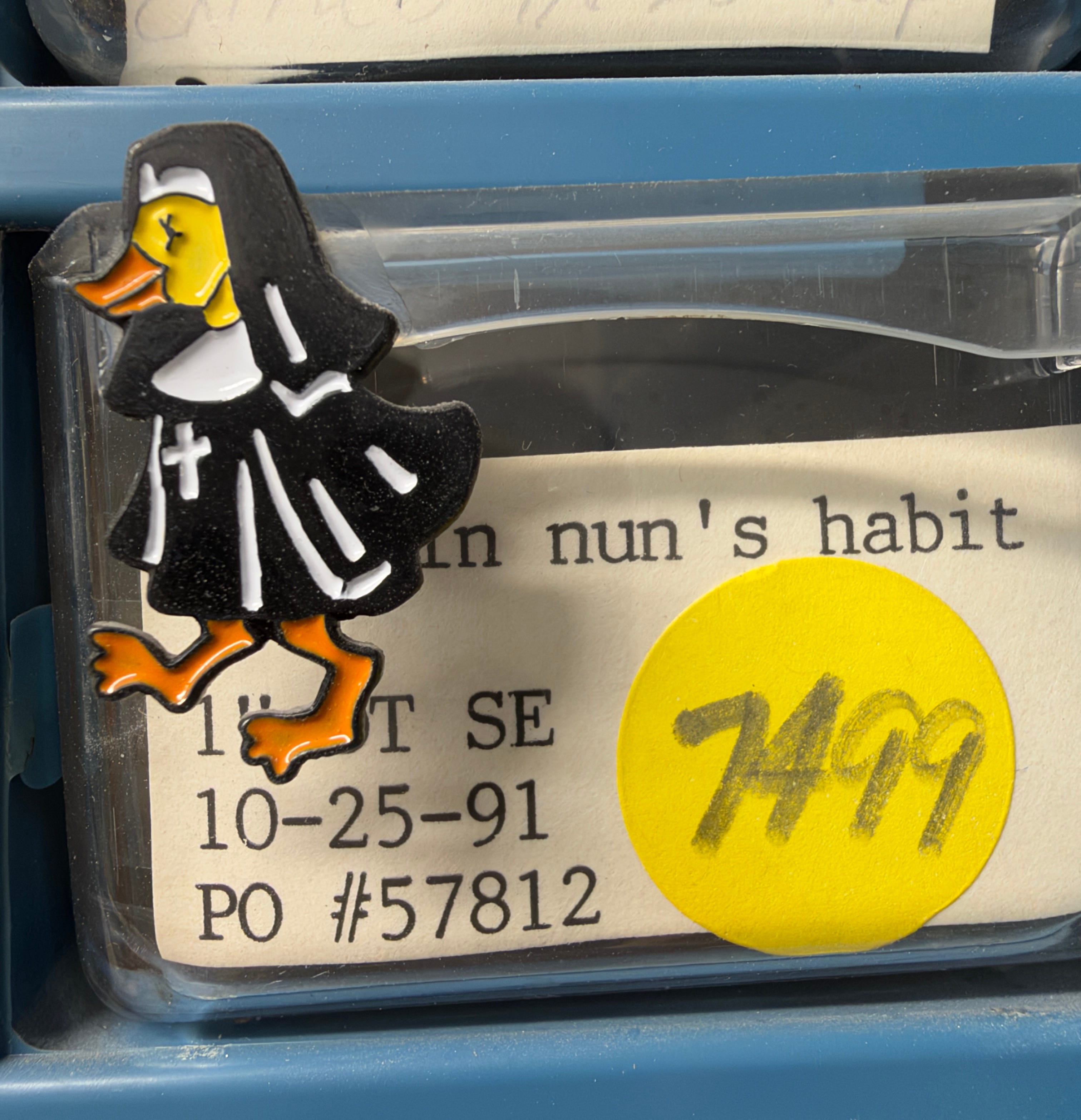
Another mystery design. The label on the drawer says, “Duck in nun’s habit” — true enough!
Paul here. I love this pin collection (as some of you may recall, I once put out a line of enamel pins myself), and I also love the idea of a company maintaining an archive of its production history. Of course, that’s a lot easier to do if you’re producing something small, like enamel pins, instead of, say, automobiles.
As it happens, Goldner is celebrating its 75th anniversary this week. Big congrats to them, and even bigger thanks to Mark for sharing this story with us.

Inconspicuous News Roundup
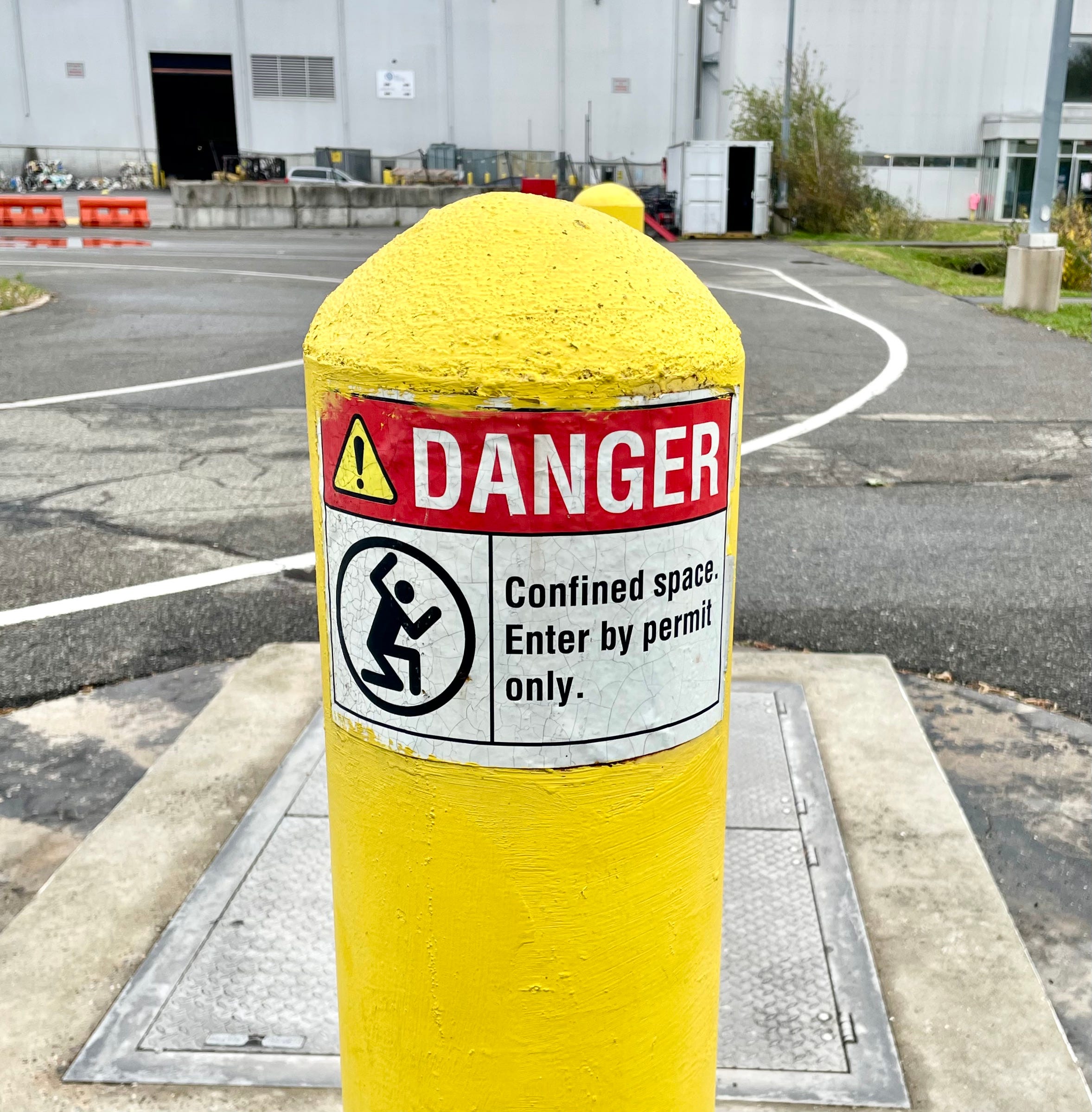
I recently encountered a new (to me) stick figure in peril. I like how the danger in this one seems almost existential rather than physical.
Remember when I wrote about novelty toilet bolt caps? I’ve just learned about the bicycle equivalent: novelty bike tire valve caps.
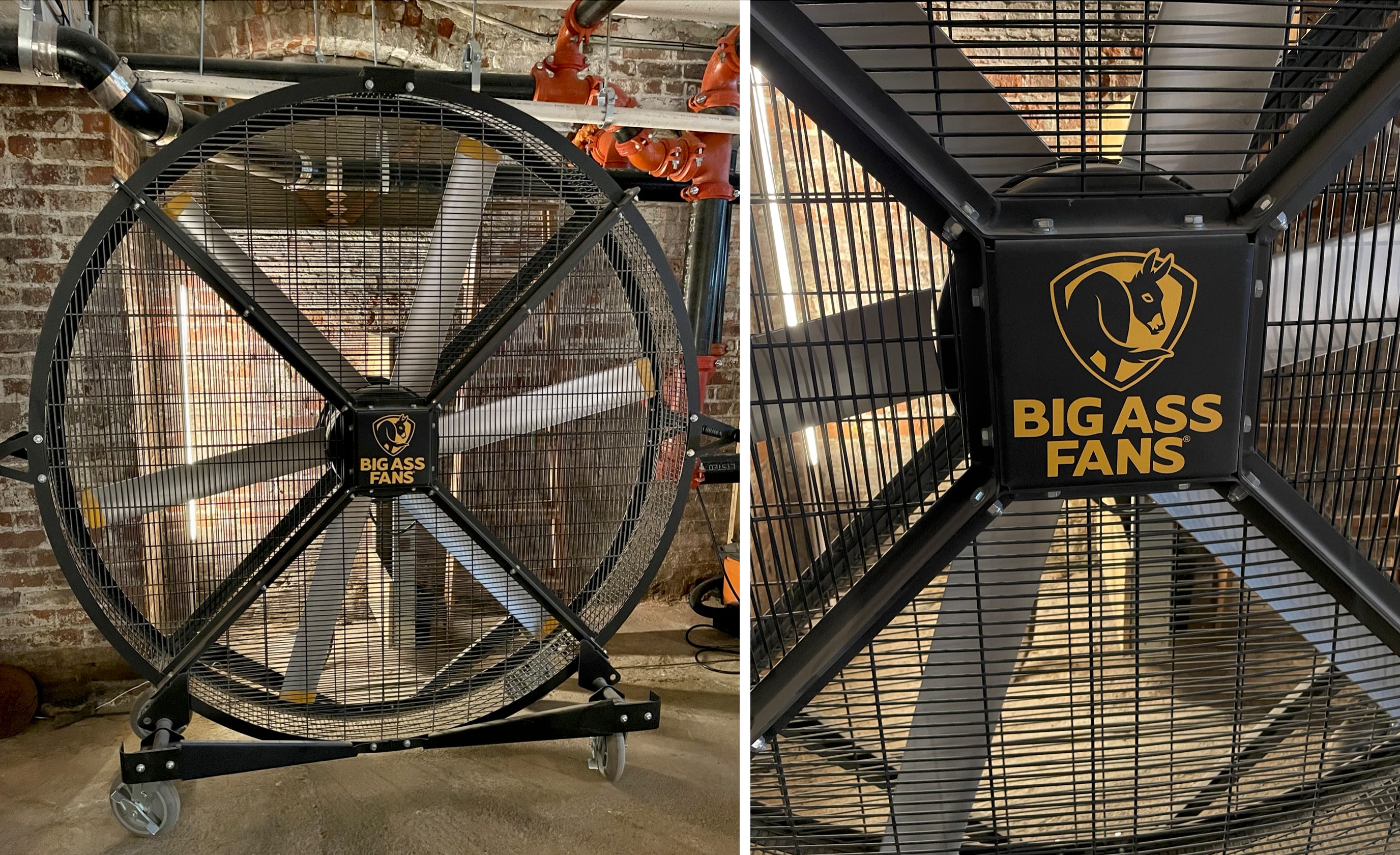
I saw this enormous fan at an industrial site the other day and was amused by the vernacular branding:
Paul Lukas has been obsessing over the inconspicuous for most of his life, and has been writing about those obsessions for more than 30 years. He also writes Uni Watch, which is sort of like Inconspicuous Consumption for sports. You can contact him here.
Big Ass Fans truly does exactly that. I guess the company name's a bit naughty? Our county covered the name up when they installed a legit-big-ass unit in our aquatic center.
They do some home-scale fans too, and they're pretty good but pretty pricey. We have two of their smallest (and quite stylish) models.
Thanks to Mark for sharing the collection.